We explored a lot of Gunagzhou in the five days we were there, as each day we saw a different area. The best part was that they were so different, it was hard to believe they were parts of the same, huge city.
Our busiest day was our second full day there. We had a half-day tour in the afternoon and decided to make our way there early, planning to stop by a Buddhist temple and grab a snack before our 2:30pm meeting time.
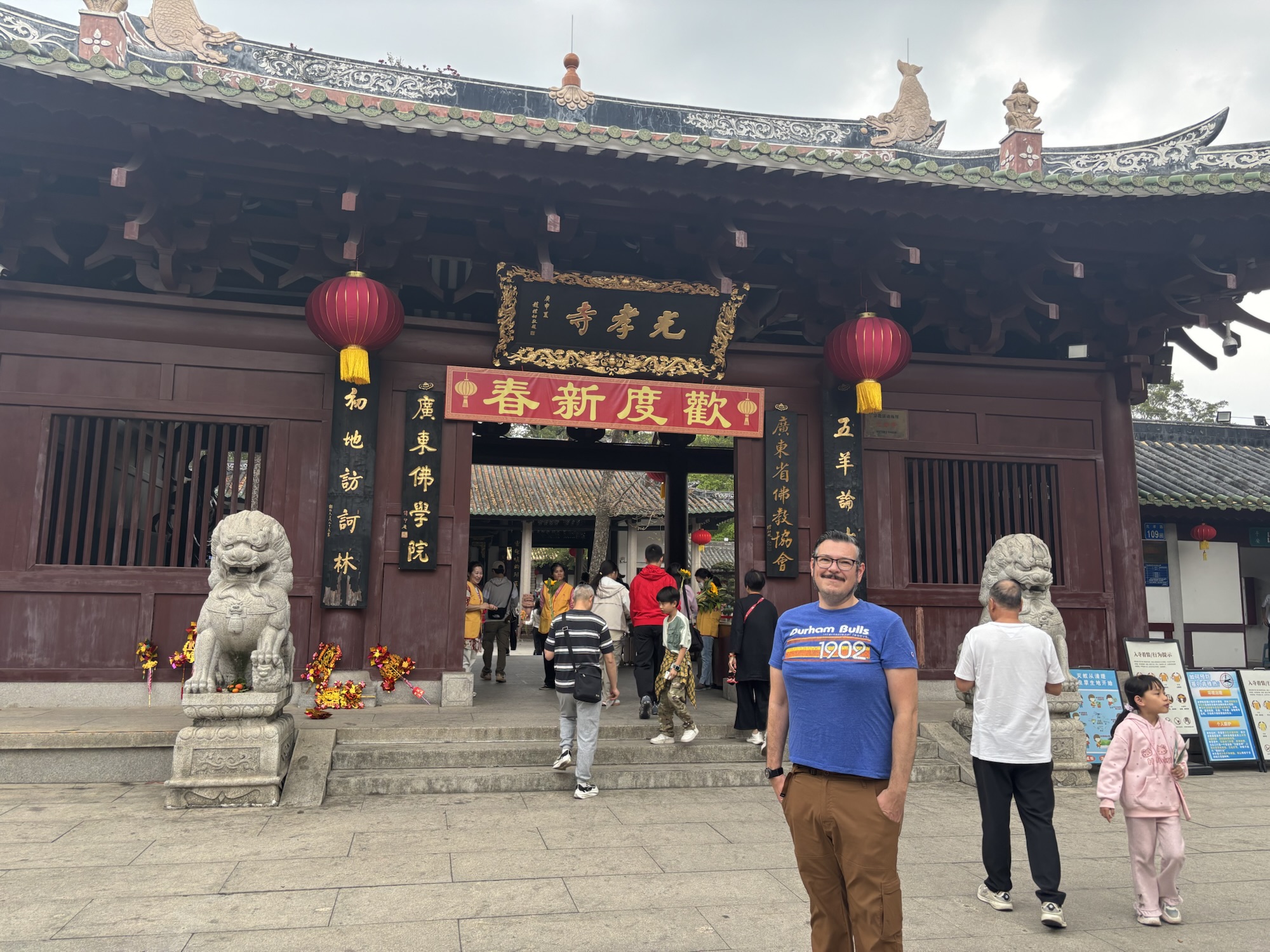
The temple was busy, which we came to expect during the Chinese New Year holiday. Vendors selling flowers and fruits were set up outside of the temple for visitors to purchase offerings to the deities before going in. We decided to purchase a handful of flowers because why not. The gals we bought the flowers from spoke a bit of English and were thrilled to speak with us and, of course, sell us their flowers.
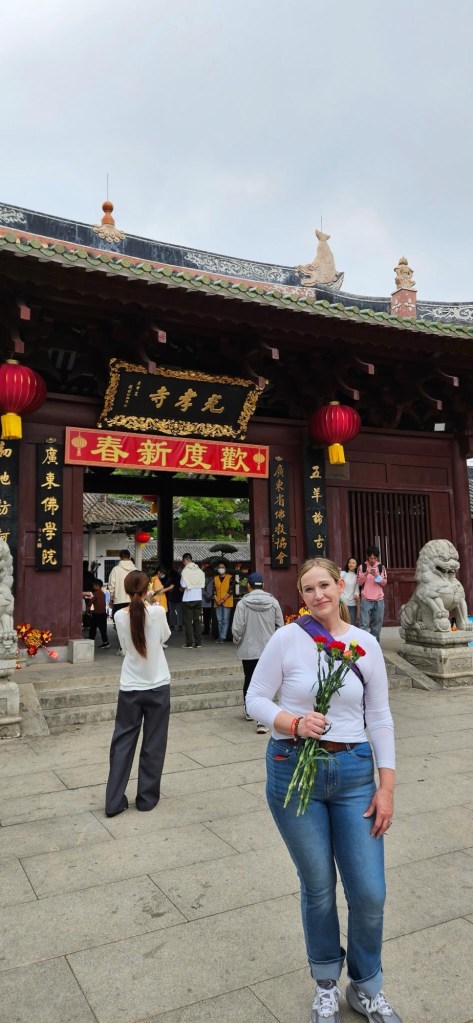
We entered the temple and a volunteer greeted us in English and asked if we would like a tour. She said it would take about an hour. We told her we had another tour to get to and she said she would make the tour a little shorter to accommodate us. Another couple joined us, too. Our tour guide, Mendi, provided so much information. We did not take many photos in the temple since we were busy trying to absorb the knowledge she shared.
Phil writes more about the temple’s history (and our other tour stops) here, and we learned that it is the oldest Buddhist temple in the region.
After the tour, we had just enough time to make it to the meeting point for our planned, afternoon tour. So much for grabbing a snack (I thought to myself, disappointingly).
We joined our tour guide, Tony, and two friends visiting from Serbia, one of whom brought his young son. We walked so dang much on this tour. It was a 20k+ steps day. I will highlight a few of my favorite moments below.
Tony explained that the beautiful trees with red flowers we’d seen around the city are the city’s official flower, the kapok. The kapok trees typically do not bloom until late March or early April, but because of the unseasonably warm weather, the flowers were in full bloom during our visit. In fact, the heavy blossoms would occasionally fall from the tree with an audible landing thud. The little Serbian boy excitedly picked up several and gifted me one.
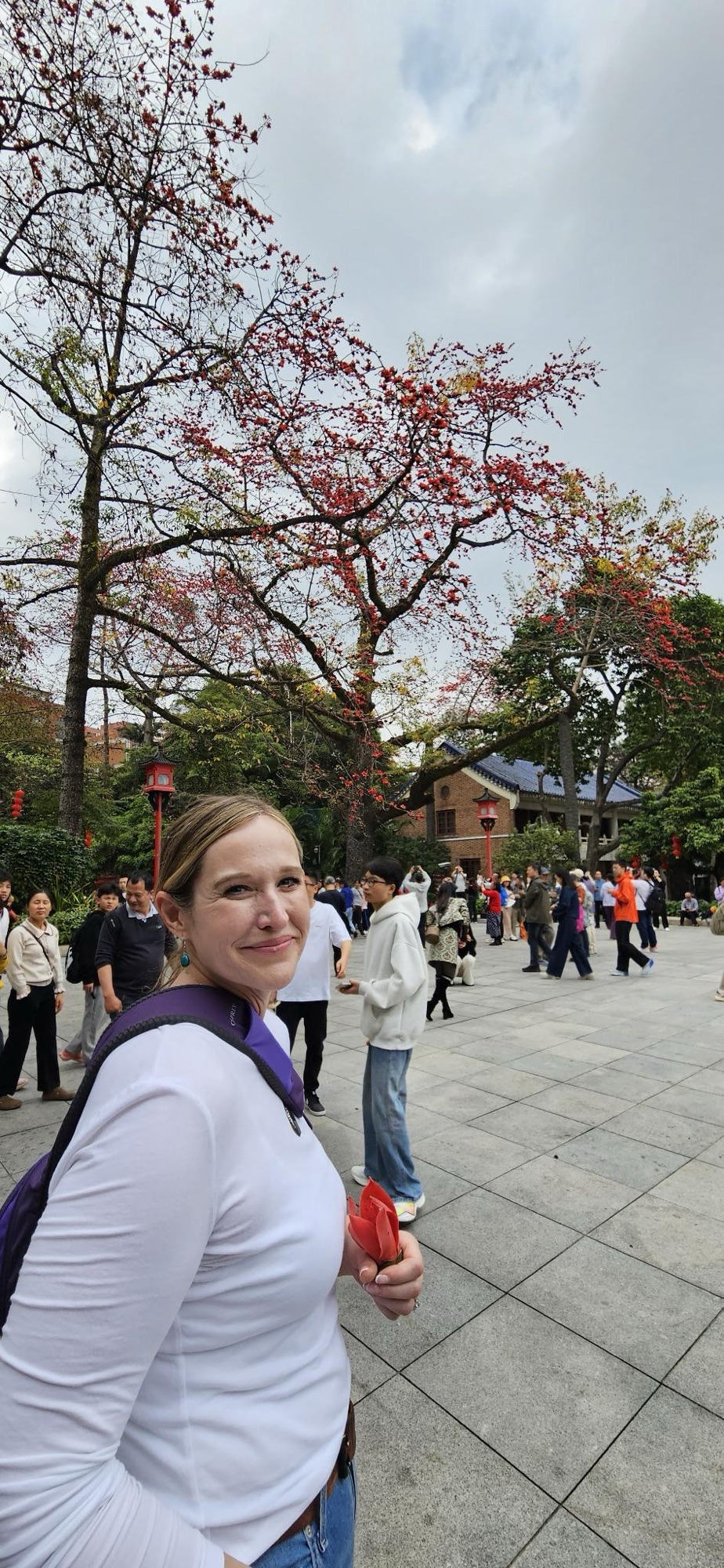
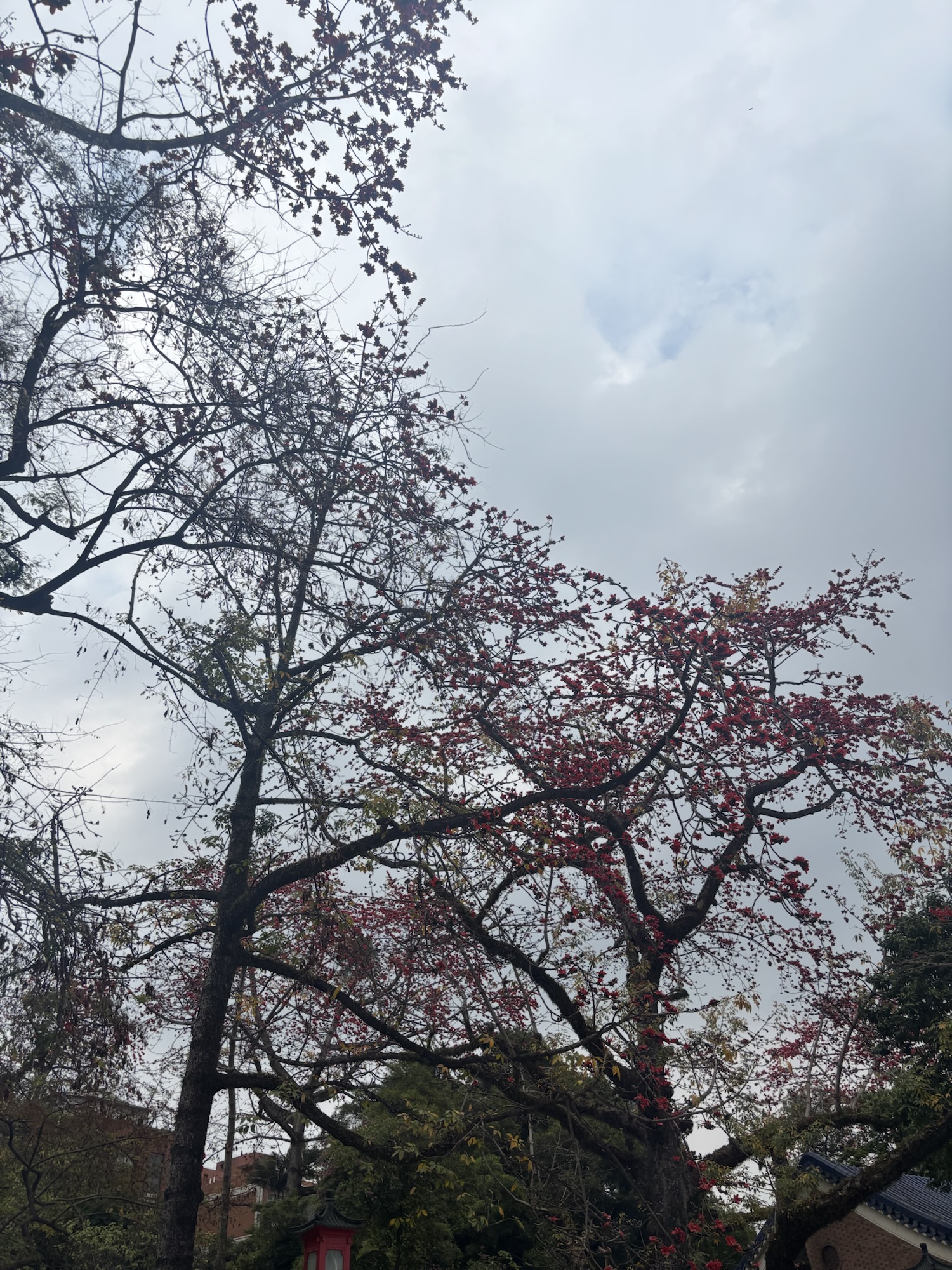
Because we were visiting China during Chinese New Year, we learned a good bit about it, certainly more than we previously knew. Much of it is focused on luck and ensuring luck in the coming year and warding off bad luck. One of the many things that will bring one good luck is being gifted something red (thank you small, Serbian child!), money, or gold.
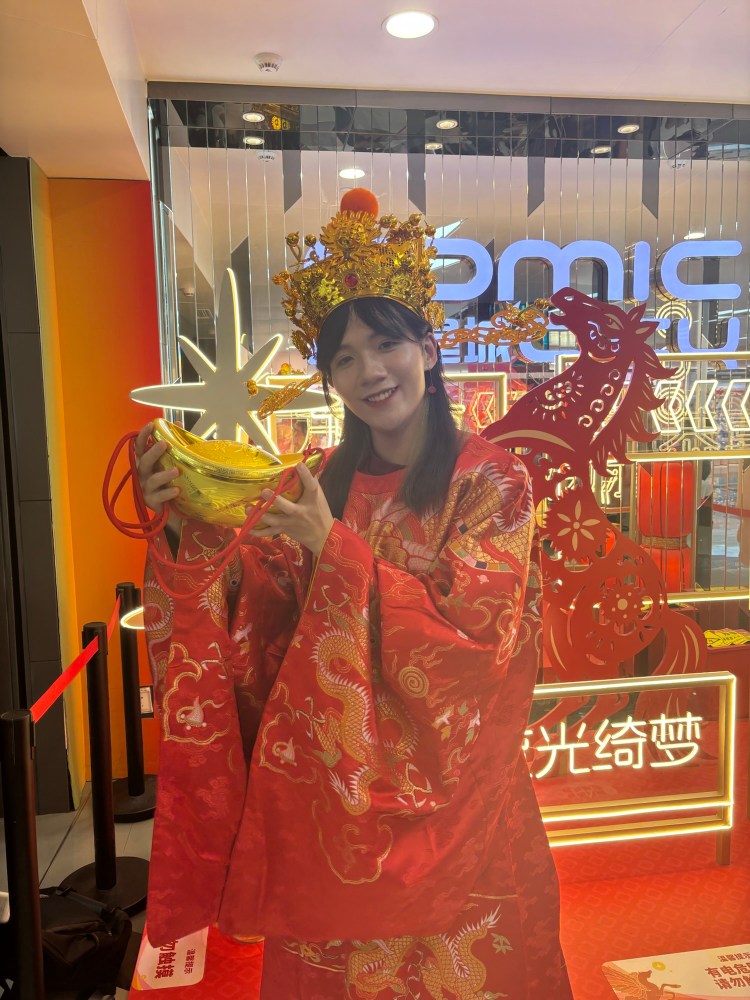
Luckily (wink) for me, this young fellow was dressed up for the new year and giving out “gold”(tasty chocolate, at least I got a little snack) coins when Tony took us to Comic city. I was improving my luck for 2026 already! Comic city is basically a big mall devoted to comic and animation culture. Many young people gather here on the weekends to dress up and have their makeup professionally done as their favorite characters. While the area was pretty busy, Tony told us it was nothing compared to the usual crowd. Many people were out of town visiting family for the holiday, he explained.
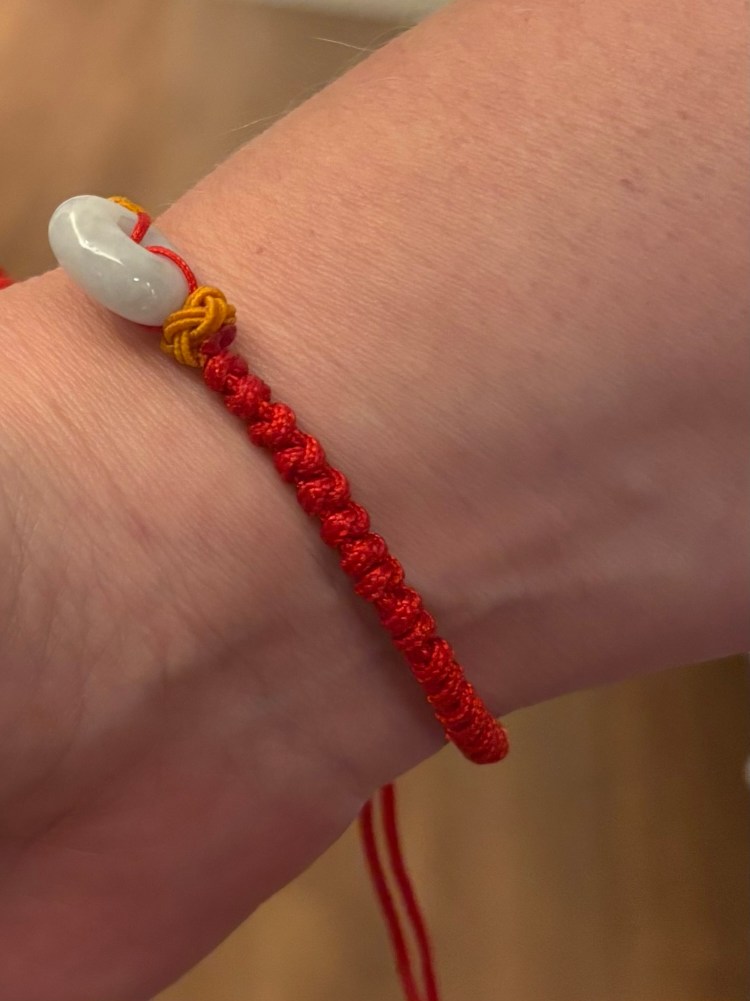
According to Chinese tradition, I need all the luck I can get this year. You see, 2026 is the year of the horse. I happened to have been born in a year of the horse. I thought surely this meant that my luck for the year is guaranteed. Apparently that is not the case. Because I was born in the year of the horse, I need to lay low as to not anger the Guardian God of the year. There are a few things I can do to help prevent bad luck, namely wearing red during the new year (preferably something gifted by a loved one) wearing a horse talisman, and building a shrine to the God in the southwest corner or my home. When we visited the Buddhist nunnery on our first day in Guangzhou, Phil bought me a small red bracelet, so hopefully that’ll do since I don’t have a home and really don’t have room in my bag to acquire any bulky new jewelry.
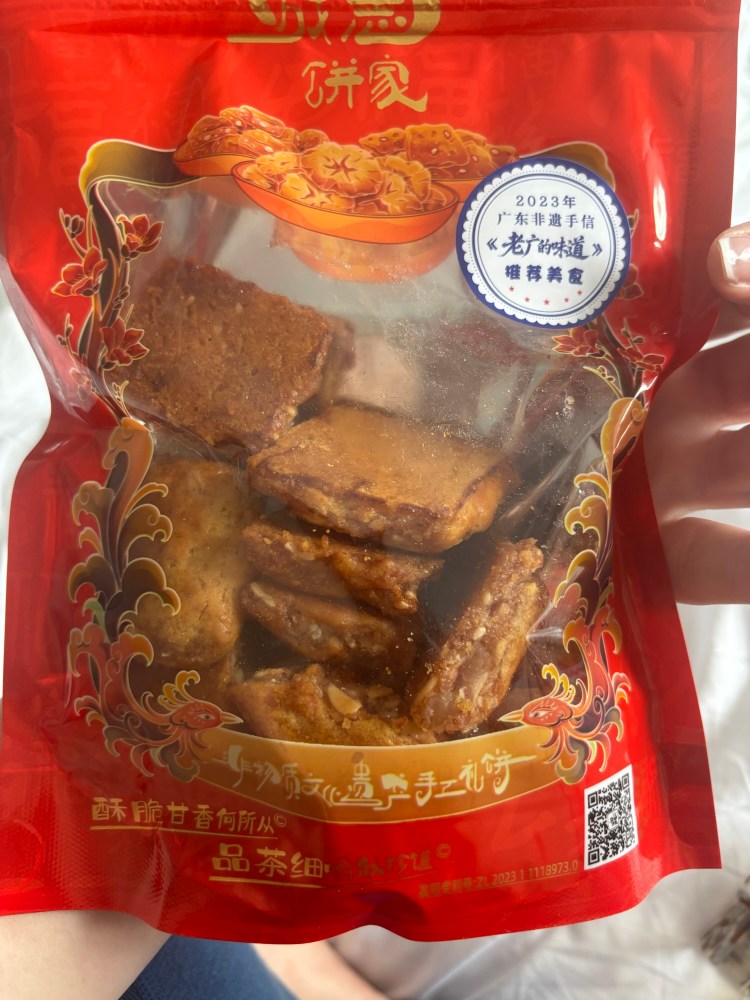
On the way to our next destination, we passed through a market and street vendors selling various food stuffs. Tony suggested we purchase some snacks, if we wanted to try some local specialties. I enthusiastically agreed, because I was very hungry and because I had so enjoyed the little New Year peanut pastries we’d had in Hong Kong.
The Kai Zai Paneng or “Little Chicken Biscuits” were very interesting indeed. Both sweet and savory, they do not contain any actual chicken or chicken flavoring…but, the first taste was a wild ride. They are a little greasy and have a sweet, sticky filling. They are also kind of funky and have a familiar savory taste that I couldn’t quite put my finger on, a bit like sweet soy sauce. I looked it up and they contain fermented bean curd. This is quite a common ingredient used in Cantonese cooking, hence the familiarity in flavor. I couldn’t decide if I really liked them or was just hungry. The taste they leave in the mouth is also quite long lasting, which I didn’t love. I ate a few more later during our time in Guangzhou, so obviously I didn’t hate them.
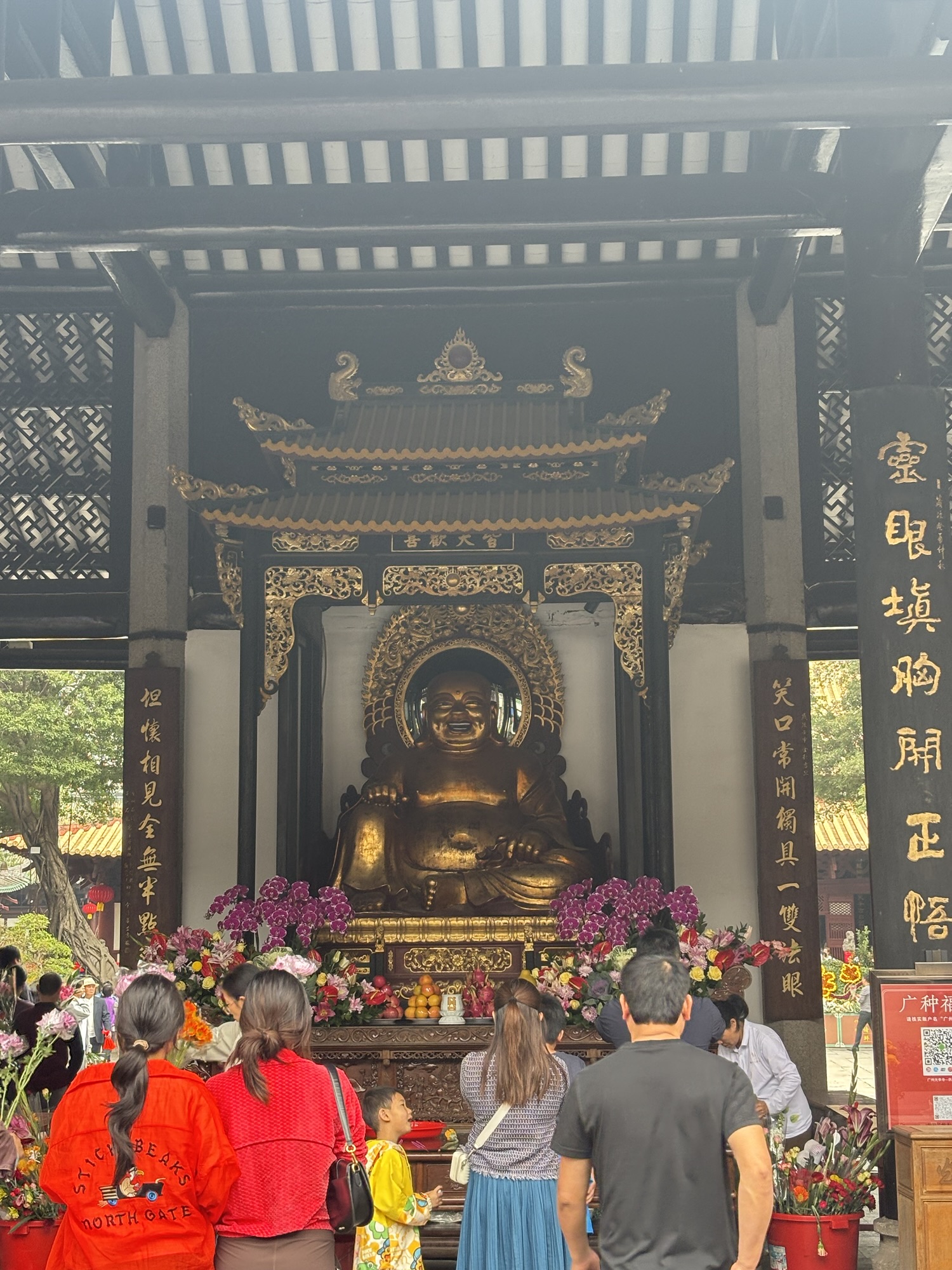
Our last stop for the day was at the Giant Buddha Temple, also known as the Dafo Temple, which was packed with people celebrating the New Year holiday.
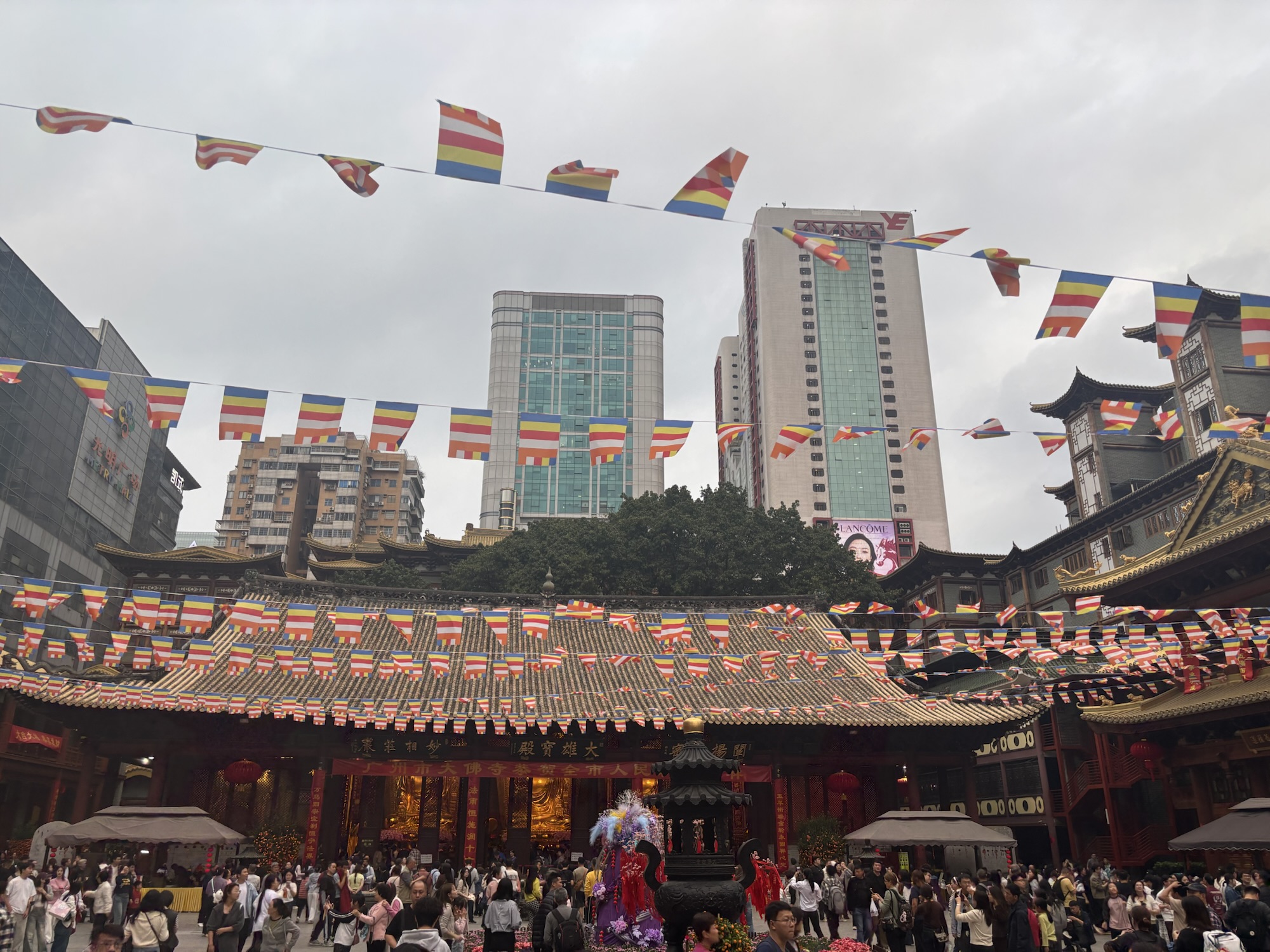
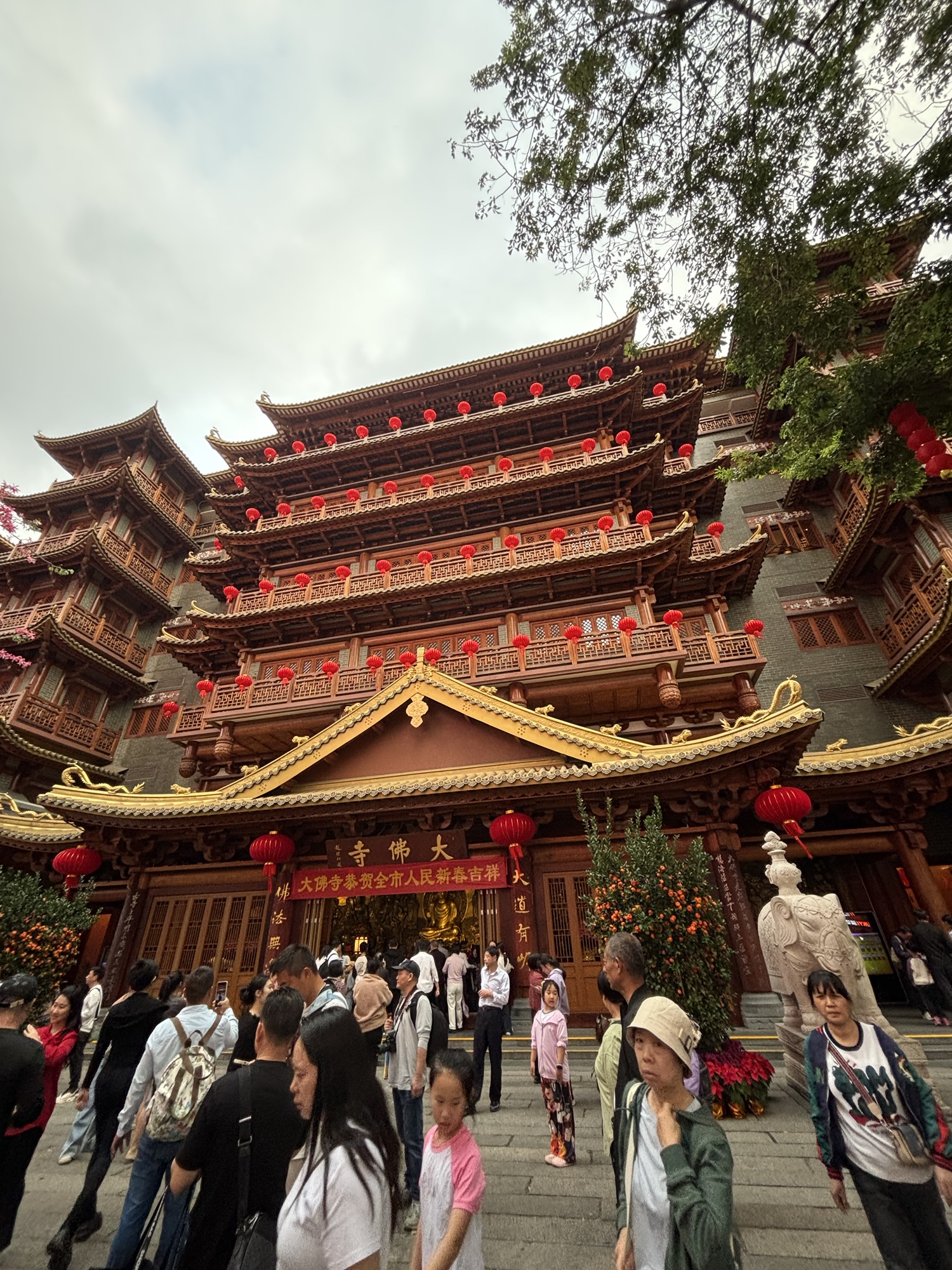
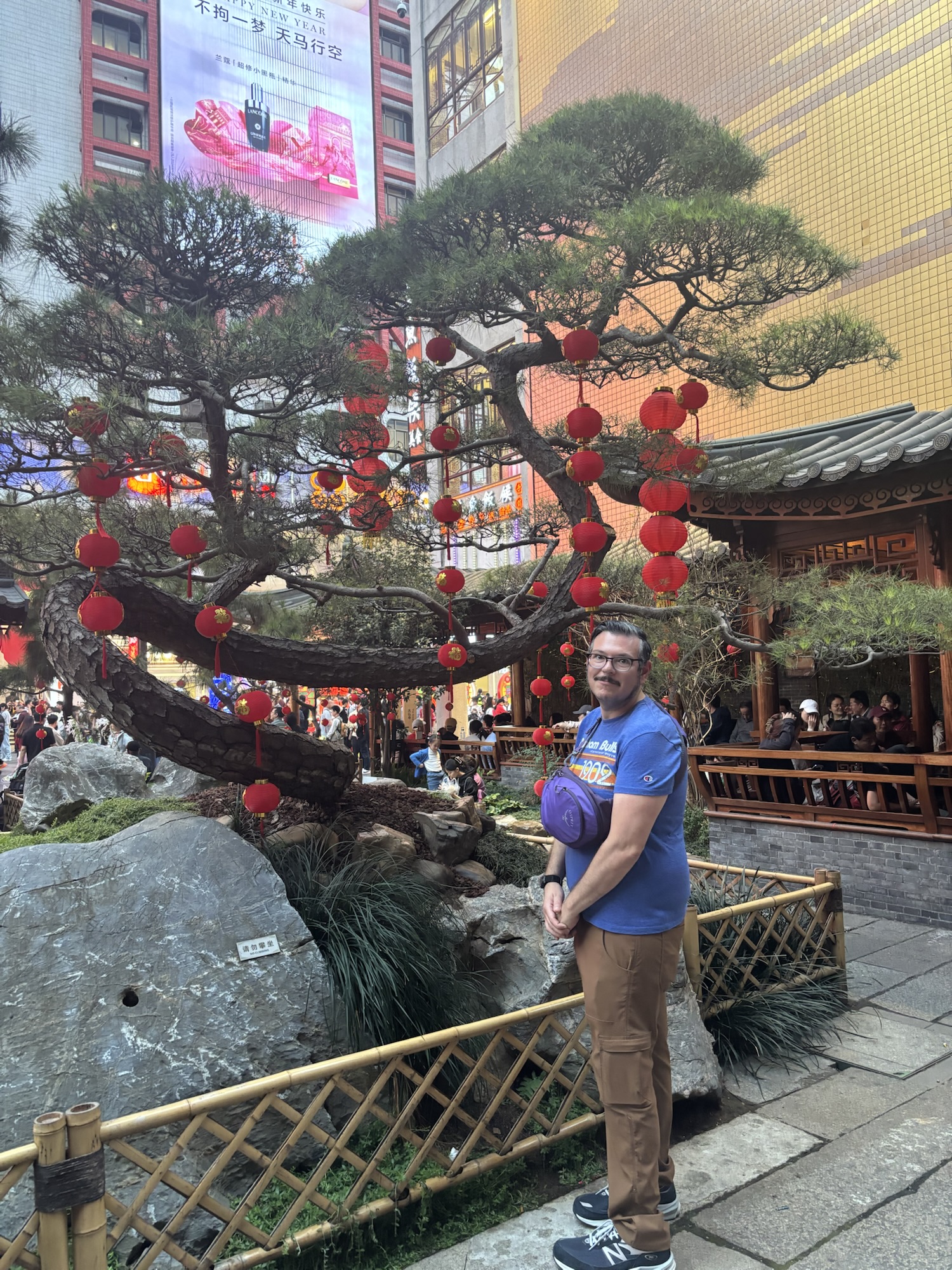
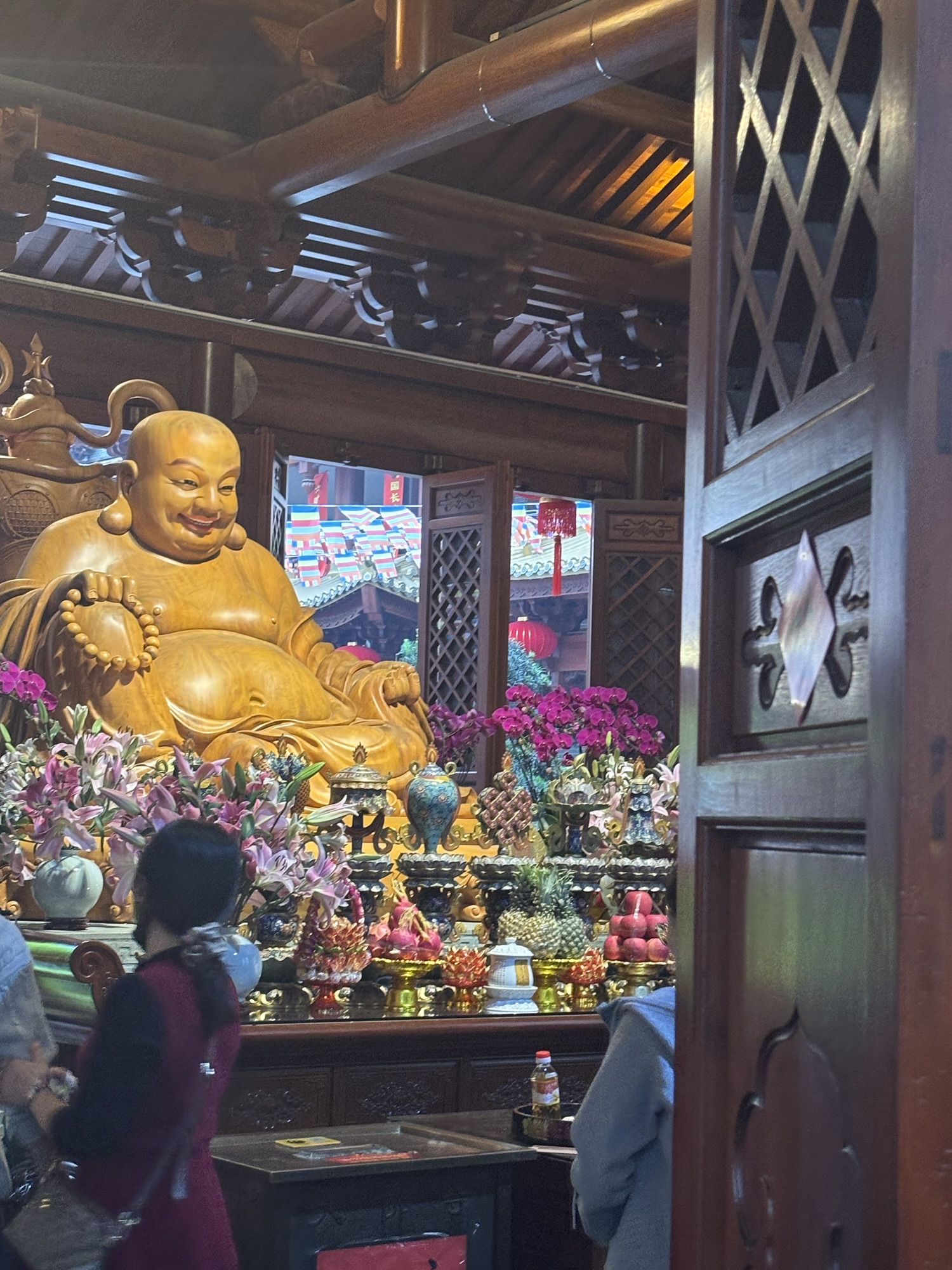
We learned that on the particular day we were visiting, it was a special day in the new year when people ask for blessings from the “Future Buddha” also sometimes called the laughing Buddha or Happy Buddha. This is the chubby Buddha statue you may be familiar with. Tony told us he is unique to China. Other Buddhist countries do not have the Buddha with the belly. He represents future joy and prosperity. Tony referred to him on this day as “The money Buddha”, which is why people seek his blessings for financial luck in the coming year and the line to see him was very long.
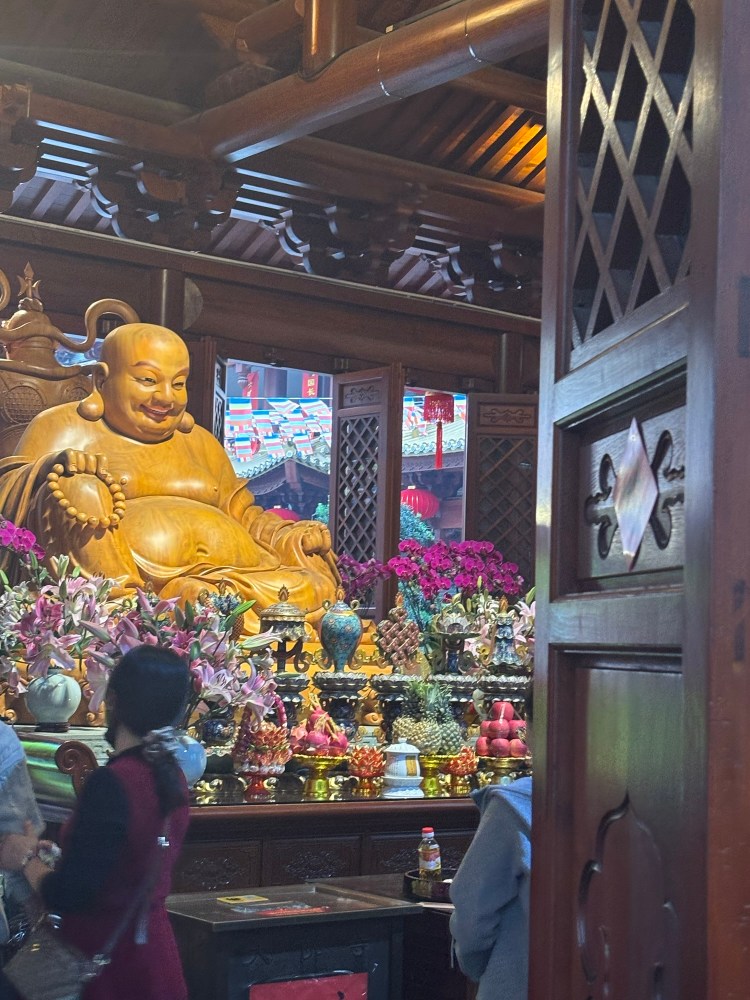
Notice the large earlobes on the future Buddha statue above. Tony told us that large, thick, fleshy earlobes symbolize food luck, wealth, and longevity in China and that often grandparents or parents will pull on their children’s earlobes when they are young in the hopes of making them larger.
Tired from our day of walking around the city, we grabbed a DiDi (China’s Uber) back to the hotel. We’d seen a dim sum restaurant next to the hotel and decided that would be an easy and tasty dinner. We headed up the stairs and were quickly seated.
Dim Sum menus work kind of like sushi menus in that they have the names of the items and next to it, you write how many orders of the item you’d like. It took us some time to figure it out since we have to translate the menu, which isn’t always exact and leads to some funny guessing “old pigeon milk soup” was one I wasn’t interested in gambling on. The menu is below.
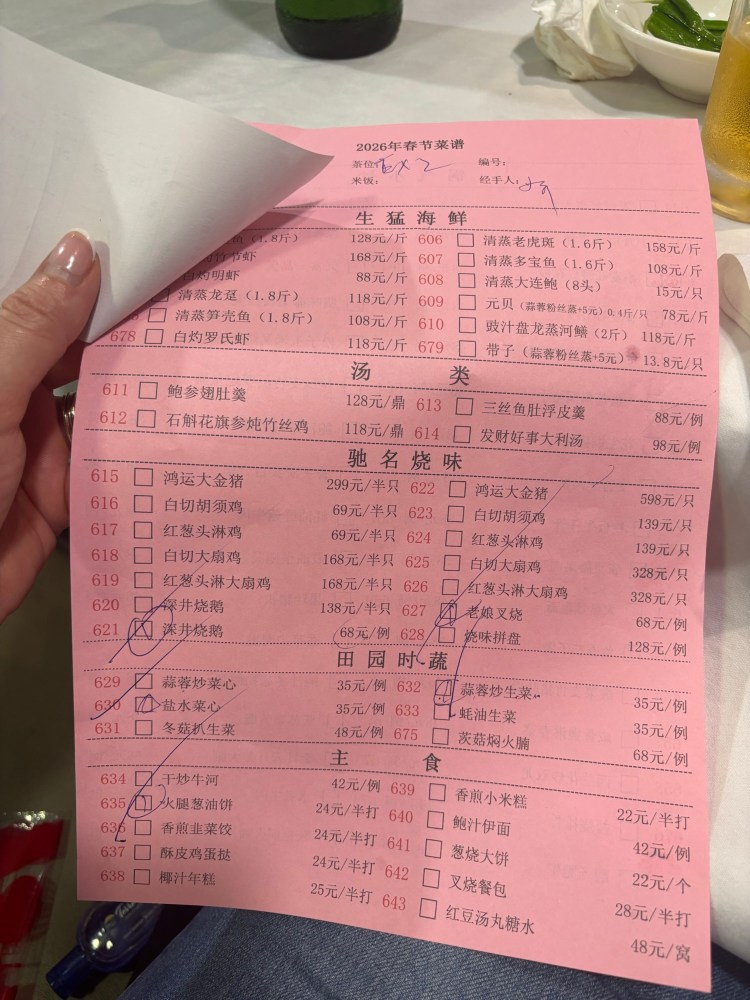
After selecting a few items we felt confident in, we waited for our food to arrive and discovered that we once again ordered way too much food. They bring it out as it is ready, and, as the plates and baskets piled up, I looked at the waitress as if to say, “holy moly, how can we eat all this?” she gave a knowing look in response that seemed to say, “uh, yeah, that’s a lot”. We once again decided that we must ask next time, when ordering, if we were getting too much food for two people. However, the meal was delicious and we were very satisfied with our feast.
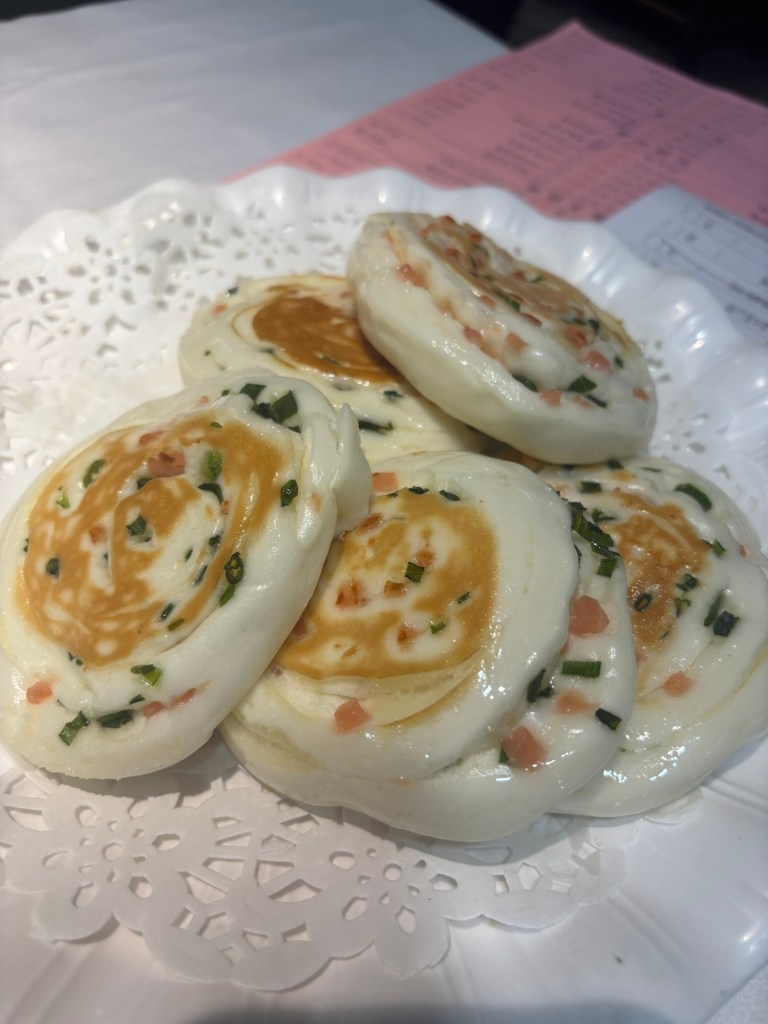
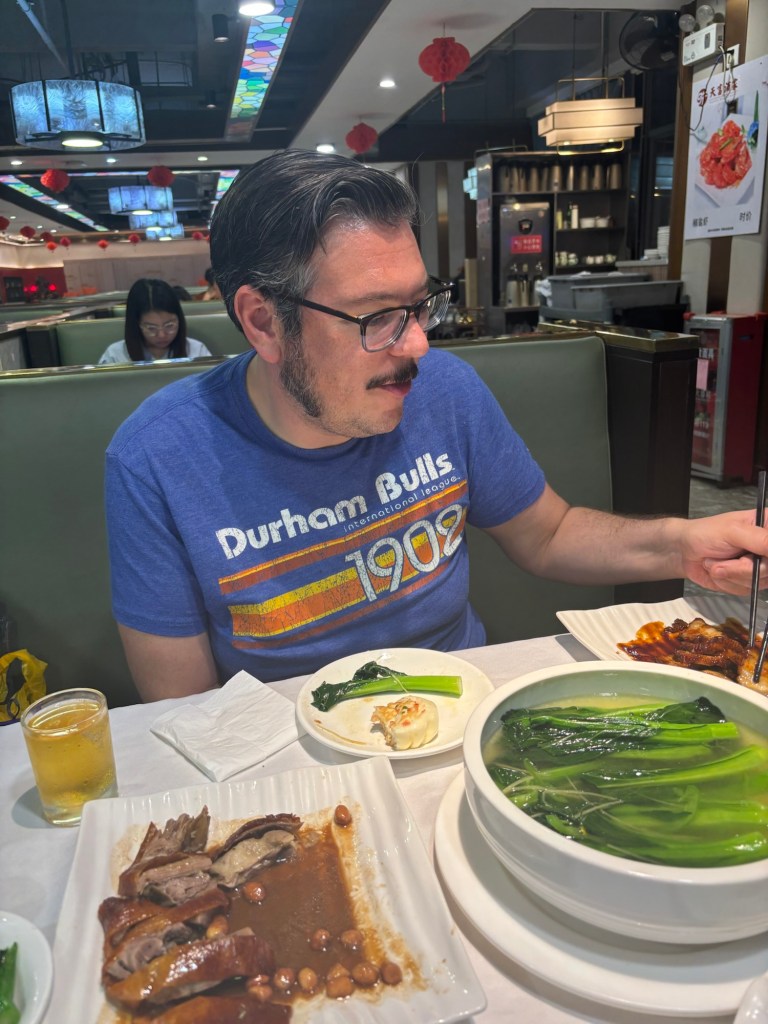
We enjoyed the same duck and pork dishes we had at the previous dim sum restaurant we enjoyed in Guangzhou (see part 1). In addition we had some cabbage, and boiled lettuce (not sure what we thought we’d be getting but it wasn’t that) and some ham and scallion pancakes that were super good.
Of course we washed it down with a beer. Funny thing about the beer in China, most of it in restaurants and stores is anywhere from 2.5-3.2% ABV, as opposed to common 5.0 ABV in the states (you can find higher ABV offerings in pubs or bars). It can still be quite refreshing, especially with spicy foods. The low ABV makes it relatively low calorie (so healthy) and I much prefer it to the warm water or tea that is often served with meals in China. Warm or hot water is served because according to Traditional Chinese Medicine, it promotes digestion and balances the body’s yang energy.
We had a great day and saw so much of Guanzhou. Tony was a great guide and taught us a lot, not only about his city, but about Chinese culture and customers in general. The most interesting part of traveling to other countries is learning about the culture. What better way than to have a local teach you a bit?
More to come about our journey through China!
 Jess Barrington Travels
Those ham and scallion pancakes look delicious!
LikeLike