
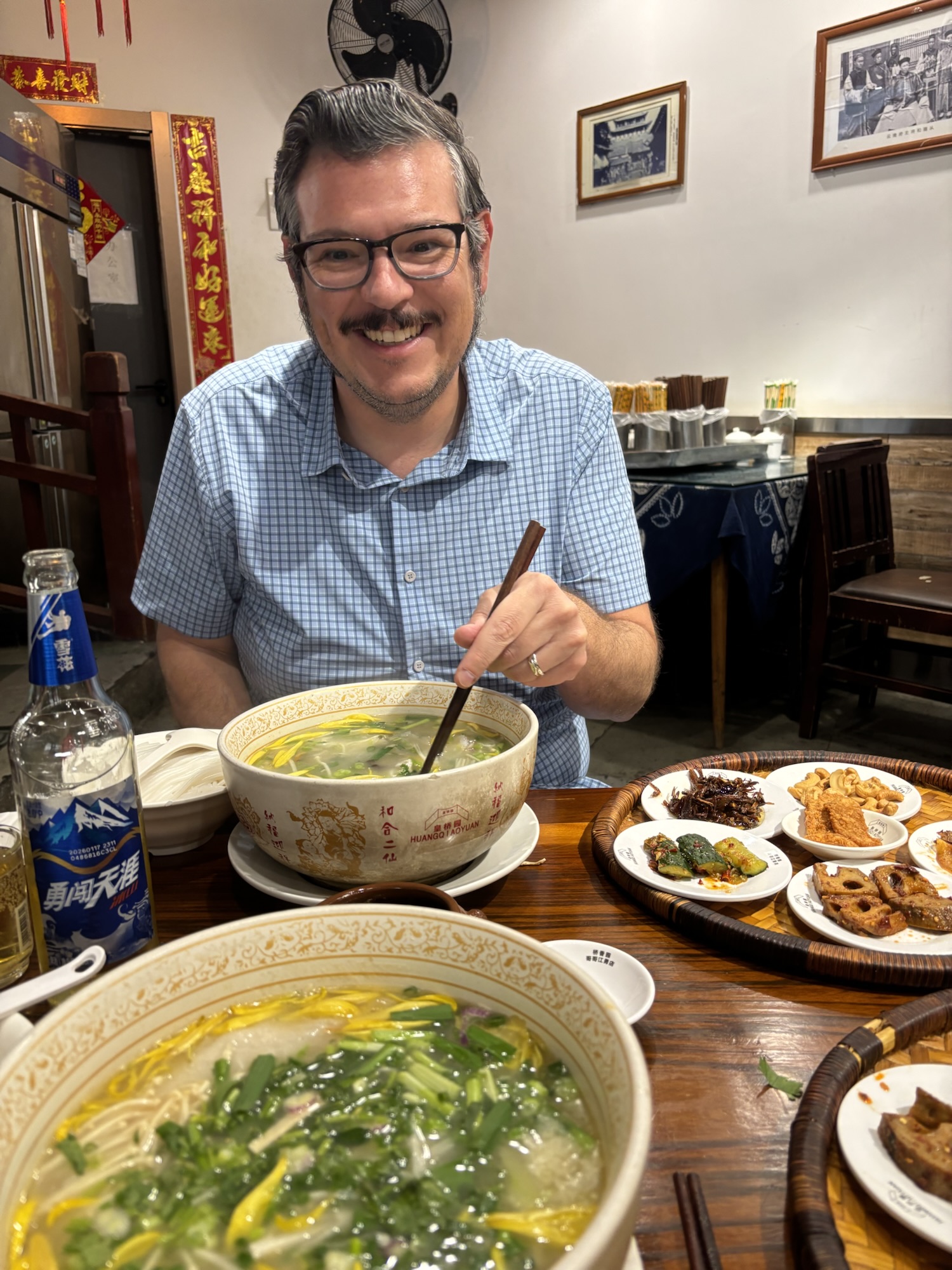
Eating Chinese food everyday has been an adjustment for our system. We haven’t had any G.I. upset, but the food has high levels of sodium, MSG, and soy. It also tends to have a lot of oil in it and is often spicy.
Phil and I have had a lot headaches since being in China and I feel it’s likely the food additives, spices, and ingredients, simply because we aren’t used to them. If an ibuprofen doesn’t do the trick, a benadryl usually does. After having been here for about a month, the headaches have become more infrequent as our systems have adjusted to the food and environment (there is also a LOT of cigarette smoke in the air, but that is for another post).
Spice
Restaurants will usually ask you about your spice tolerance if something is super spicy, but it’s best to assume a base level of spicy in most things. We have had many many spicy meals since arriving. We have a decently high spice tolerance, but if asked, we will say, “not too spicy”.
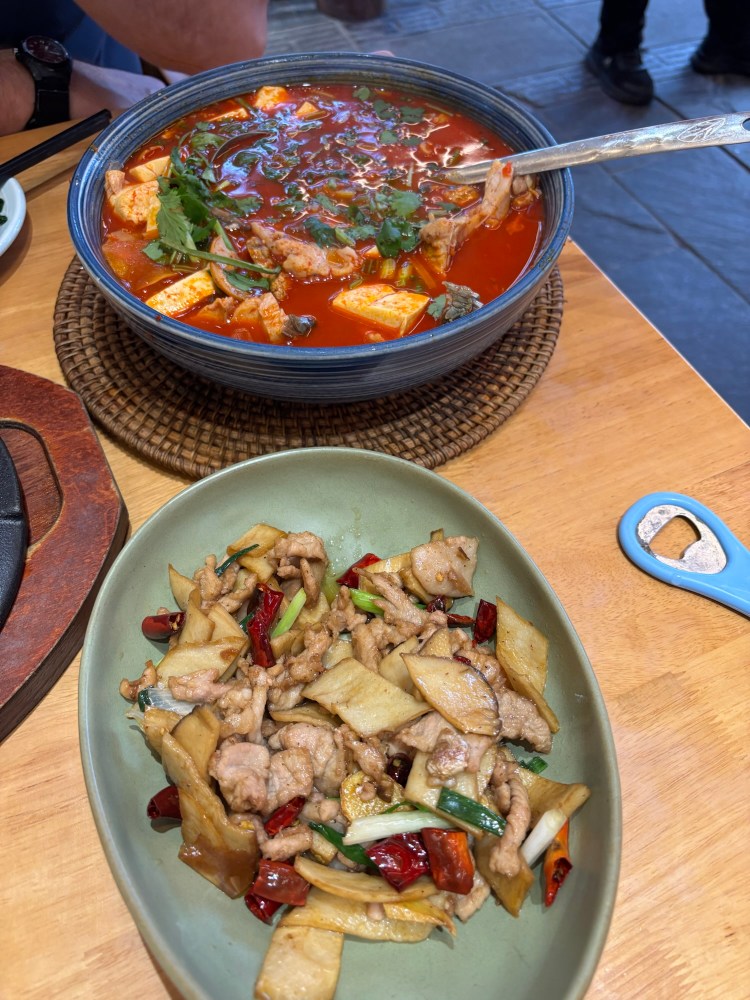
Red, tien tsin peppers are very common and have a lot of heat (see the red bits in the photo below). We’re cool with them being in a dish, but generally try to avoid eating them directly, and just leave them in the bowl or platter. If you are someone who thinks black pepper is too spicy, you will want to have a conversation with the waitstaff before ordering.
Food allergies and sensitivities
I have skin issues that soy (and certain beers and really spicy food. Oh, shush, no one asked!) can flare. The occasional sushi or Chinese night in the states doesn’t usually bother it, but eating some sort of soy pretty much daily has caused it to flare up. I have accepted that I’m gonna be a little red and flaky during the time we’re here.
If one has a true food allergy such as gluten or peanut, China may not be for you. While not impossible to order gluten free items, many wheat-based soy sauce and thickeners are used in traditional cooking. My guess is that in major cities, in high end restaurants and hotels, one could likely find gluten free options. This has not been the case in South and Southwestern China.
Chinese food is often cooked in peanut oil and/or contains sesame oil. Even if one specifically asks for food to be prepared in a different oil type, the likelihood of peanut or nut cross contamination in the kitchen is still very high.
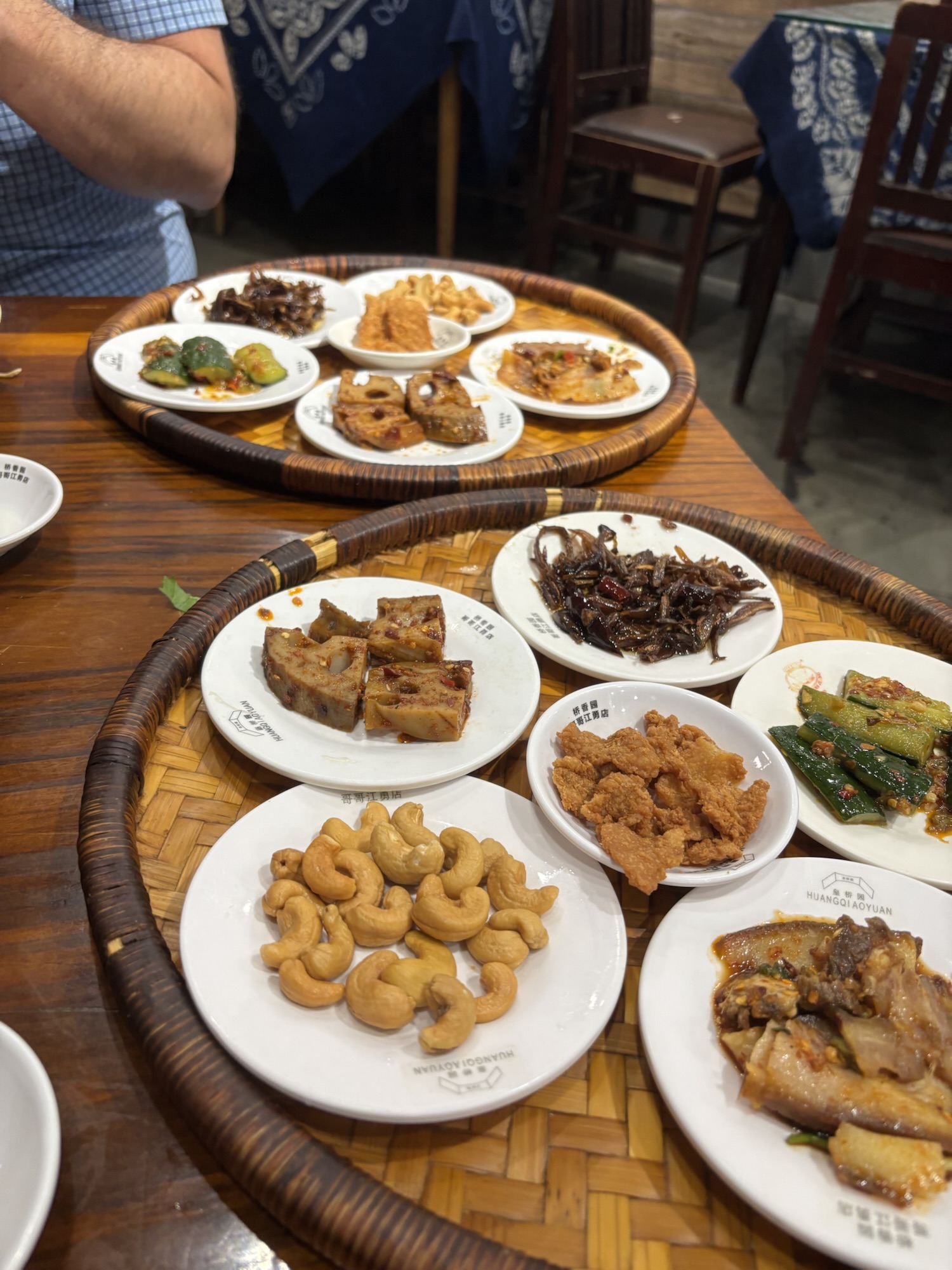
Vegetarians, be cautious. While we have eaten a ton of really great veggie dishes (see the delicious veg and tofu dishes below) in China, they are often prepared with a bit of meat for flavor, or may be cooked in lard. Eating vegetarian would not be as difficult as avoiding gluten or nut oils, in my opinion, but it would certainly require having conversations with the restaurant before you order to ensure a pure veggie dish. A lot of traditional pastries are baked with lard instead of butter or oil, so one would need to inquire at bakeries too.
You’re going to get some bone shards
When eating pretty much any meat, it’s going to be on the bone or the dish will have bones in it. Even chicken that looks like a boneless chunk needs to be bitten into with caution. I often ask Phil what cuts of chicken he thinks we’re eating. It seems like all knuckles and knees, basically because it is so bony. It takes a lot of work to get what you want because they are small chunks. To up the difficulty, try doing that while using chop sticks.
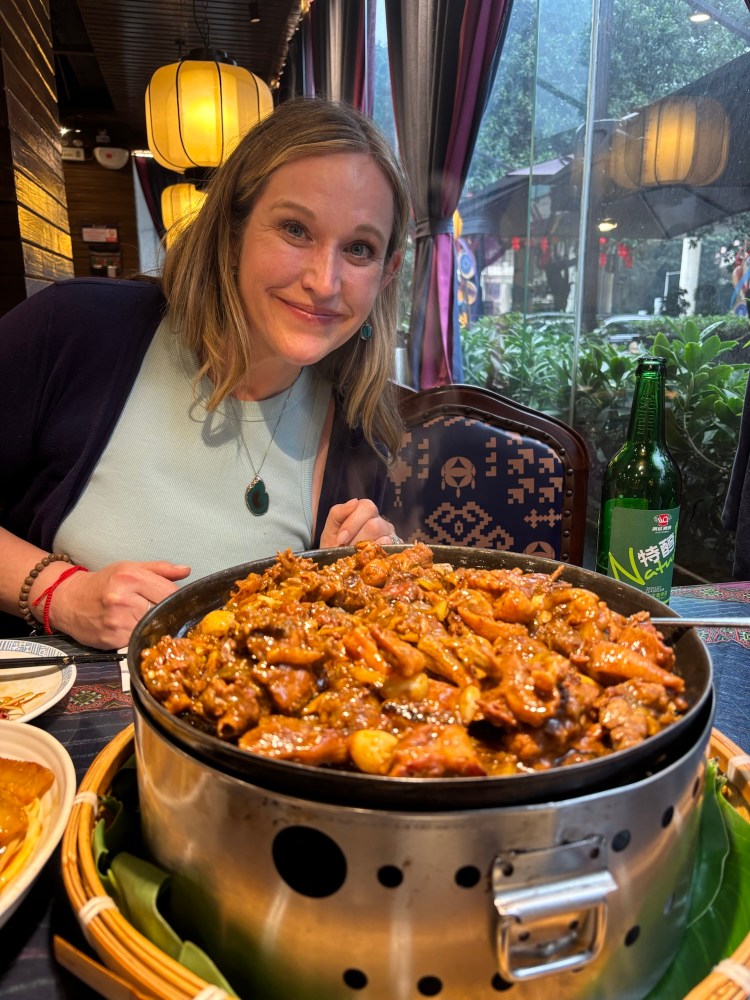
Let me paint you a picture: you bite into a chunk and are able to get some meat off (sometimes its all bone) and then you have to remove the bone from your mouth with your chopsticks and put it on your plate. So slippery. While we are getting pretty good with our chopsticks, some things still feel awkward.
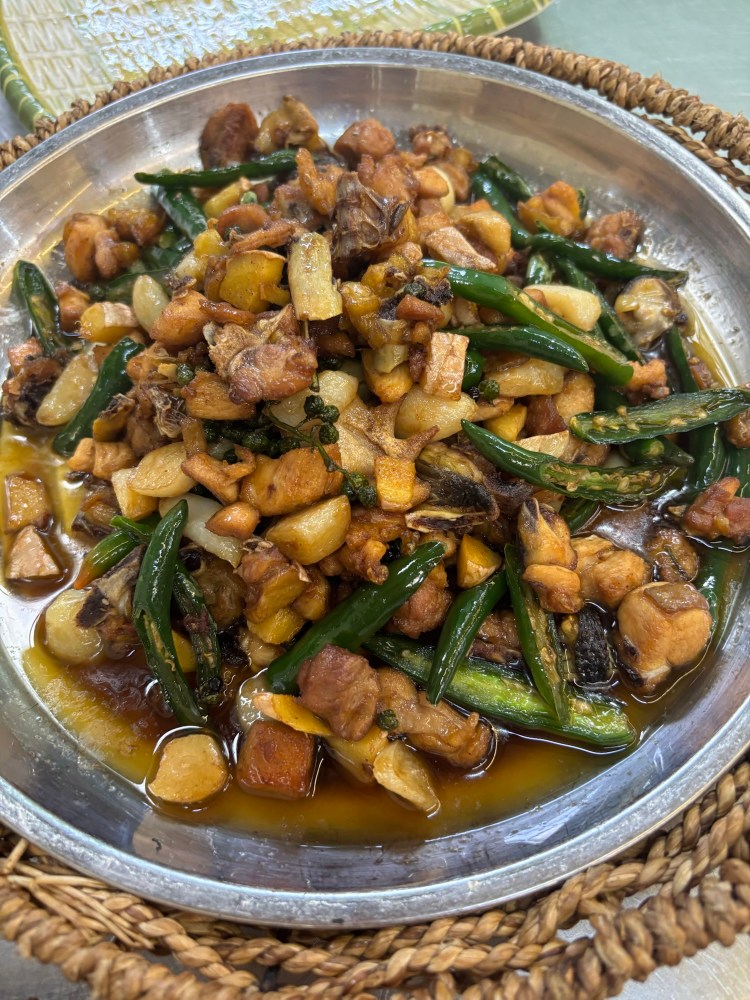
The Chinese are not big on using hands when eating. In fact, when we have ordered a burger or pastry, we are given plastic gloves to wear so we do not actually touch the food with our hands. So, as much as I would love to get my hands on those bony meat chunks and go to town, I want to respect customs as much as possible and not gross out the other diners by touching the food.
When ordering a fish dish, you will certainly get a whole fish, bones, head and eyeballs. The tiny fish bones are the hardest to navigate. You are definitely going to swallow a few, sometimes knowingly and other times not.
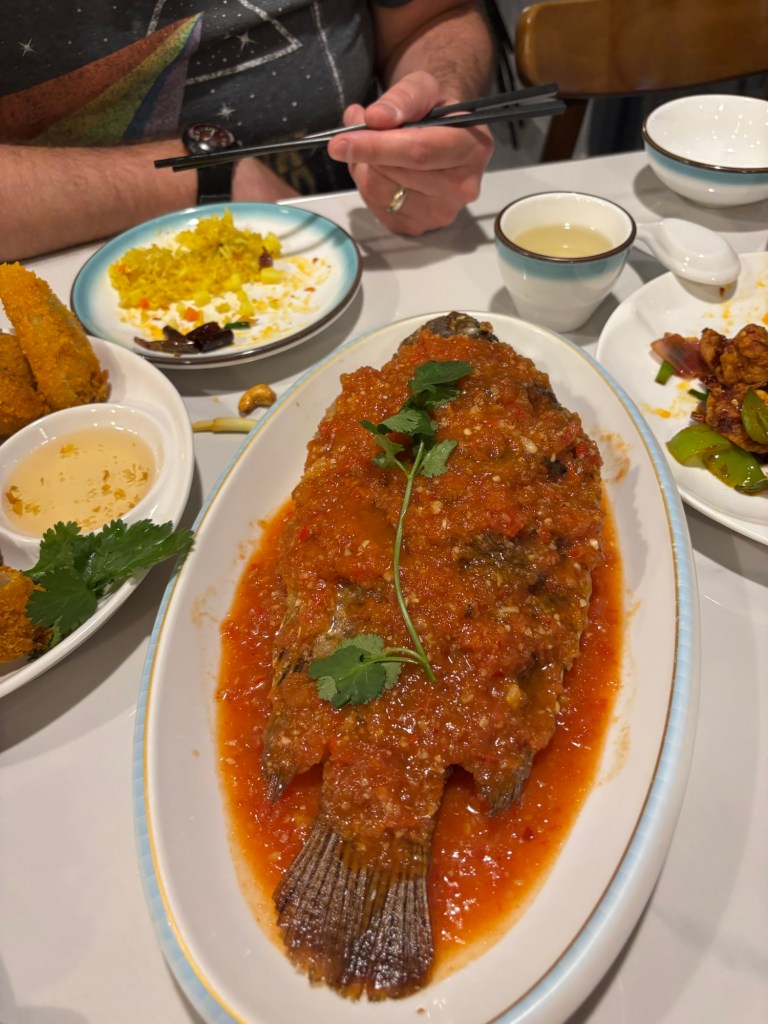
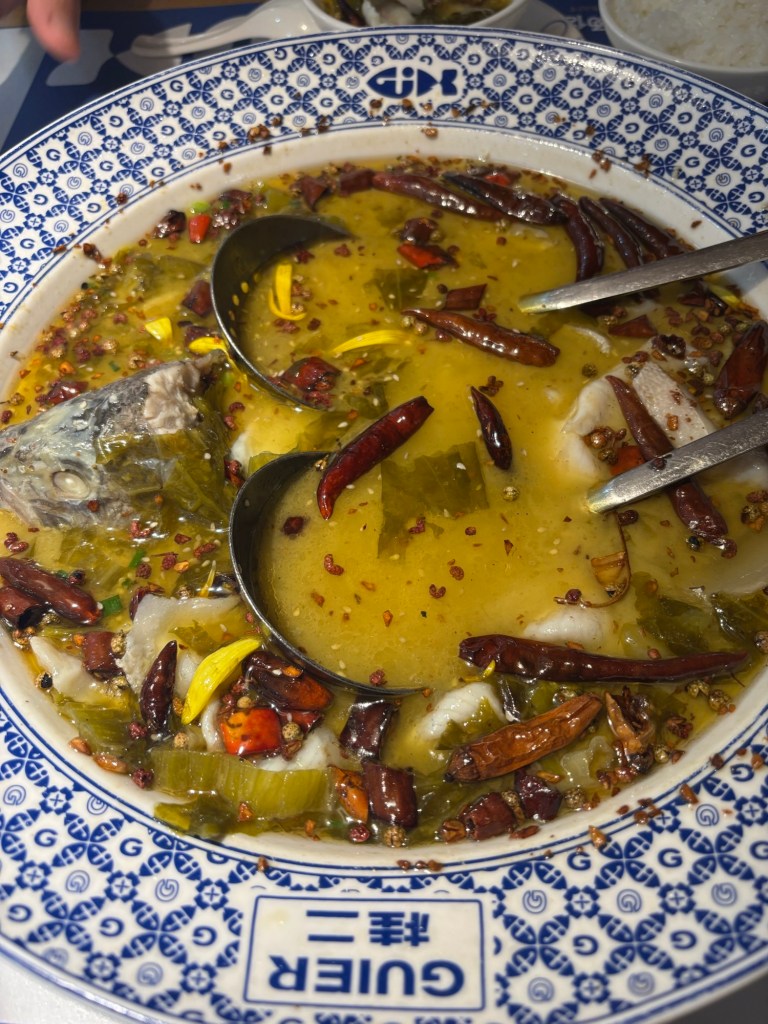
You’re going to eat some creatures
While we were traveling in Zhanjiang, we went to a local food court one night (Phil writes about it in this post). We chose a spot that was fairly busy but had open seats. There were many accolades hanging on the wall of the restaurant and they specialized in seafood stews from what we could ascertain.
We perused the menu, and decided that since we were so close to the coast and they seemed to specialize in seafood, we had to get something with fish. The translator app was lacking a bit, but we decided against the frog medley dish and went with one containing a mix of fish. What we received was very interesting indeed.
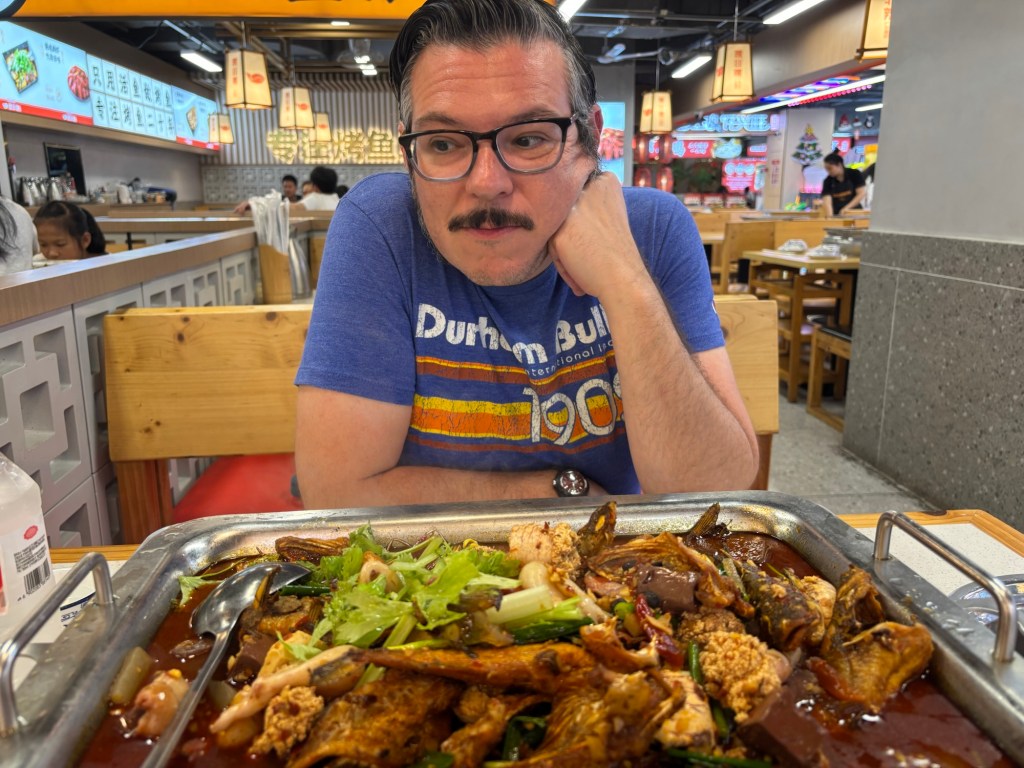
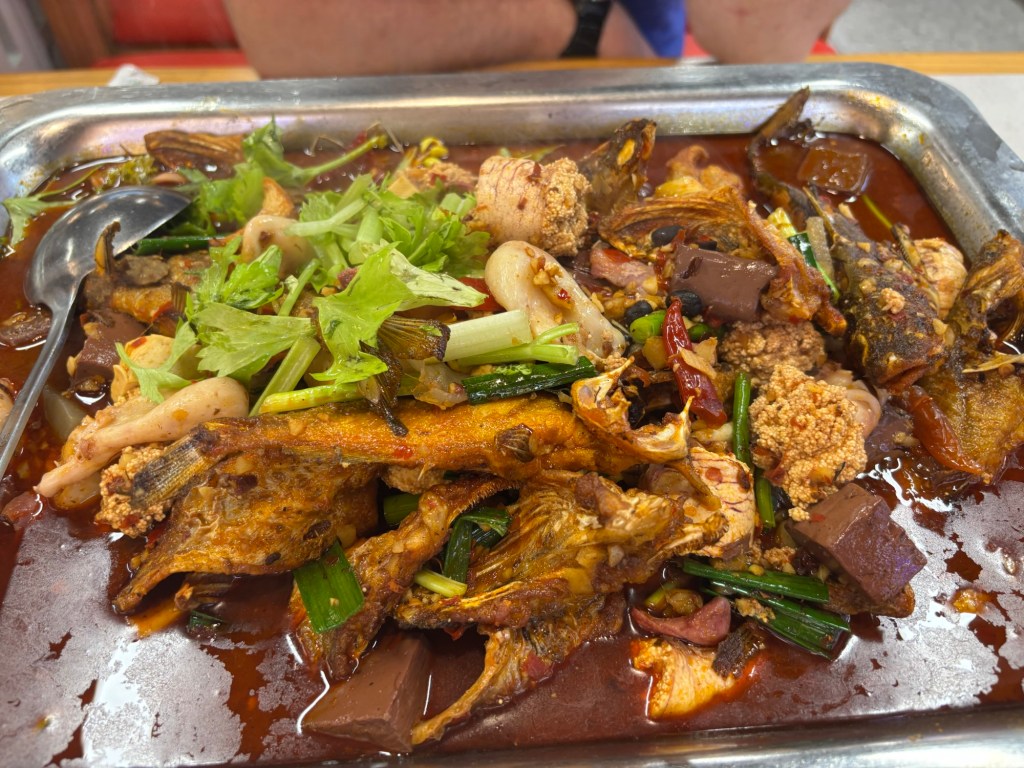
Phil’s face in the photo above really says it all. The broth was very good, gingery and a little spicy.There were several, whole fish and the rest was a real mystery full of various textures. There were some gelatinous cubes, some small rubbery things (frog faces? I don’t want to know) and larger rubbery things (also frog faces?!) and lots of bones (like a random fish jaw I think).There were white chunks that looked like sausages but I am certain they were not.
Nothing tasted particularly bad, thankfully the broth really shined through. We fancy ourselves adventurous eaters as far as being willing to try new things. This dish, whatever the hell it was, was not a winner in our book. We both ended up having crazy dreams and nightmares that night and we joked that it was the ghosts of whatever creatures we’d consumed.
Not being able to speak or read the language, and relying solely on photos and translator apps means that you may end up getting something unexpected. 90% of the time, even if it is unexpected, it’s a happy surprise. Other times, well, it can be a mixed bag (of fishy bits).
Watch out for durian
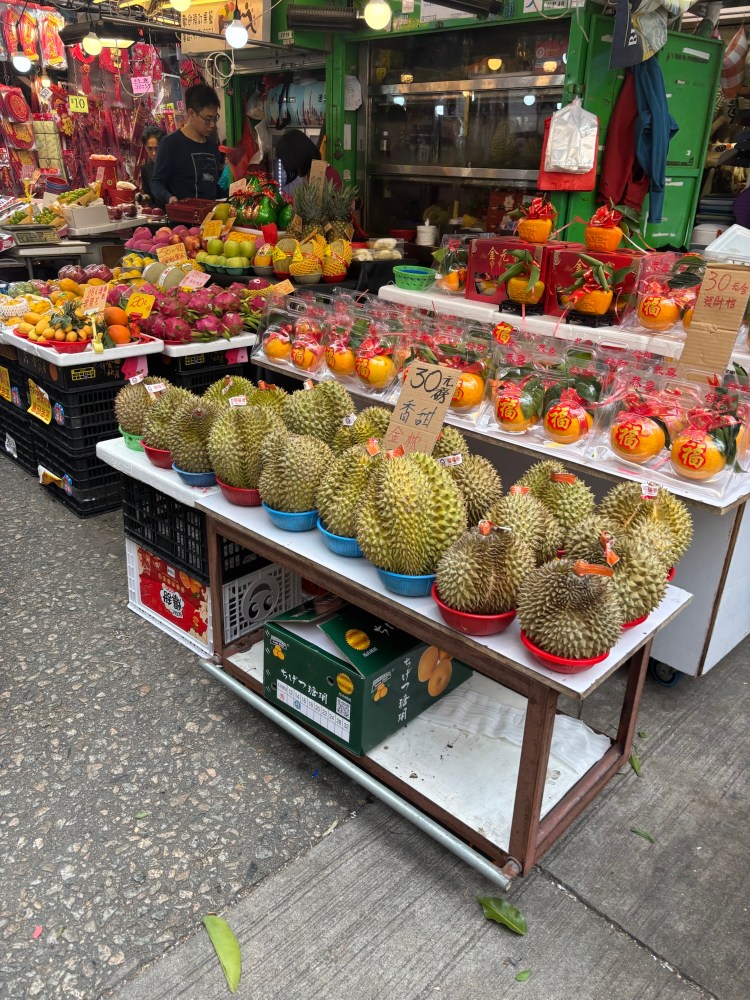
Durian is the famous stinky fruit that is banned in many public places due to it’s unique and very fragrant smell (I mentioned durian in a previous post). The taste, similar to it’s smell, is a real love it or hate it situation. You may love it. If so, you’re in luck because they sell it everywhere. It also comes as a flavor in ice cream bars, pastries, and smoothie drinks for those who may just want to dip a toe without going full on stanky durian bite in their first go.
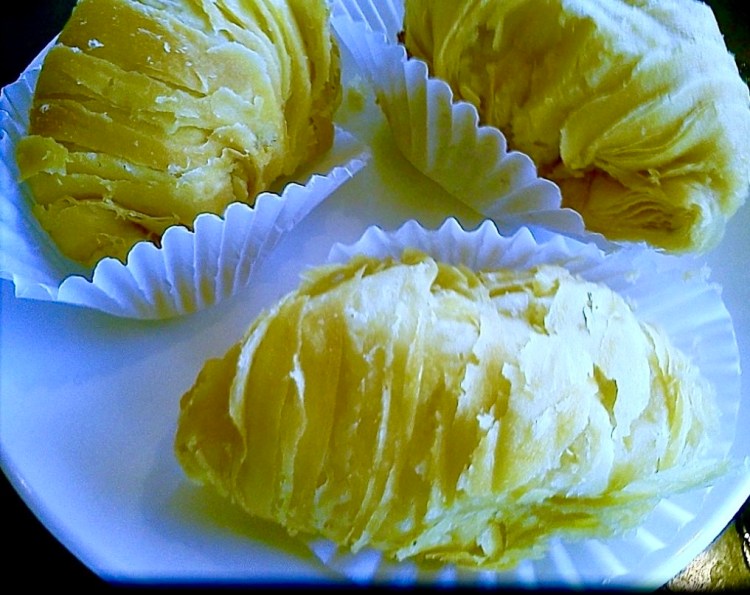
One morning at breakfast (also in Zhanjiang, oddly), I eyed a tasty looking, flaky pastry and decided to pair it with my coffee as a lil breakfast dessert. The photo below is not the actual pastry but looks very much like the one I had. As I bit into it, I knew immediately that the filling was durian. I looked at Phil and said, “It’s durian” and his eyebrows flew up. I continued to chew, not loving it, but not hating it so much I needed to spit it out. Plus, I’d said I was curious about it and this was my chance to experience it. I finished the bite and swallowed. I did not go back for more, satisfied with one taste, and that taste lingered and lingered, well past the time we returned to our hotel room. The closest I can come to describing it is to say that it tasted like natural gas smells.
On the bright side
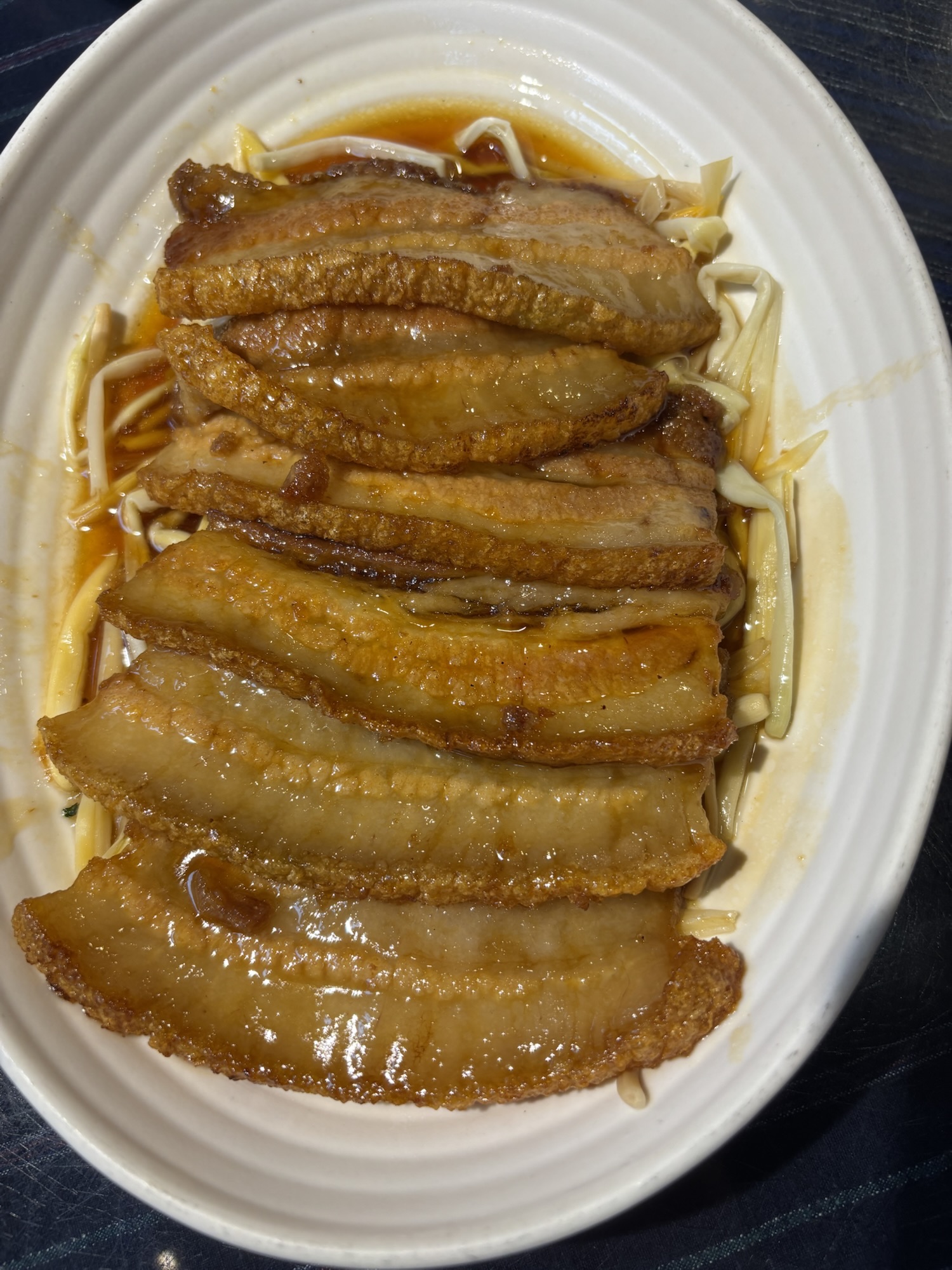
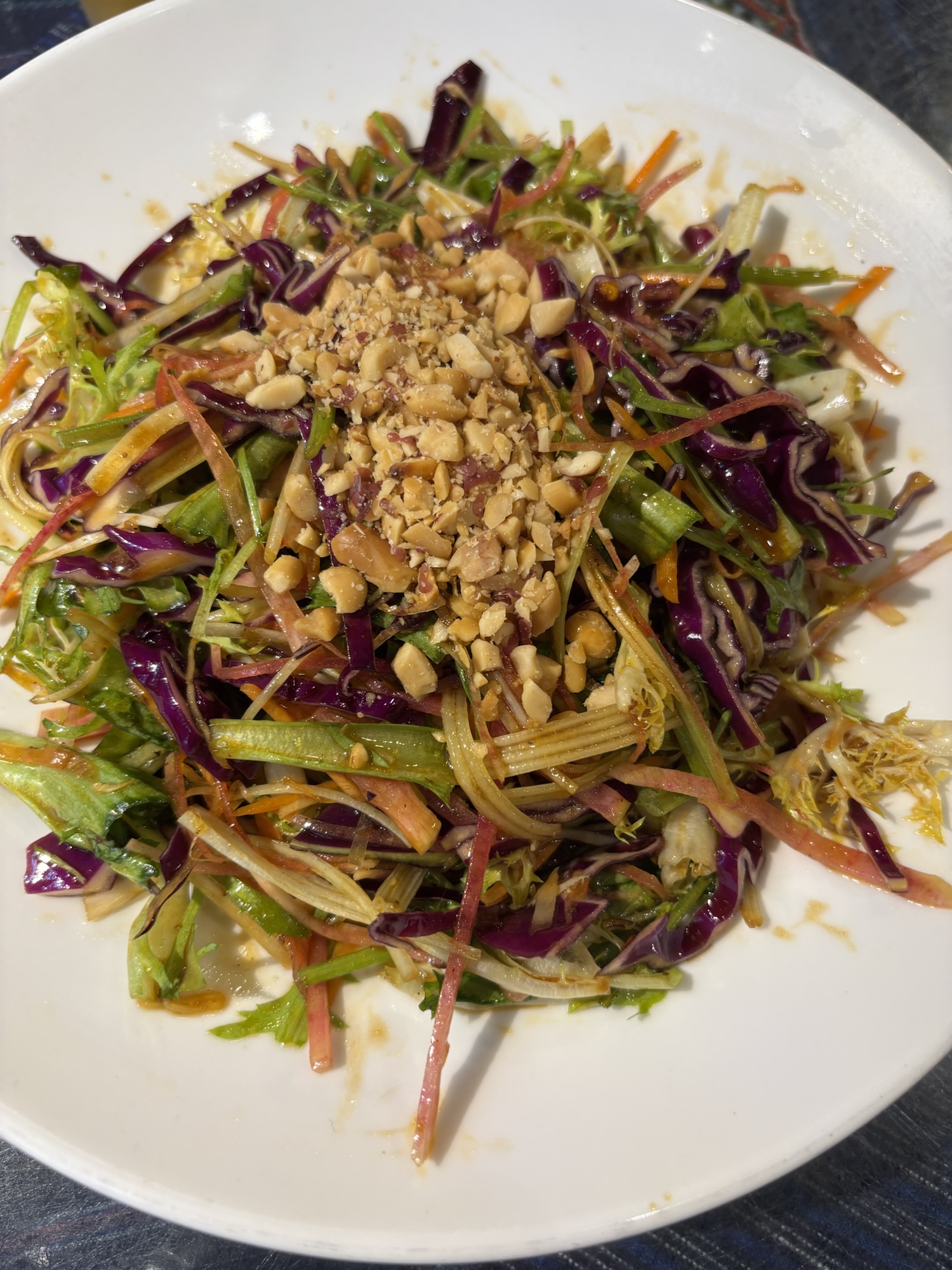
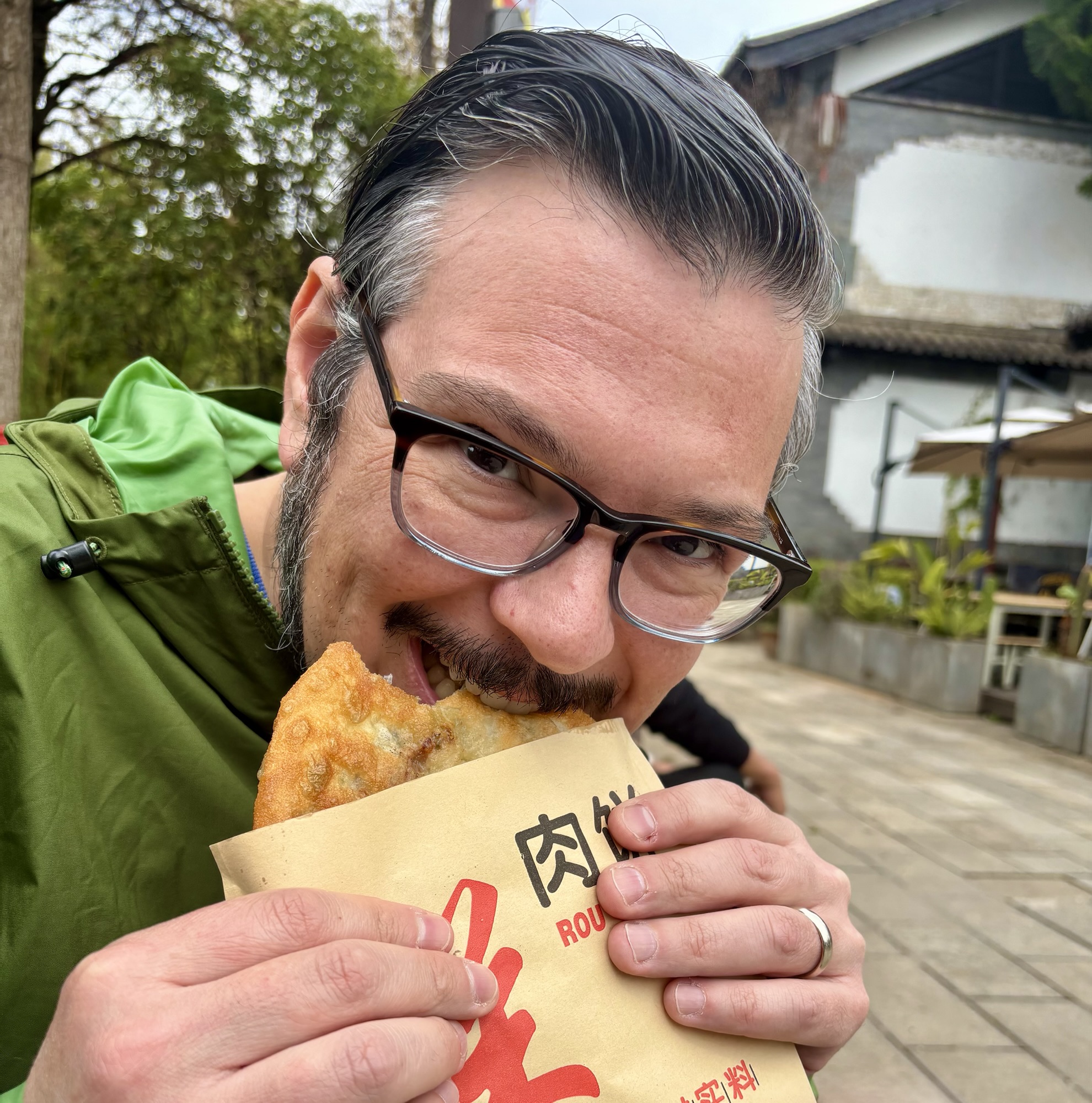
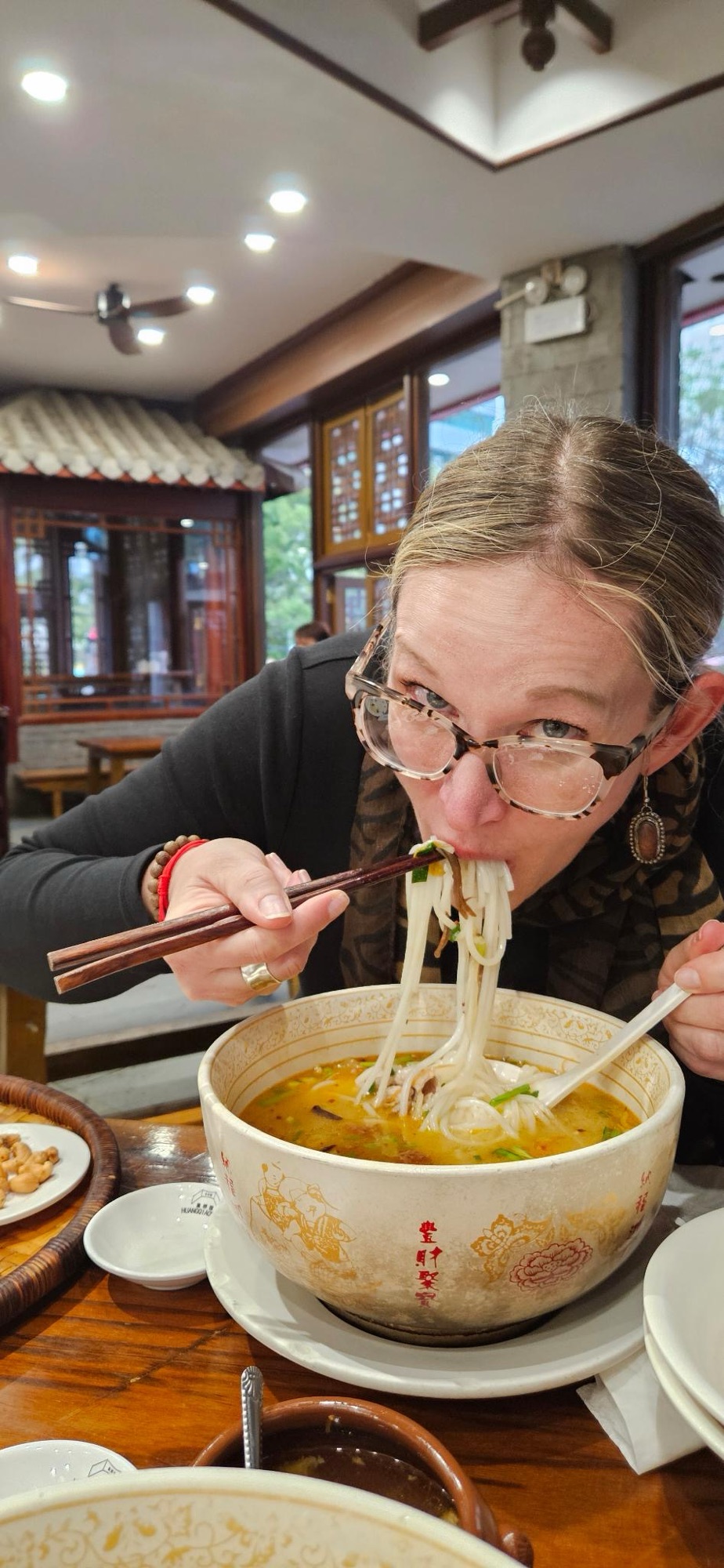
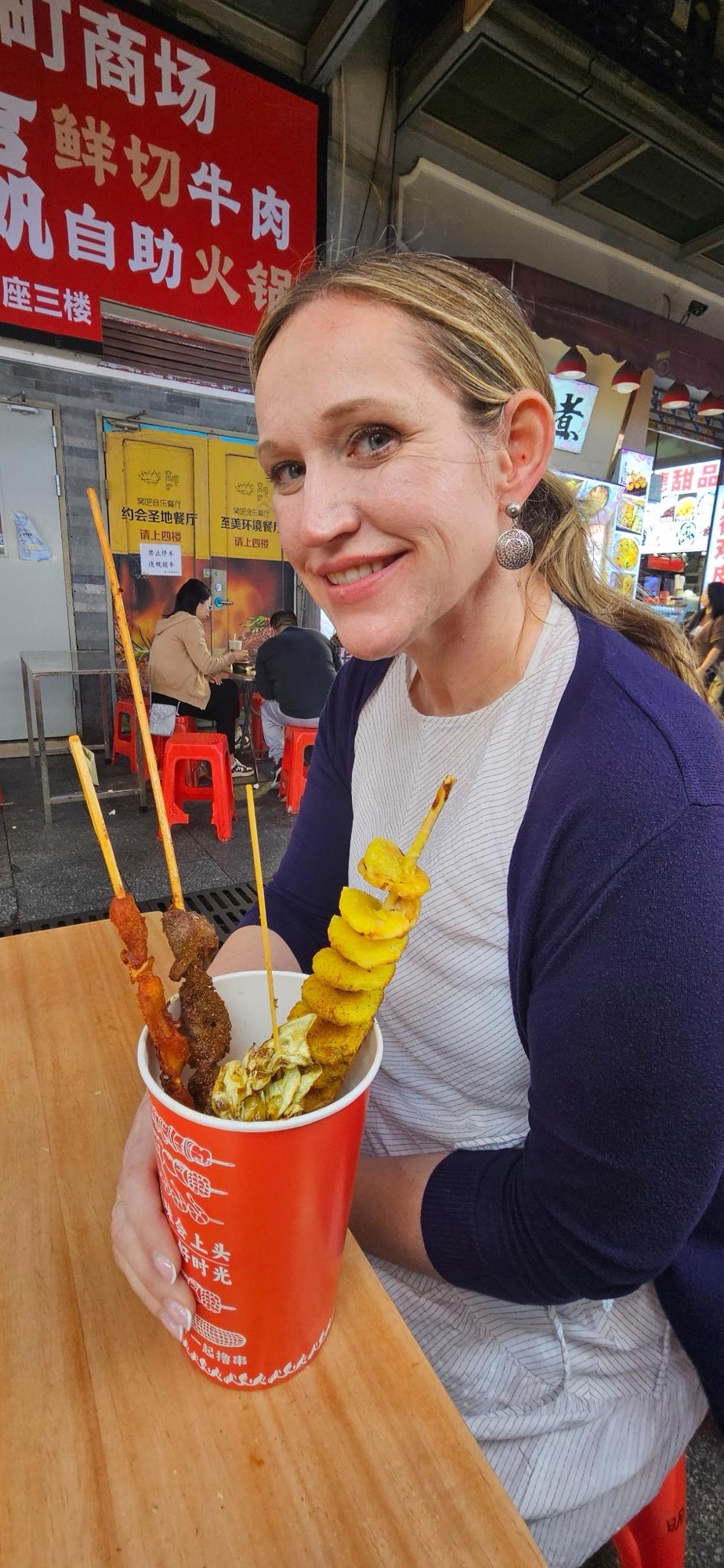
While we have encountered some interesting foods during our time in China, almost everything has been good. Tasty to delicious, street foods to nicer restaurants. The ingredients are fresh and you can taste the love.
In Conclusion
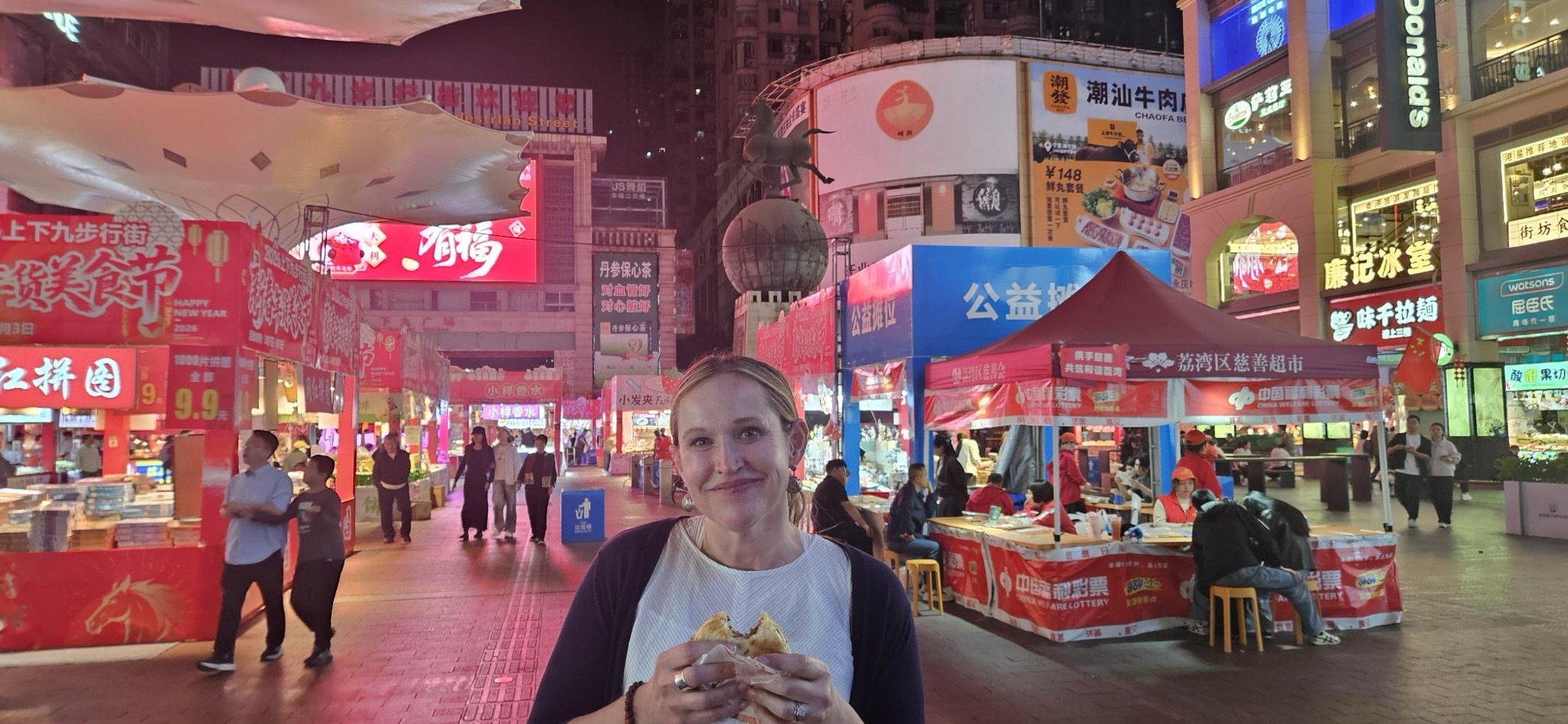
If you have dietary restrictions or intolerance, you’re going to have a tougher time finding food to meet your needs in China, though it’s not impossible (other than maybe a severe peanut allergy). If you’re a picky eater, you will be able to find western fast food chains and local restaurants offering more western-style foods like pizza, burgers, and chicken nuggets.
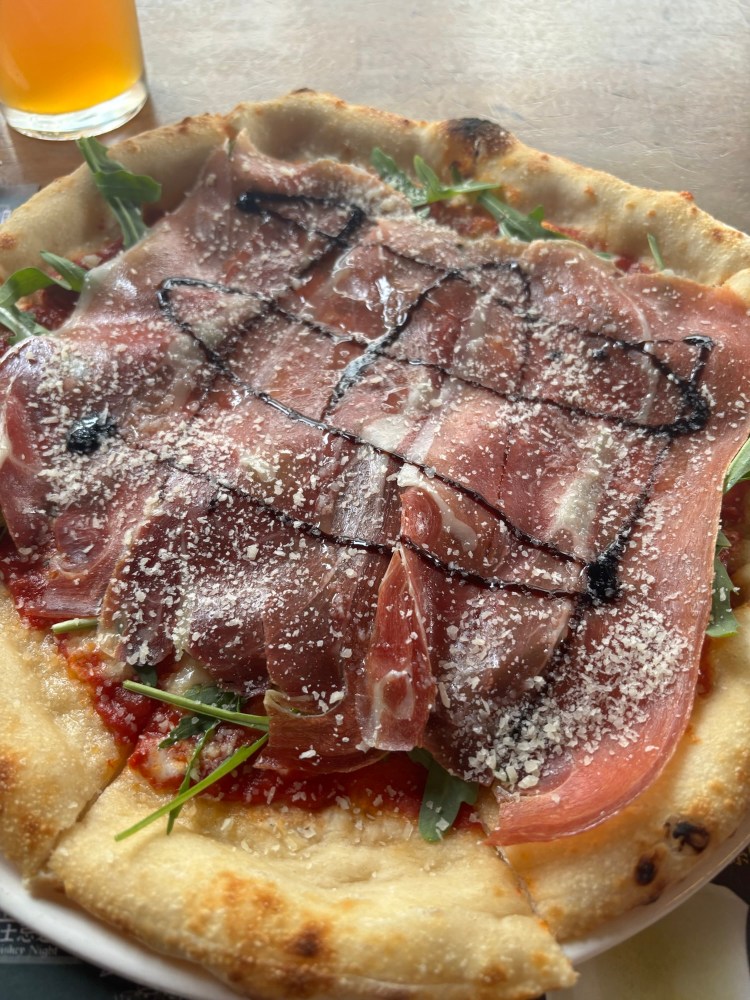
While western foods are a nice change sometimes, especially after eating Chinese food every day for weeks, trying local cuisine is a huge part of the travel experience. My suggestion for someone who isn’t quite as adventurous in their culinary endeavors as Phil and I are, would be to talk to your waiter or waitress. We’ve found that most places are very friendly and want to help. They will be able to provide a suggestion that may meet your needs and preferences, but be patient and set appropriate expectations. Even with photos and translator apps, things often get lost in translation.
Next up: You’re going to get coughed on…probably because of all the cigarette smoking
 Jess Barrington Travels
I was shocked by the number of people smoking cigarettes in Spain while we were there…I didn’t love that. I can’t wait to read your thoughts on that in your next post! I am not picky, but I am also not a super adventurous eater…I like veggies and fruits, but nothing that I would consider variety meats, and I don’t eat fish almost at all. I am not sure I could do the stuff with all the bones in it.
LikeLike
It is next level here with the smoking.
If you stuck with veggie dishes, dumplings, and buns, you’d be fine here. The meat in the veggie dishes are boneless, usually small strips or cubes. The veggie dishes are also super flavorful so I think you’d be satisfied as well.
LikeLike