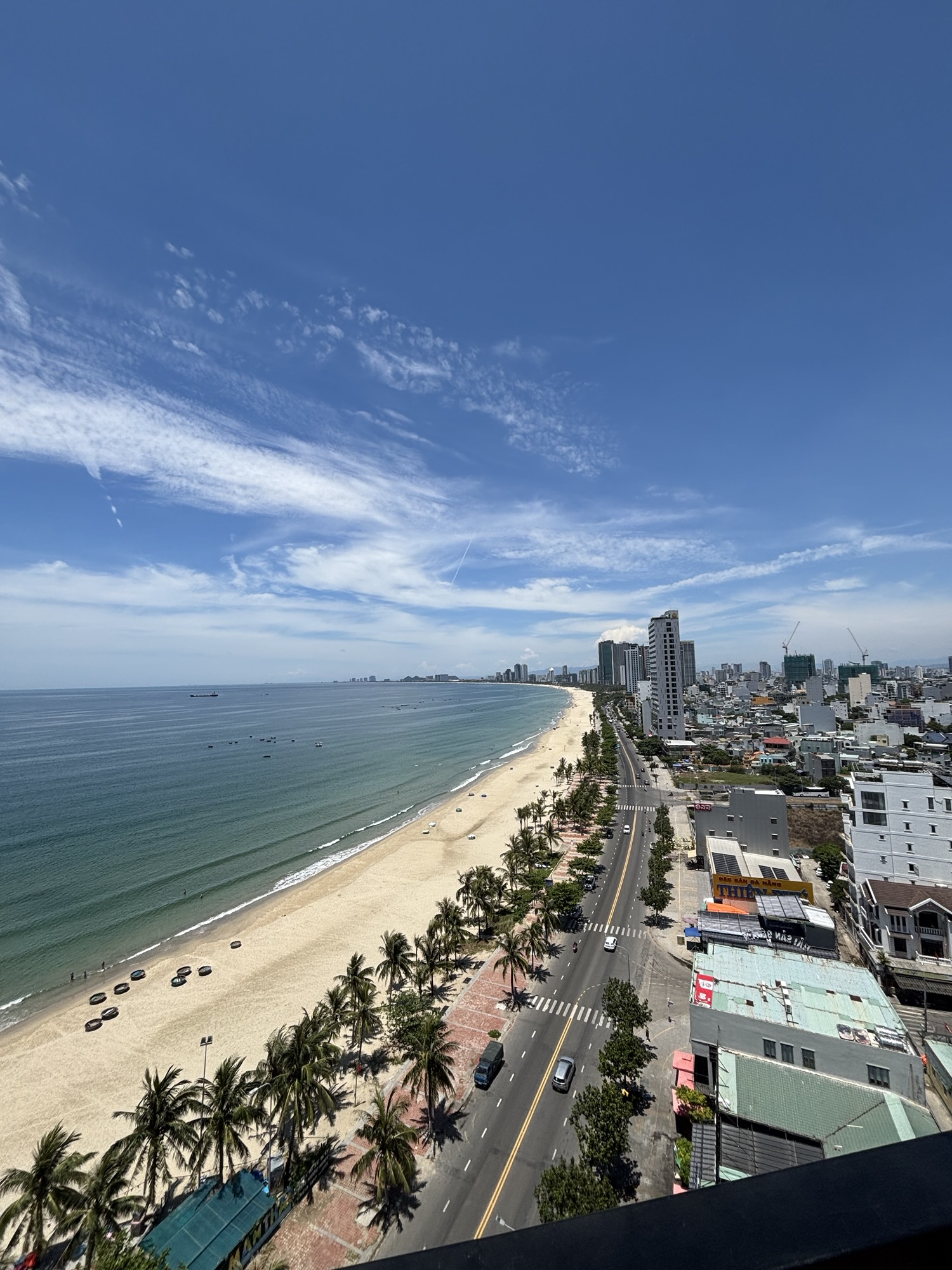
Our first stop in Vietnam was the beach town of Da Nang. A popular tourist destination for the Vietnamese and foreigners alike, it was a vital hub for the Americans during the Vietnam War, and home to one of the worlds’ busiest airfields at the time. In fact, we stayed quite near Son Tra Mountain, nicknamed Monkey Mountain, by U.S. military forces. The high elevation, overlooking Da Nang and the sea served as a strategic installation for radar stations and communications interceptions for the U.S. during the war.
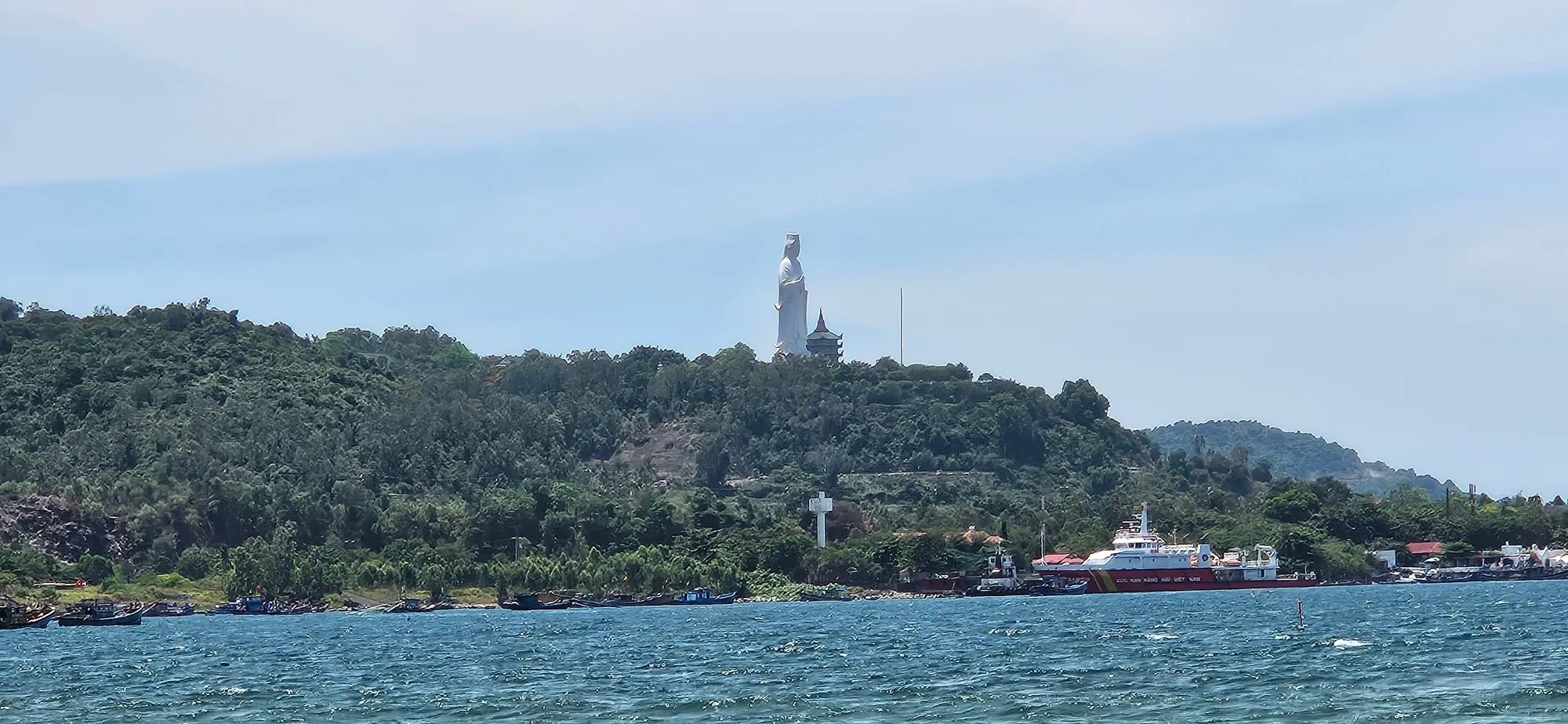
Son Tra Mountain is now home to the beautiful Lady Buddha statue at the Linh Ung Pagoda. We could see her from our hotel balcony, a peaceful presence watching over us.
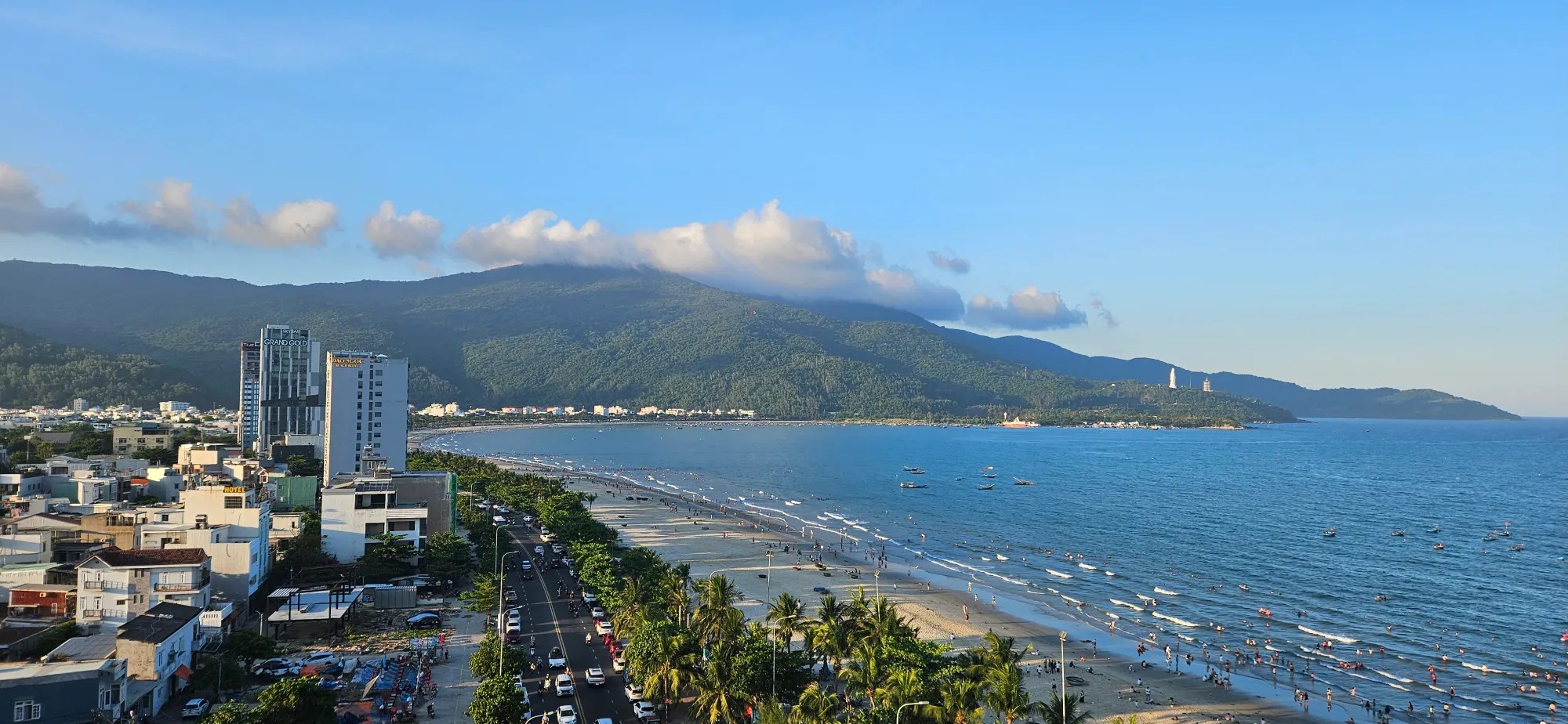
We stayed at the Seashore Hotel for 30 days and while we were looking forward to being so near the beach (it was literally right across the street, hence the name), but we were a bit nervous about staying in the hotel for that long. We just never know from stay to stay what we will like and what might be annoying about a particular place. The breakfast might not be great, the walls might be thin, the pool opens super early and you awake to the squeals of children, the smoke alarm blinks at night, or right above your bed and drives you crazy (luckily Phil carries some duct tape for covering over weird, you only notice at night time hotel lights).
When reading the reviews about our hotel, some mentioned construction noise from a building project right next-door. It bothered some and others never heard it. We researched other possible accommodations; Airbnb’s and other hotels, but, ultimately decided we would gamble on the Seashore. No other accommodations within our budget allowed us such easy access and beautiful views of the beach. The beach, after all, was the primary draw for visiting Da Nang. Luckily, our gamble paid off because our stay was lovely.
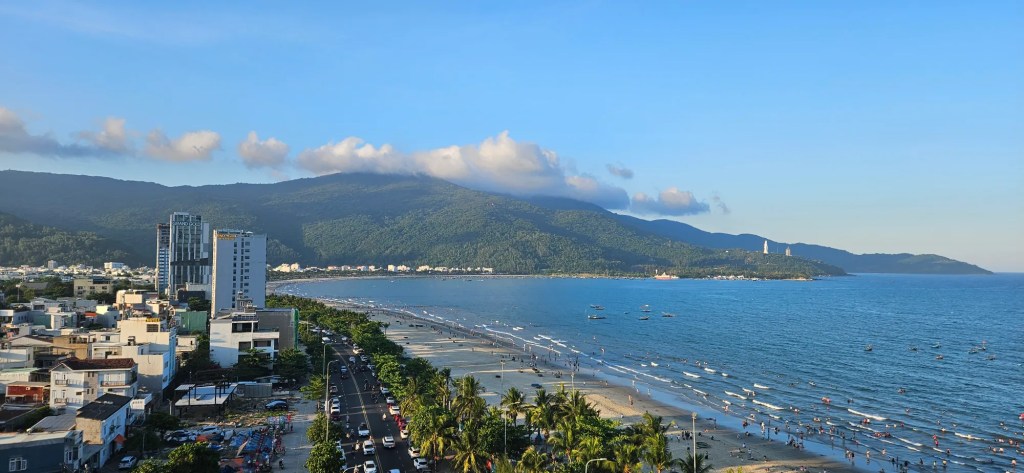
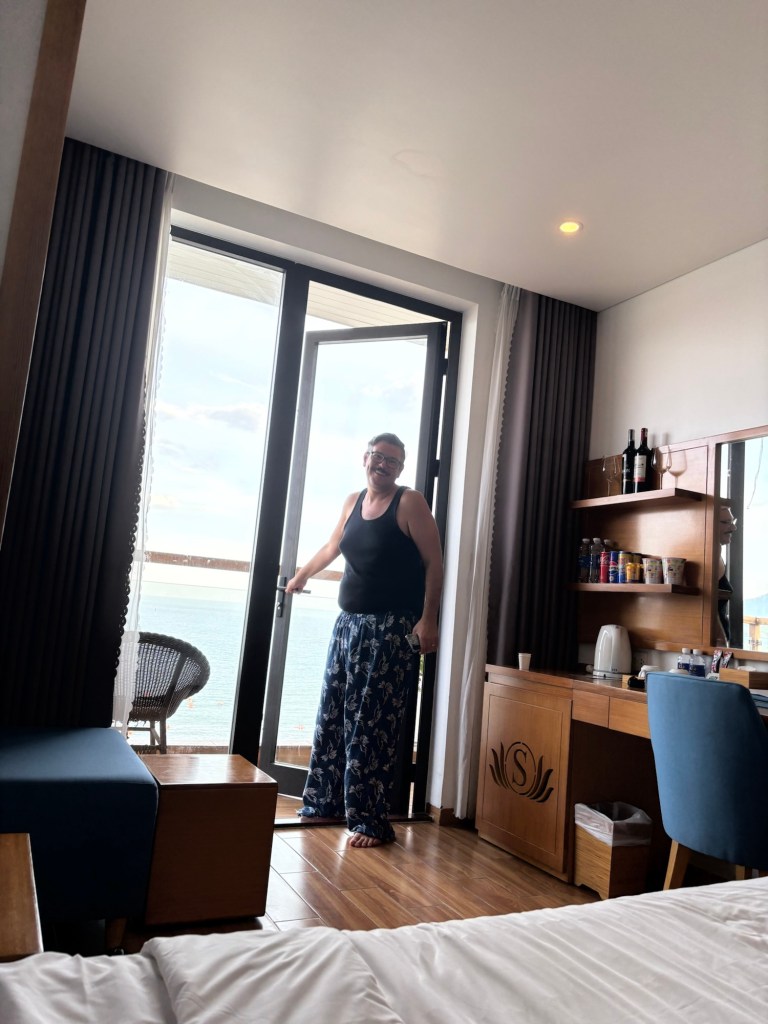
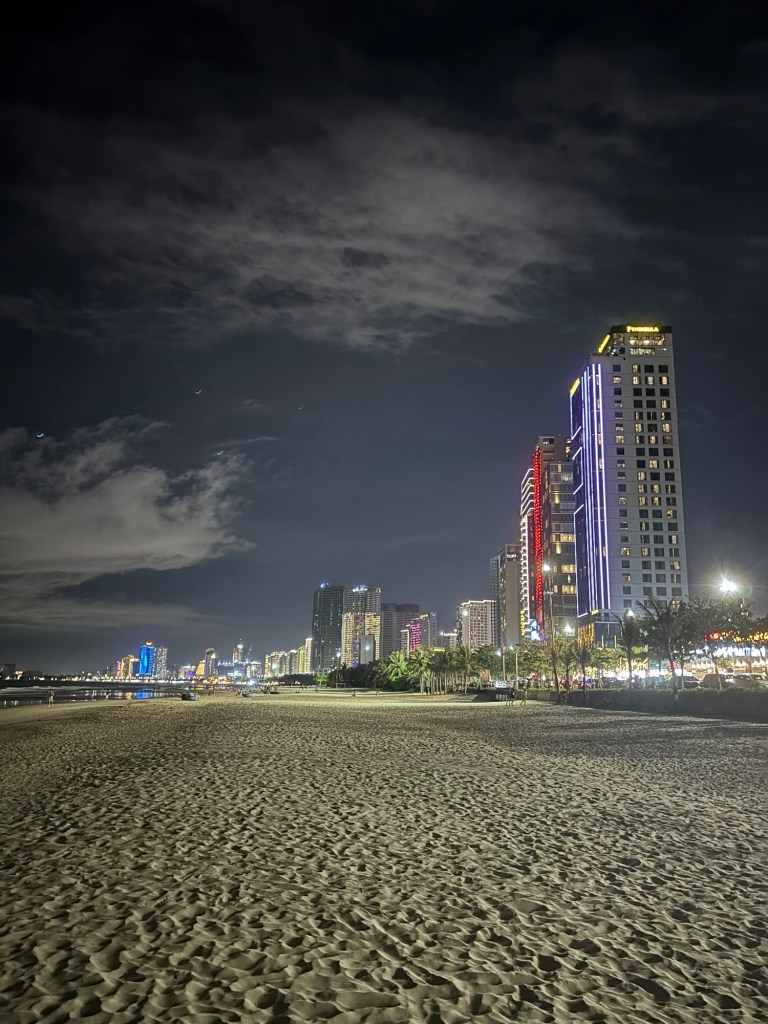
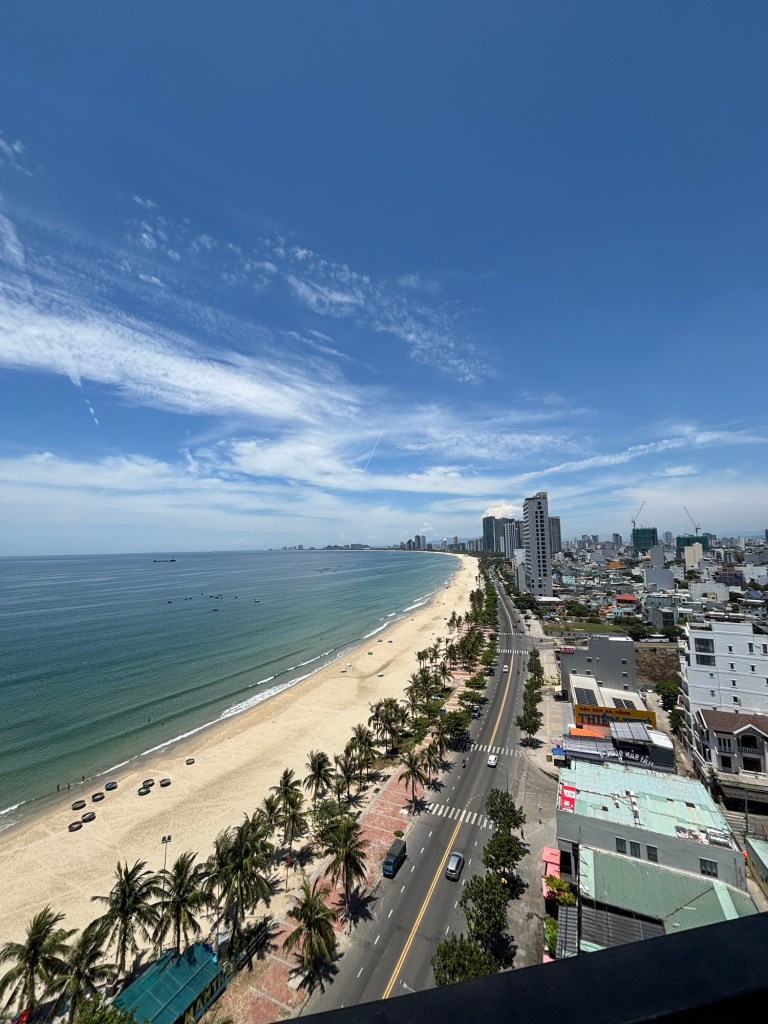
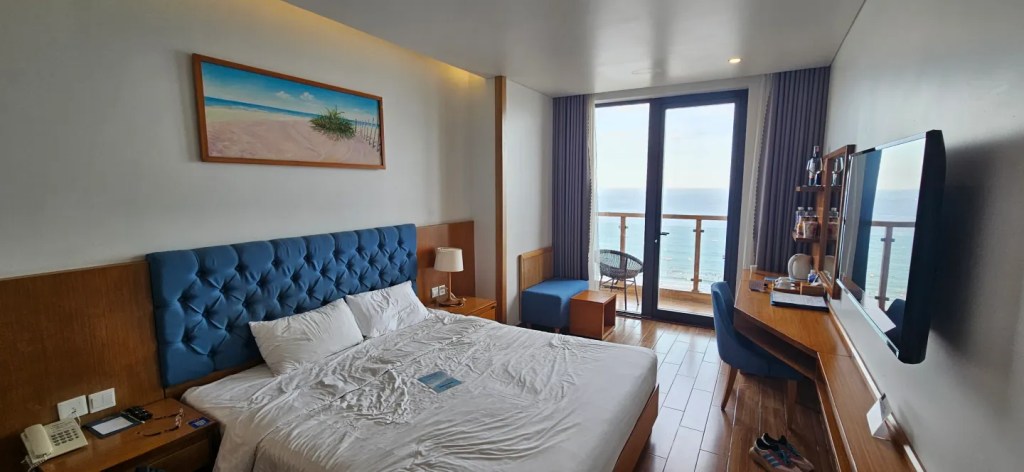
Our room was just big enough not to feel cramped, with a desk and a little cushioned bench with table in addition to the bed. The small balcony with a couple of chairs made a huge difference as well. Being able to see so much of the outside made the inside feel bigger.
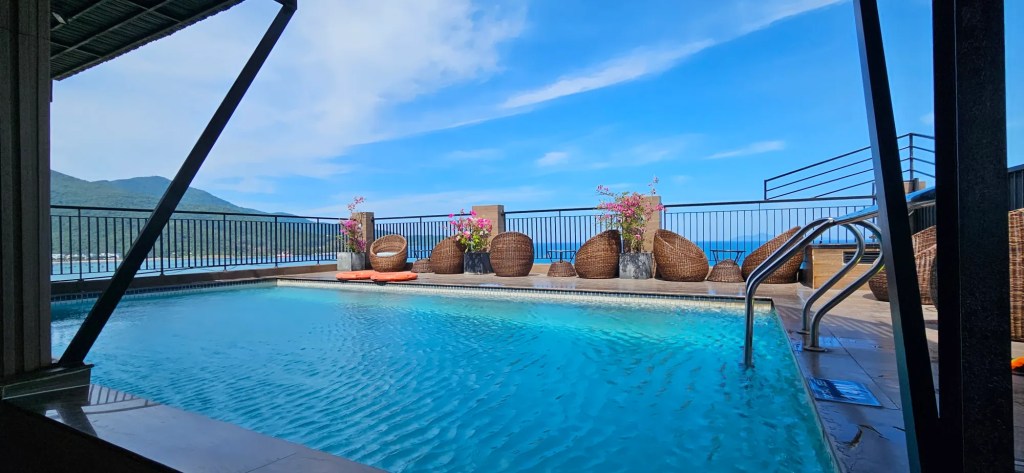
The hotel also had a rooftop pool and restaurant area that offered great views as well.
We usually started the day with a walk on the beach after breakfast. The hotel breakfast was really something, and I’m not just talking about the food. Though the food was tasty and they had ample offerings, what made it unique was that the elevator doors opened right into the dining area and you never knew how intense it was going to be once they did. Other than the day we ate at 6:30 a.m. because of a site seeing tour, it was always intense.
The space was quite narrow, so we were either dodging others in the narrow lane of horseshoe shaped buffet area, or sucking it in and weaving through tables on the dining side, all the while large groups of loud families, people talking on the phone, and crying babies were the regular soundtrack. Sometimes we were taking all of this stimulation in before having coffee (the horror!). Even when it was in full swing though, we always found a table to sit at, which was the most important thing.
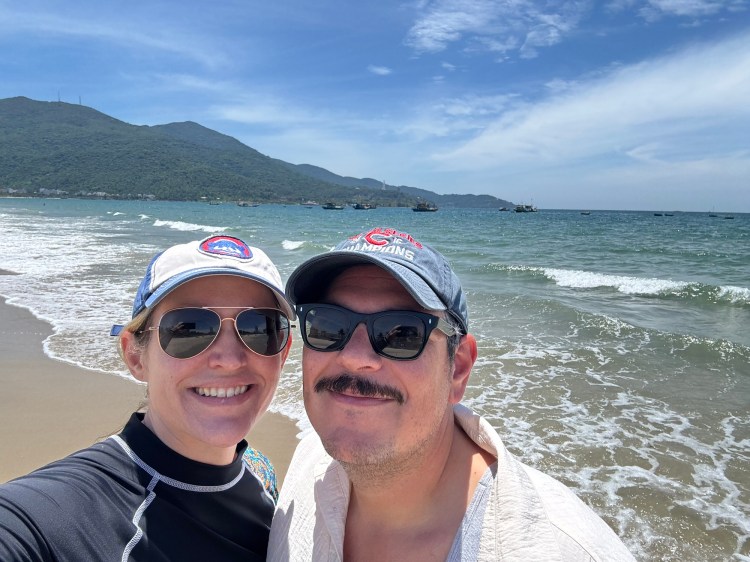
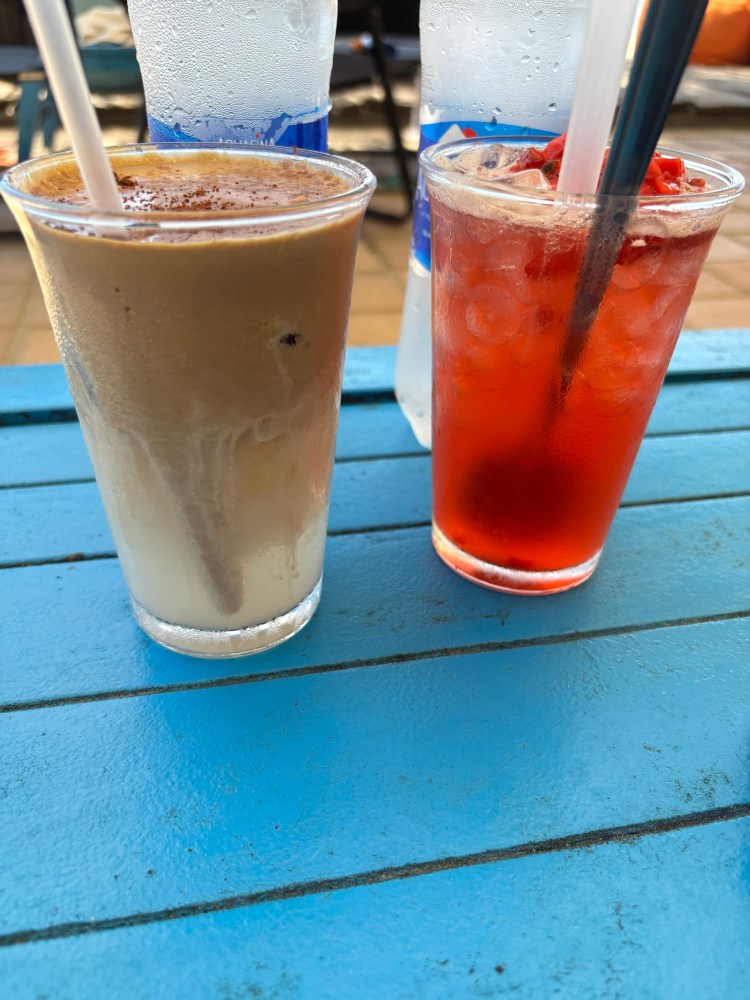
After our beach walk, we would often take a swim, then enjoy a beverage at the beach bar directly across from our hotel. I usually had an iced Saigon Coffee (strong coffee with condensed milk) and Phil had the strawberry tea. It was nice to dry off a bit while we relaxed in the sea breeze.
Man Thai Beach was our beach and much less populated than the popular tourist beach of My Khe with it’s beach loungers and many bars. My Khe Beach was given the nickname of China Beach* by American and Australian forces during the Vietnam War. The name stemmed from the fact that the beach sits on the South China Sea and it served as an R&R spot for troops.
*China Beach was also the name of a popular U.S. television show from the late 80’s/early 90’s, the only thing I remember of which is that it started Dana Delaney who I thought was absolutely beautiful and it had the kick-ass intro song of “Reflections” by Diana Ross and the Supremes.

We were quite happy to be near the less popular beach. That’s not to say it wasn’t busy. It was, mostly with locals and Vietnamese tourists. We learned from our doorman at the Seashore, Chow, that the Vietnamese don’t like to go to the beach during prime sun times. They go very early, between 4 and 7am and again from 4pm until sundown. We saw many Vietnamese enjoying the beach on these off times. It also meant that during the time we most often went (9-11 am), we were two of only a handful of others, and we were cool with that.
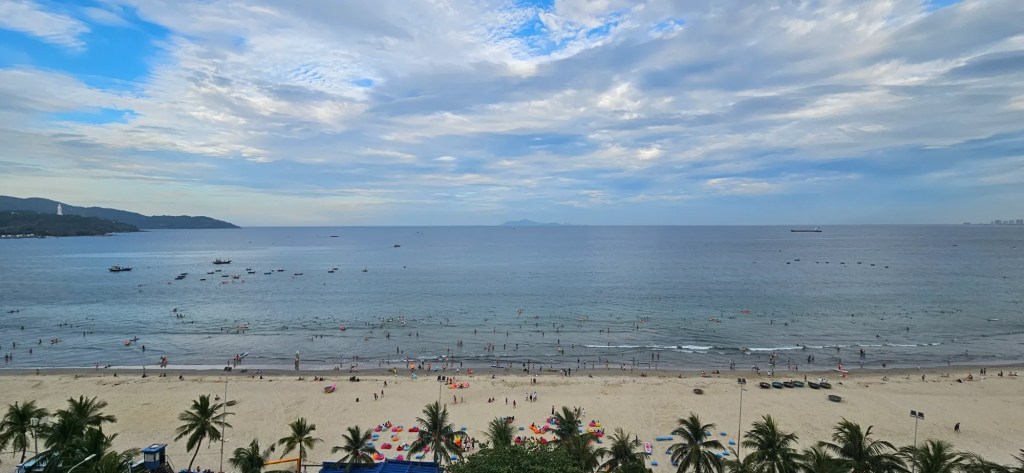
People were up and at the beach at 4am? Yes, the sun rises quite early in Da Nang. In fact it is common for Vietnamese (primarily middle aged and older adults) to get out onto the beach and do various exercises; Qigong (meridian body tapping), stretching, Thai Chi, dancing, swimming, or a combination at sunrise. While we did not rise between 4-7am, normally, we could often hear the sounds of folks out, enjoying their early morning beach time.
So, this was our home for 30 days. Not too shabby. We really enjoyed our time in Da Nang. Because we were there for so long, we could fill our days with a combination of seeing the sites and relaxing near or on the beach. That’s one of the benefits of slow, longer-term traveling and a must, really; being able to weave site seeing and cultural experiences into the everyday, because it’s not just traveling or a vacation, it is our life. We can’t “go go go” or try to see and do everything in regular life or we would quickly burn ourselves out. This is true of all people, whether working a 9-5 and going home to family every day or living out of a hotel in Vietnam.
Next up: Da Nang: The Food!


The views from the hotel are amazing! Also…to be at the beach during a regular day and not be crowded because it isn’t peak time for the locals would be awesome. (I remember China Beach the show. You are right, she was hot, and I don’t remember anything else about it…lol)
LikeLiked by 1 person