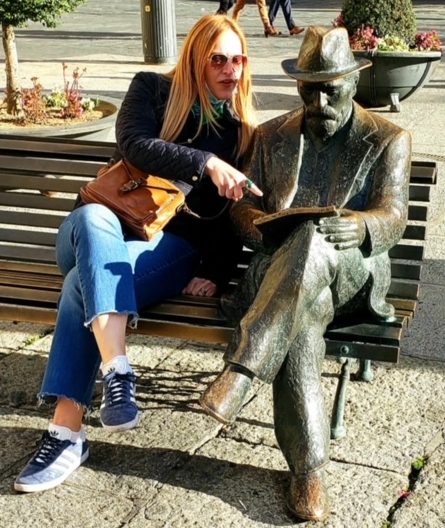
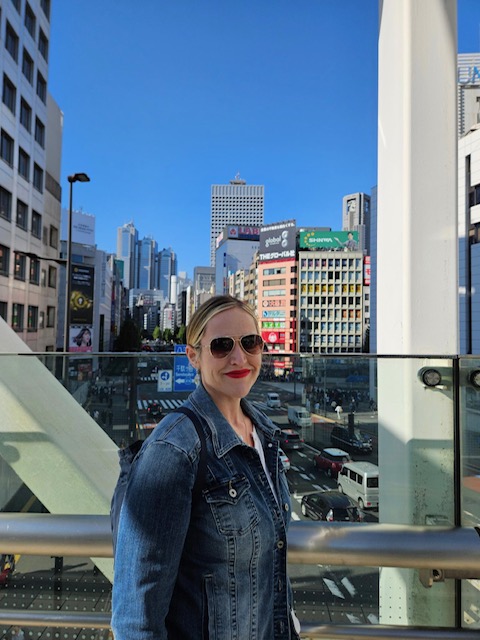
Japan is a country we have wanted to visit for a long while. It seemed like a destination we would need at least two weeks (stupid, limited U.S. vacation time), because of the distance and all of its places we wanted to explore! As such, Japan was not a trip Phil and I had talked about as being something that would be happening anytime soon. We weren’t even planning on taking another international trip in 2024. The fact that we had been to Prague in the spring and would be traveling to Peru in September was already pretty amazing. But, sometime over the summer, Phil was chatting with a coworker who has visited Japan recently. She talked up Tokyo and all of the fun stuff to see and do and happened to mention that the yen (Japan’s currency) was down against the US dollar, allowing our dollar to stretch farther.
Phil started doing some research and while the flights would not be cheap, lodging would be. Food too. We were running out of year to fit another trip in. We decided on November (a little birthday gift to me). We could only go for a week though.
With just a week, we debated visiting Tokyo and Kyoto or Tokyo and Osaka and Tokyo and someplace else. Eventually, we decided to stay in Tokyo the whole week. We figured in the largest city on Earth, we’d find plenty to fill our week and we didn’t want to feel rushed or like we didn’t get a full experience.
We would be staying in Shinjuku, also called Shinjuku city, area of Tokyo. Shinjuku is centrally located and home to one of the busiest railway stations in the world. We could easily (after getting the hang of it) zip to different areas of Tokyo using their excellent train system…but I am getting ahead of myself.
We flew out of Raleigh, to Toronto, then onto Tokyo. The flight to Toronto was short, only a couple of hours. Toronto to Tokyo was 14 hours. That’s a really long flight. When we lived in L.A. and visited Italy in 2019, the flight was also 14 hours, so I just kept telling myself I had done that long of a flight before and I could do it again.
Made it, we did, though the flight was super uncomfortable. Typically international plane seats, even in basic economy seating, are roomier than your average, domestic flight. This was the case with our flights to Europe and Peru earlier in the year. We were not so fortunate with this flight. Luckily we had exit row seats, so we could cross our legs and stretch out, but had my hips been any wider, I would’ve been in trouble. The in-flight food was horrible to boot. Air Canada offered the cheapest, most direct route for us, which was what we were looking for when booking flights. It delivered on those two points, so mission accomplished I suppose.


Phil and I are used to dealing with time differences and are usually pretty good about adhering to the local time of day to help reduce jet-lag i.e. if we arrive at 1pm, even if we are super tired, stay up until at least 8pm to get our body used to the new sleep/wake times. Japan was a whole different beast. To add an extra, fun wrinkle, we were traveling over U.S. daylight savings time, so also had to factor “falling back” into the equation.
We landed in Tokyo in the early evening, 13 hours ahead of our usual, Eastern Standard Time. We made it through customs fairly quickly, then picked up our wifi “egg”, aka pocket wifi. As opposed to getting a Japanese SIM card for our phones, you can rent the wifi “egg,” a small, portable wifi device that fits easily into a bag or pocket. With the “egg,” one can use the internet and text without purchasing a new SIM. Pick up and drop off at the airport is relatively simple with a little research and pre-planning.
It was raining heavily as we exited the airport but we had arranged a car through booking.com to take us to our hotel. Cabs are expensive and while I’m sure the train would have been relatively easy to navigate, after traveling for so long and running low on brain waves, we were all too happy to meet our driver who grabbed our luggage and handed me an umbrella as we headed toward his super swanky van.
As opposed to offering in-room toiletries as is common the US and Europe, in the lobby, they had little bins of individually wrapped, one-time use toiletries (i’m talking individually wrapped q-tips), coffee, and tea. Additionally, as we exited the elevator on our floor, there was a shelf of guest pajamas one could help themselves to.


We were very tired and not super hungry by the time we got settled into our room. They’d fed us a sub par breakfast, er, dinner?, I don’t know, on the plane shortly before we landed. We had a few snacks in our bags so made due and were in bed by 10pm. We planned to eat our way across the city, so might as well start fresh on our first, full day the following morning.
We woke up earlier than anticipated and were up and out of the hotel by 9:30. We had a walking tour scheduled later than afternoon in the Koto area on the east side of the city. We decided to head that way early, so we walked toward Shinjuku station which was only a couple of blocks from our hotel.
The Suica card is a rechargeable, contactless smart card that is used as a fare card on train lines throughout Japan. It can also be used to pay for things at convenience stores, shopping malls, and restaurants. It took some doing, between trying to purchase one at the automated machine at the train station and getting into and out of line at the JR Travel Center (kind of like a tourist information center for travel) a couple of times, but we walked away with our cards in hand, off to board the train.
The hustle and bustle of a busy Tokyo train station can be a bit overwhelming, but for the most part, train lines and directions are clearly marked. I must give credit where credit is due; Phil is our navigator. He is a pro map reader and is able to quickly determine the best routes for us. I assist by keeping my eyes open for the number, color, and location of the train line we are looking for. With so many people, going in so many directions, having two sets of eyes comes in handy as one can easily miss a sign or directions to the intended train line.
In preparing for our trip and reading about Japanese customs and etiquette, I knew the trains would be very clean and quiet. I don’t know why I thought they would be nearly silent, but I did. People do speak to each other, but in hushed tones as to not disturb other travelers. Most people are quietly reading, looking at their phones, or listening to headphones.
We arrived at our destination and went looking for food. We tried a nearby restaurant that was highly rated and just opening for lunch, but were informed we needed a reservation. Oh well, on we went. One thing we knew, and perhaps the thing I was most excited about, was almost any restaurant you went to in Tokyo, regardless of size or price point, would be pretty darn good.
We walked on and after a quick Google search, found a nearby spot called Shingo and was listed as a brunch restaurant for some reason (though not particularly brunch-y). We ordered the special of 3 different curries; pork chicken, and beef and washed it all down with a beer. Delicious.

We wandered around the area, walking through a park and then grabbing a couple of iced coffees. Tokyo has many, independent coffee shops with all manner of drink options and tasty treats. If you are in search of coffee in Tokyo, don’t go to Starbucks. A better option awaits you just around the corner, I assure you.
We walked with our coffees toward where we were to meet our tour guide and happened upon several groups of children at baseball practice. We sat on a park bench and watched them for about an hour. They were so darn cute.
One of the nice things about building time to wander into your travels (as opposed to rushing from one must see/do activity to another) is taking in the simple, day to day activities of the locals. A favorite memory from one of our passes through Milan is watching a group of older adults playing bocce ball. They were having such a good time; giving each other grief, cheering each other on, arguing, and laughing.
Our tour guide, Manami, met us not too far from the baseball diamond. She has a PhD in Cultural Heritage and is from the Koto neighborhood. She even walked us by her childhood home, explaining that her father had taught at the University just a short walk from there.
We stepped onto a side street as we were talking for Manami to show us a map of the area and explain some of the geography. The street, she mentioned, was one that housed izakayas. An izakaya is a small bar, usually with seating, or standing area, for only a few (6-20 people) that also serves small plates of food. Because it was Sunday, most of the izakaya on the street were closed. A young, drunk fellow from a nearby, open izakaya, gave us a smile and said, “Peace” and flashed a Peace sign as he stepped out of the bar, onto the sidewalk for a smoke.

Phil made note of the street in Google maps, thinking we may want to swing back by after our tour. In Shinjuku, the area we were staying in, there is a famous, izakaya area called Golden Gai that is comprised of several narrow alleyways packed with the tiny bars.While we planned to check out Golden Gai, this smaller area definitely seemed more our speed.
We walked with Manami to Fukagawa Fudo, a large, Buddhist temple. As we approached the gates, she explained that you always stand to one side and bow before entering, never walking through the center path as you enter. The center path is considered sacred and reserved for spirits or deities to pass through and by entering slightly to the side of the center, you are signifying that you are respectfully giving them the right of way.
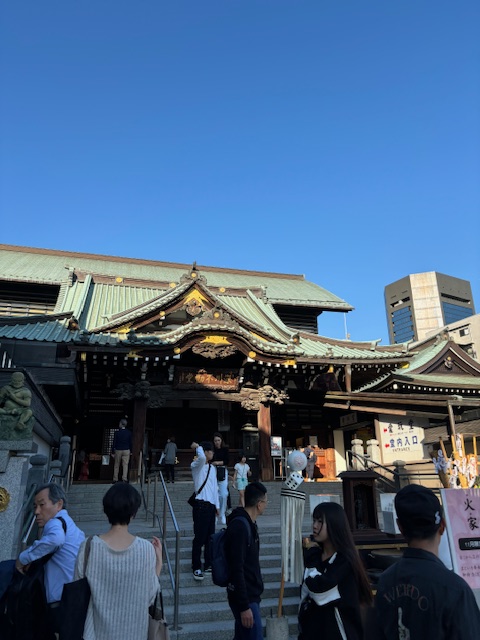
We removed our shoes upon entering the shrine itself and were given a bag to place them in. We had arrived just in time for the monks’ fire ritual. Manami told us it was rare for the very old monk to lead the ritual, so we were lucky.
The altar area was below the main floor, recessed and surrounded by a small area of stadium-style seating. The benches surrounding the altar were full, so we sat, crossed legged on the carpet above the seating area. The ritual began with loud drum beats as the monks’ filed in, with the oldest monk and his attendant coming in last. The monks’ chanted as the drums beat on. Manami had laminated pages she would hand us to explain the meaning of each part of the ritual. A large fire was lit in front of the alter. The ritual, called a Goma, is the ritual performed to destroy negative energies, detrimental thoughts and desires, to make wishes and give blessings. It’s believed that the fire replenishes Fudōmyō-ō’s (the deity of justice) power to burn away all the problems that get in the way of his follower’s path to enlightenment.
Toward the end of the ceremony, the attendees are welcomed to come down to the fire and have personal items blessed (mostly purses, bags, or wallets). We filed down the steps along with many others, and handed our bags to one of the monks who waved them above the fire and returned them to us, blessed and free of negative energies. The ceremony concluded with more loud drumming and the monks filing out. The total ritual lasted around 20 minutes.
Manami explained that the two major religions in Japan are Buddhism and Shintoism and while most people consider themselves one or the other, the religions compliment each other well and people take things from each. She said that Shintoism focuses on this life, the here and now, whereas Buddhism has a focus on the afterlife. Because of things, weddings and birth celebrations are often held in a Shinto temple whereas a funeral is more likely to take place in a Buddhist one. There was even a small, Shinto shrine, on the Buddhist temple grounds.
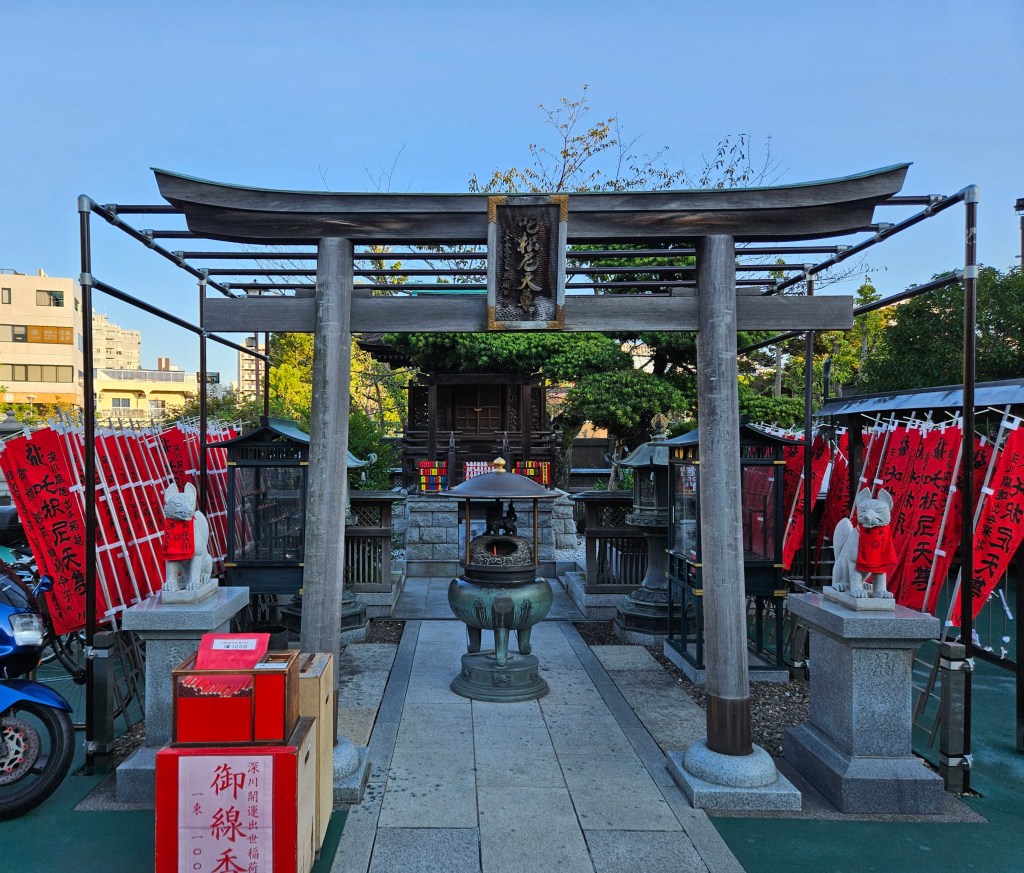
We left the Buddhist temple and walked next door to a large, Shinto shrine. Just like a Buddhist temple, one enters through the gate a little to the left or the right, leaving the center path open. We visited a lot of Shinto temples during our week in Tokyo. We never entered the temple proper, just the grounds. The temples all have barriers of tall, wooden offering boxes with long slats at the entrance. One can see into the temple from this vantage point. Manami explained that it is customary to give a small offering of coins (which disappear with a clang down the slats), then bow twice and clap the hands together at the heart (in prayer hands) twice. One does not enter the temple unless there is an actual service happening, which we did observe briefly at a small temple we visited later in our trip.

On the grounds of the temple, there are several areas to visit. At one, you take a cylindrical container (Pringles can sized) and shake out a stick with a particular color or number. There is another container with slips of paper corresponding to the stick you pulled. The paper indicates either good luck or bad luck. If one pulls bad luck, not to worry. Simply tie the fortune to a tree at the temple and leave it there. This will end your bad luck.
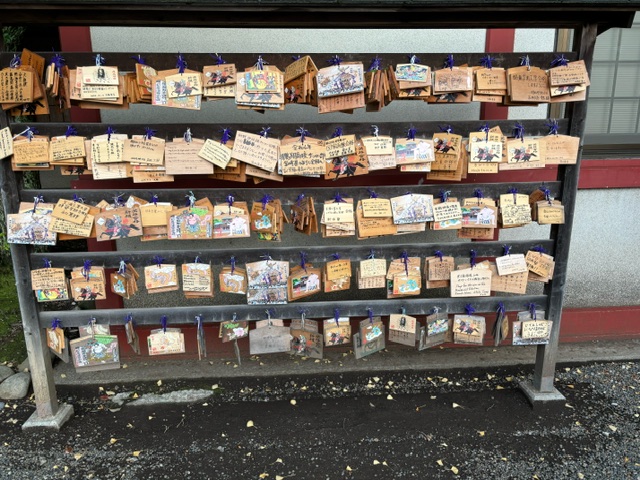
At larger temples, there are booths, kind of like gift shops, where one can purchase wooden blocks to write prayers on, then hang the wooden block on a nearby wall. The gift shop also sells small, talismans for good luck on all manner of things: childbirth, fertility, success at work. success in school, protection of the home, and protection while driving.

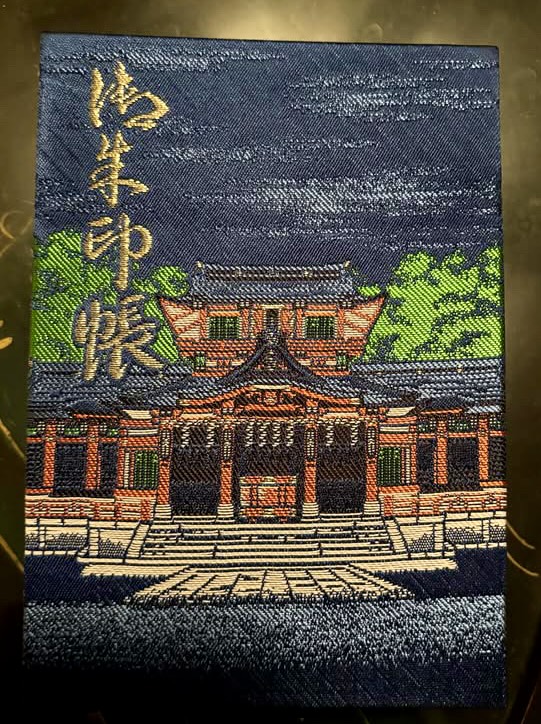
One of the coolest things we saw in the little gift shop were these beautiful notebooks with embroidered covers. We had already decided to purchase one when Manami explained that the books have special paper in them and when one visits a Shinto Temple, for a small fee, they will stamp the page with their, individual, temple identifier and date of visit. The stamp is a combination of actual stamp and beautiful calligraphy.

We parted ways with Manami after the Shinto Temple and decided to head back to the izakaya we’d seen open on the little street earlier. As we entered, there was a very small, right angle-shaped bar with room for only six or so people to stand comfortably (no seats in this one). There was a couple on one side of the quarter square, so we bellied up to the other. We ordered two beers and the little lady behind the bar gestured behind us to a cooler that held a few different offerings. We chose two, 20-ounce bottles while she placed two glasses and a bottle opener down on the bar. We realized it was probably customary to share a bottle, but hey, we’re Americans who like to drink, so bigger is always better.
There was a TV in the corner of the room, almost right above my head, with a Japanese game show playing. It provided everyone with something to look at as opposed to staring at each other, unable to converse. I watched (I could only crane my neck for so long to see the TV) the bartender behind the bar impressively prepare a small plate of food for the couple, an omelet-like egg dish. The cramped, behind-the-bar quarters, were well organized, and she pulled various containers and tools off of unseen shelves, as she used a hotplate to cook.
After a bit another fellow entered the bar and stood at the corner of the bar, ordering a drink (what I now believe to be a highball, as we later learned that the Japanese really like highballs) and some food (more entertainment for me!). A few minutes later, another gentleman entered and Mr. highball scooted closer to the other couple so the guy took the space next to Phil. He said a few words to the other folks, ordered a beer, and joined everyone in staring at the game show as I watched the bartender expertly prepare a very tiny fish, frying it head, bones, and all.
Phil and I decided to share another beer, Phil grabbed a different bottle this time, labeled “Hoppy” (why not try something new?) and the man next to him said, to our surprise in English, that the bottle chosen was not in fact beer, but some sort of bitter liquid that one mixes with water to taste like beer (what?). A Google search later revealed that “Hoppy (ホッピー, Hoppii) is a beer-flavored almost non-alcoholic drink (0.8% alcohol) that Kokuka Beverage Company began producing and selling in Japan in 1948; it is most available in and associated with Tokyo.” Huh. Dude really helped us dodge a bullet.
The fellow’s English was quite good, in fact he almost sounded like a native speaker, so I asked him if he had lived abroad. He had in fact, in Chicago! The man, Wilson he told us to call him, had attended the University of Chicago. He and Phil talked Chicago while I watched the man who had ordered the fish, do a spectacular job of eating it. Not a bit of flesh remained as the bartender collected the finished plate that held only the perfect skeleton of a fish.
Come to find out, Wilson has been living in Japan for twenty years. After weighing his options after college, he took a job with a Tokyo based multinational corporation. He is originally from Indonesia and wife, whom he’d med in Japan, is originally from Malaysia.
We asked Wilson if he had any restaurant recommendations in the area and after naming a spot that he said was excellent, he mentioned he had not eaten dinner yet and asked if we minded if he joined us. We told him we would be delighted. We all finished up our beers and offered to pay for his, which he refused.
We arrived at the restaurant a short walk later. It was located inside of a building, and up some stairs. A place that unless you were a local or a local had recommended it, you would never likely find. There was a line of folks waiting to get in. Wilson said it was worth the wait, so we waited. About 30 minutes later, we got a table. The restaurant was mostly standing only. There were a few stools here and there, but almost everyone was standing at their table. The place was packed and had a lively and jovial vibe.

Wilson said hello to a few folks. This was a neighborhood spot and most of the folks were from the neighborhood. There was a menu, but Wilson asked if we were cool with him ordering several plates for us to try. “Yes!” We said emphatically.
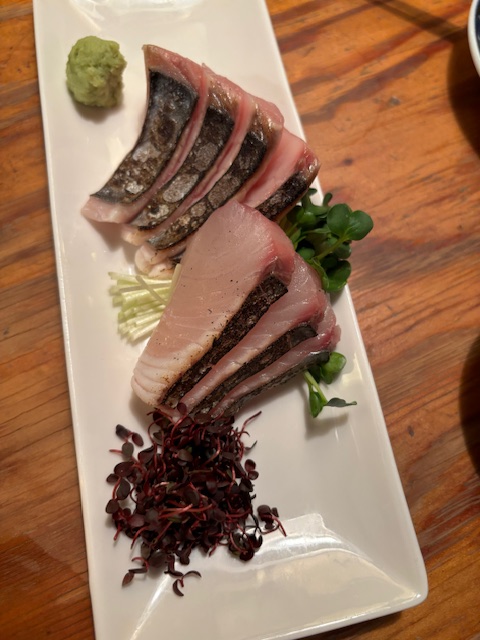

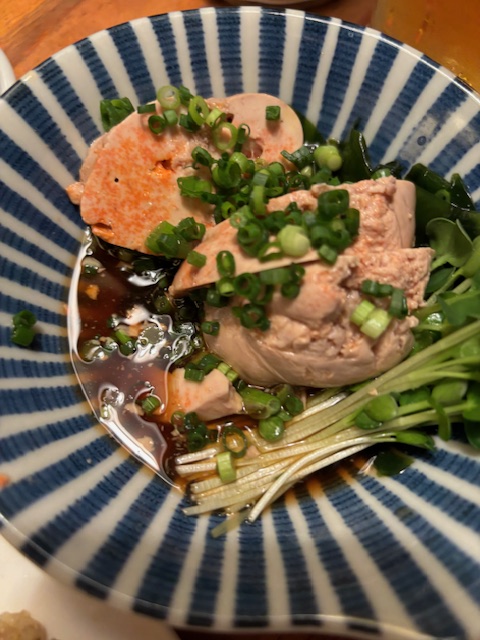
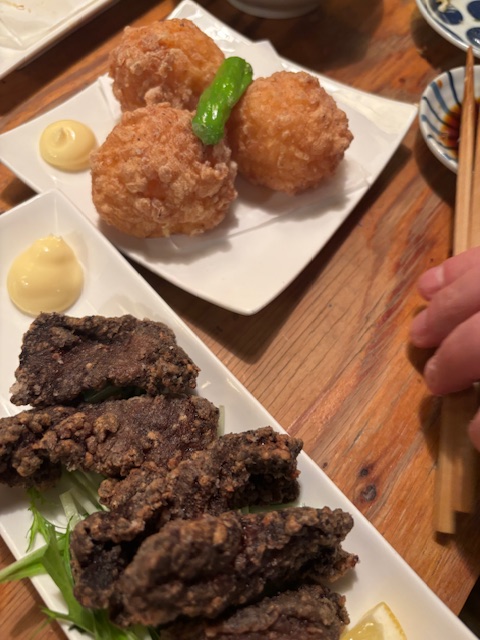

We feasted on tuna sashimi, fish tempura, fried shrimp balls, mackerel, monkfish liver, and even fried whale! Yeah, whale. It was quite dark, and looked a bit like chicken livers. It had a very meaty taste, like chicken fried steak I thought. While my gut reaction to eating whale was, “is this ok?”, in the moment, it was a ‘when in Rome situation’ and when will I get an opportunity to eat whale again? Later, a Google search revealed that Japan allows the commercial sale of whale meat of whales that were caught, accidentally, in fishing nets.
After dinner, we parted ways with Wilson and headed to the train station. We felt very lucky to have met Wilson, a local who provided great company and a unique and delicious dining experience we will never forget. We tried to pay for the dinner as a thank you for his hospitality, but he again refused.
We couldn’t have imagined a better first day in Tokyo than the one we had. We were excited to see what other adventures the week would present!

Next up: Highlights of the rest of our Tokyo trip!


I am excited to read about your adventures in Japan, because I have never had it on my bucket list…that might change after seeing your trip, though! Also, how cool to have found a local who showed you around that first evening – I love that!
LikeLiked by 2 people