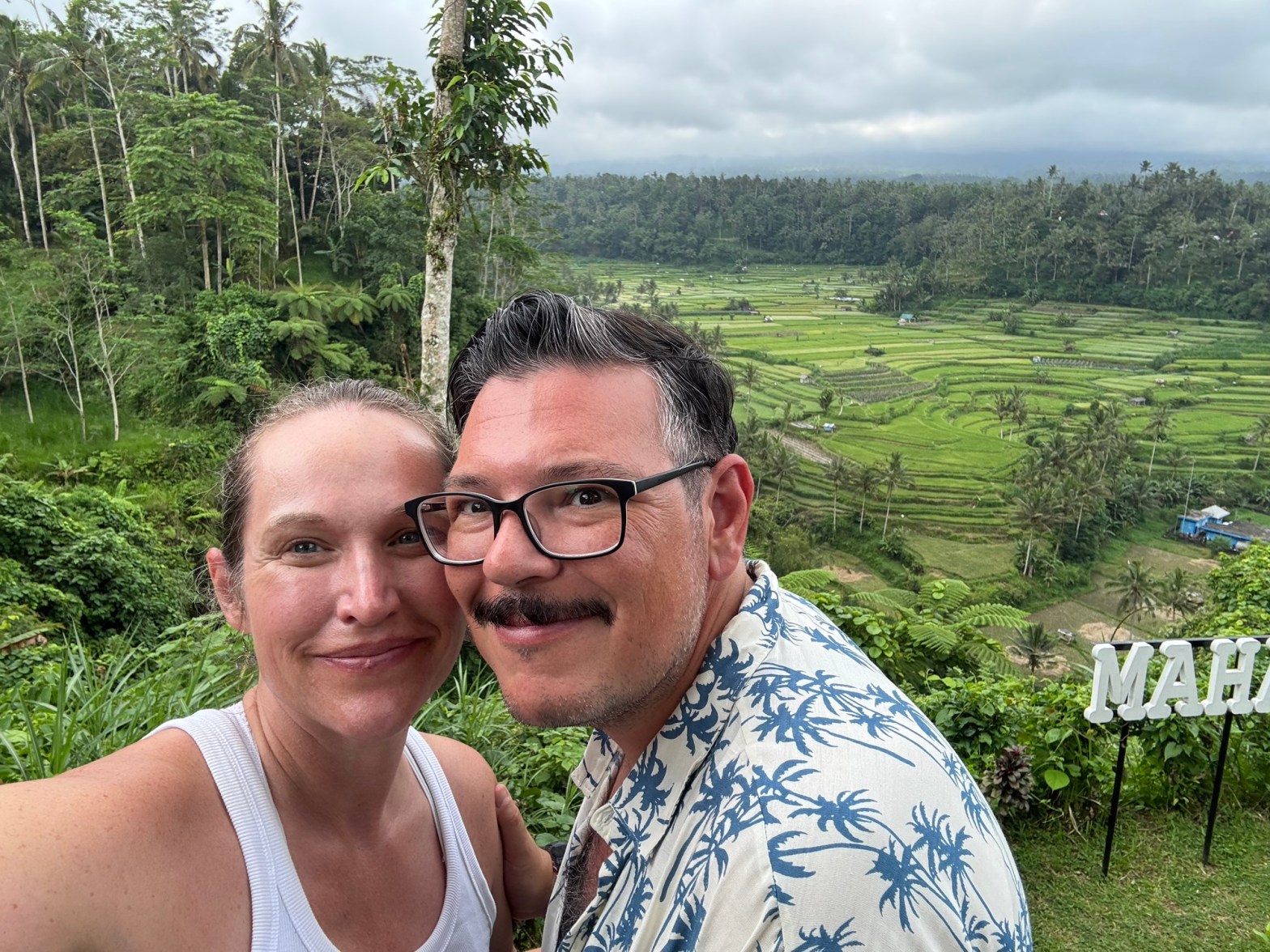
One of our first days back in Bali after visiting the surrounding islands, we decided to book a day of site seeing. Phil writes about our full day of outings here.
One of our stops was to the Satria Luwak Coffee Plantation. It was not what I expected but was a fine visit nonetheless. As many tourist destinations are in popular areas, the coffee “plantation” felt a bit like a tourist trap. We did enjoy a free coffee and tea tasting, so worth a stop in just for that.
As one exits their vehicle at the entrance gate, there is already a guide/employee ready to whisk you in. Our guide led us through a small, garden area with various plants including coffee, cocoa, and ginger. Not plantation size for sure.
She showed us their civet cats (not really a cat, a nocturnal mammal belonging to the viverridae family). The civets are famous for their key role in making Luwak Coffee, one of the worlds’ most expensive coffees. The civets eat premium coffee cherries and enzymes in their digestive tract alter the coffee, resulting in a smooth, less bitter taste. The partially digested beans are collected from the civet’s feces, then they undergo a multi-step, thorough, cleaning process before being roasted.
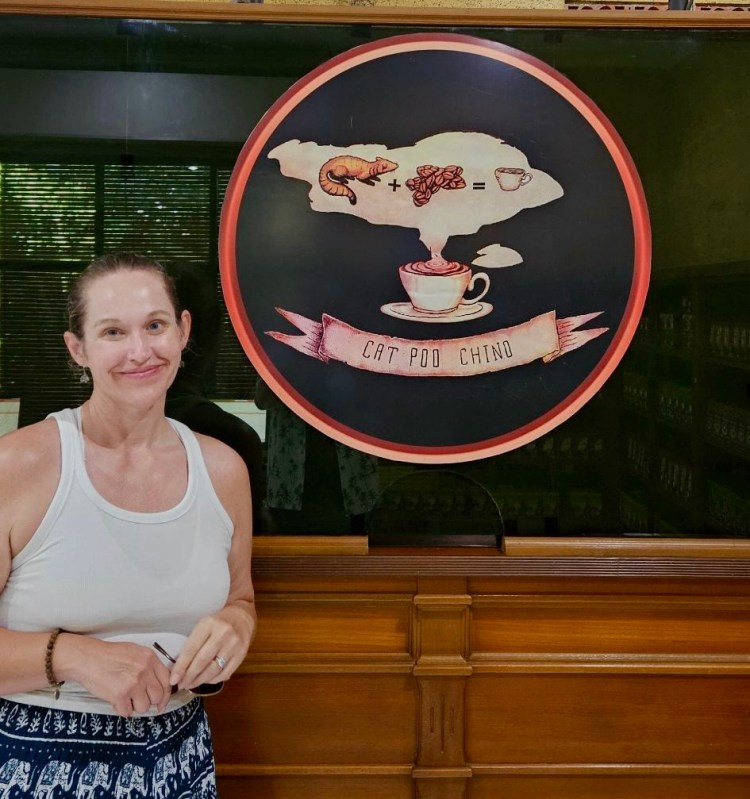
The civets they had at the plantation looked rather sad. They are a nocturnal animal so maybe they were just annoyed with so much commotion while trying to sleep. Our guide explained that the civets live high in the mountains on the plantations’ property and that the civets onsite are switched out every week or two, so they don’t have to spend so much time in the cage. I don’t know that I believed her 100%, but I hope that is the case.
I was familiar with Luwak Coffee prior to our trip and I knew we might very likely encounter it. I really like coffee, like a lot. My thoughts going in was: while I was not opposed to trying Luwak Coffee (it undergoes enough cleaning and processing that the poop thing doesn’t gross me out), I was not willing to pay $35-$100 for a cup of it. Like I said, it’s some of the most expensive coffee in the world and can sell for $100-$600+ for a 1lb bag.
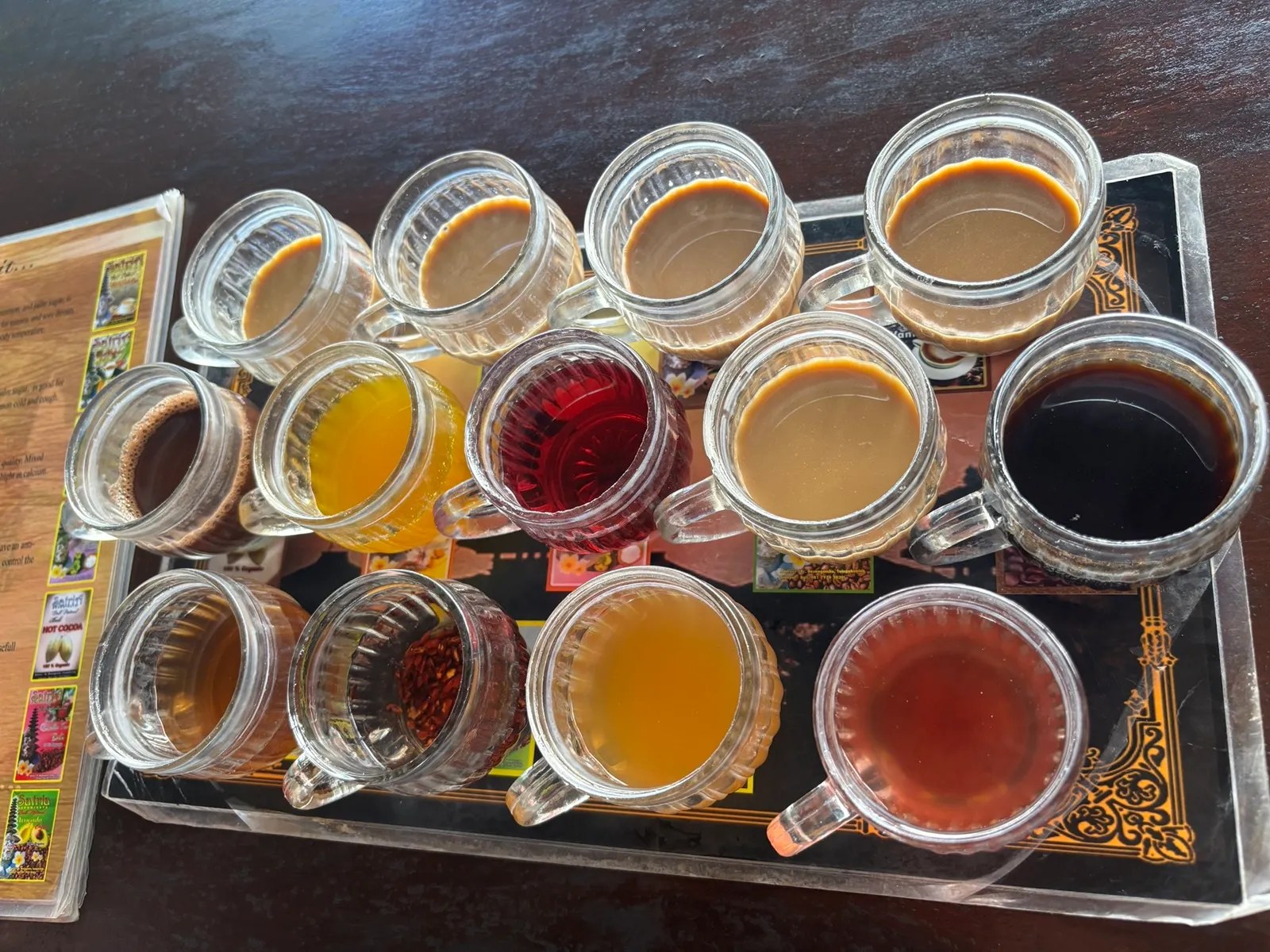
After our brief tour, we were directed to an outdoor room with many long tables, the tasting room. For a fee of around $5 USD, we could try a cup of Luwak Coffee along with the others. We agreed, purchasing just one since we had so many other coffees to try.
First, we had black, Balinese coffee, which is similar to Turkish coffee in that the strong, black coffee sits above the fine grounds which float to the bottom. One does not want to drink the last bit of coffee in the bottom of the cup, or you are in for a silty, chalky surprise. The remaining coffees tasted like various, sweet, instant coffees. They were giving gas-station cappuccino. A nice, sweet treat just not super coffee-y. We’d even requested the “less sweet” versions when asked, but they were still pretty darn sweet. The avocado coffee was our favorite flavor of the bunch. The teas were all pretty tasty, but tasted more like sweet, fruit drinks.
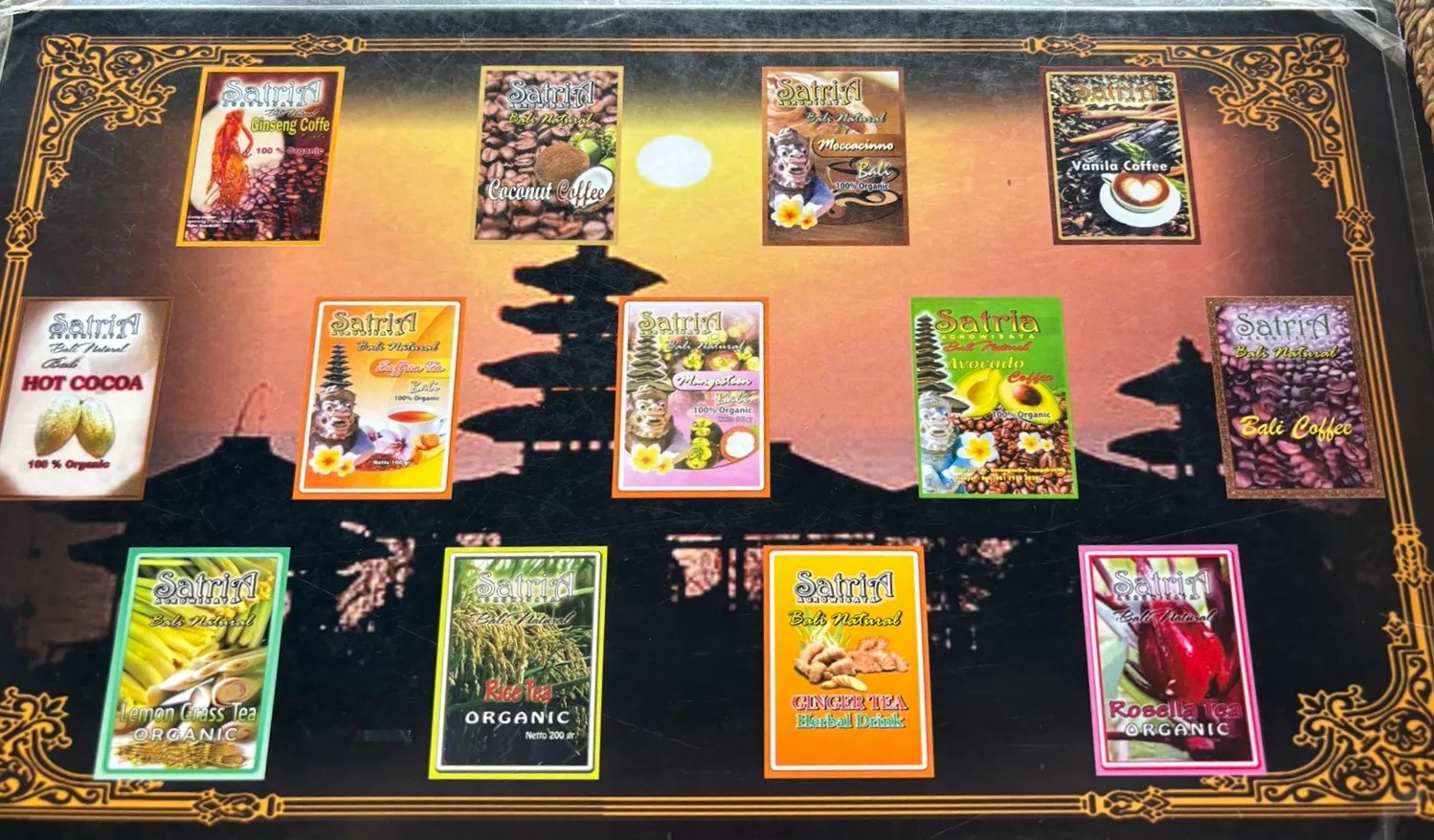
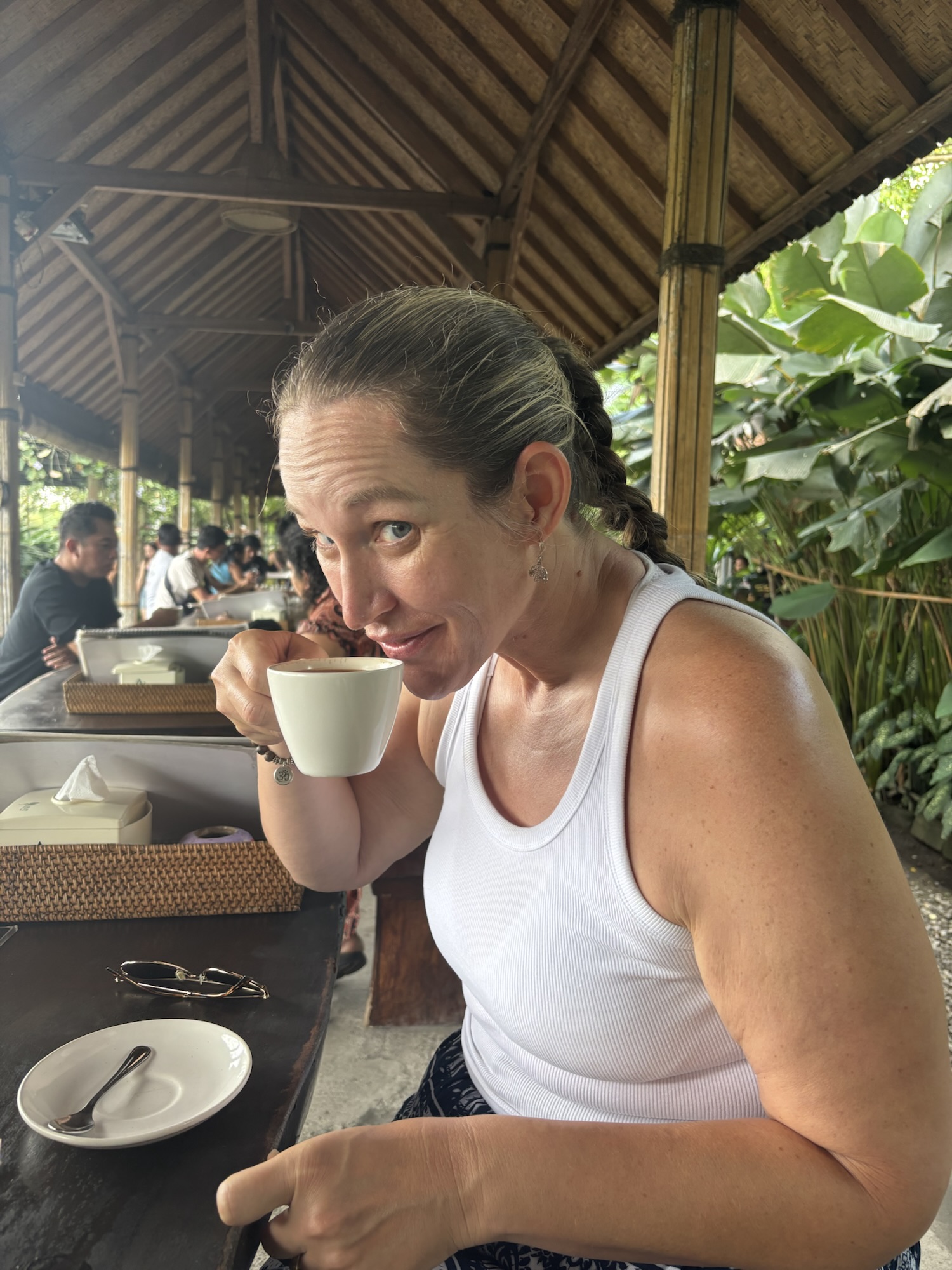
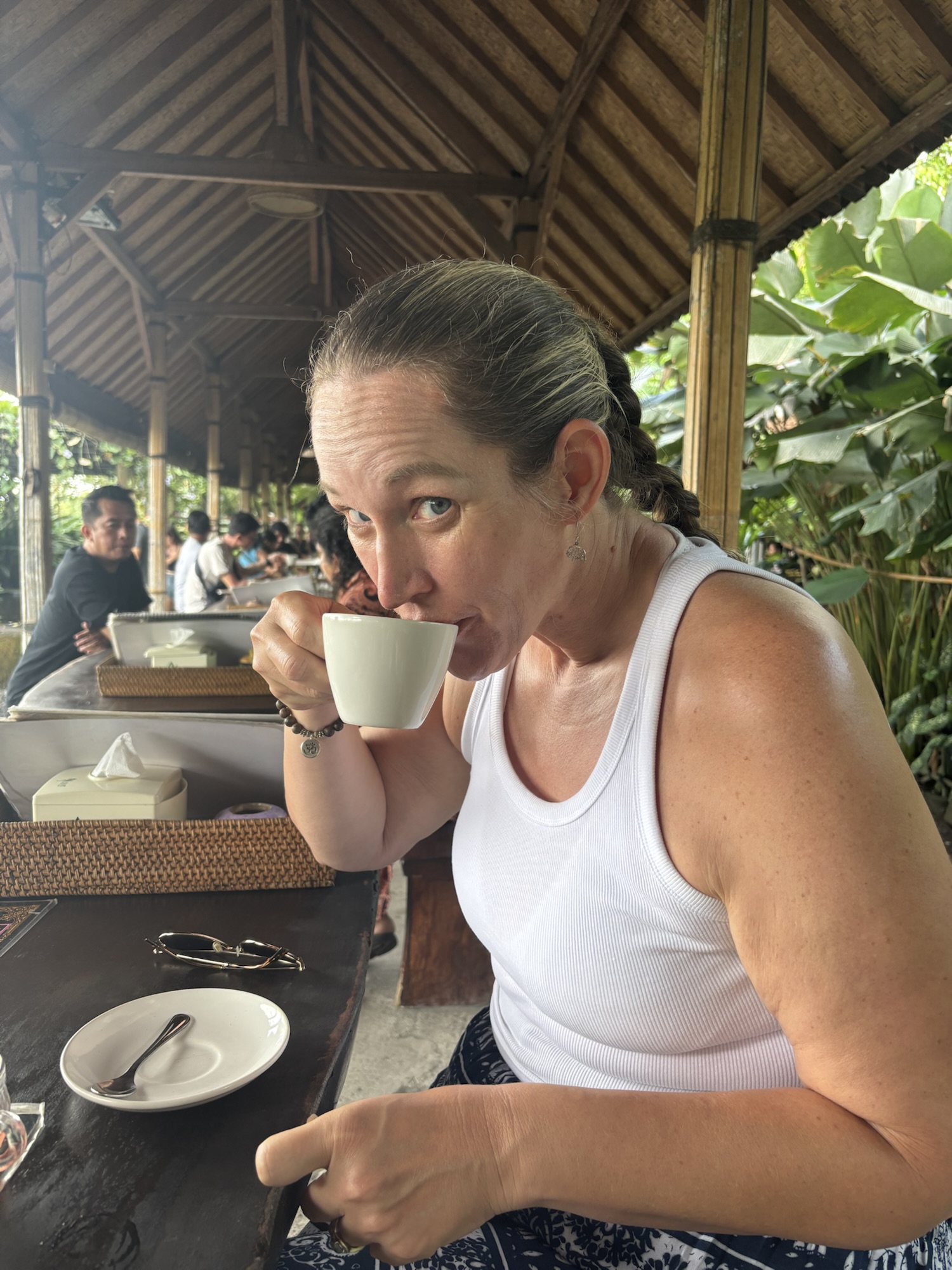
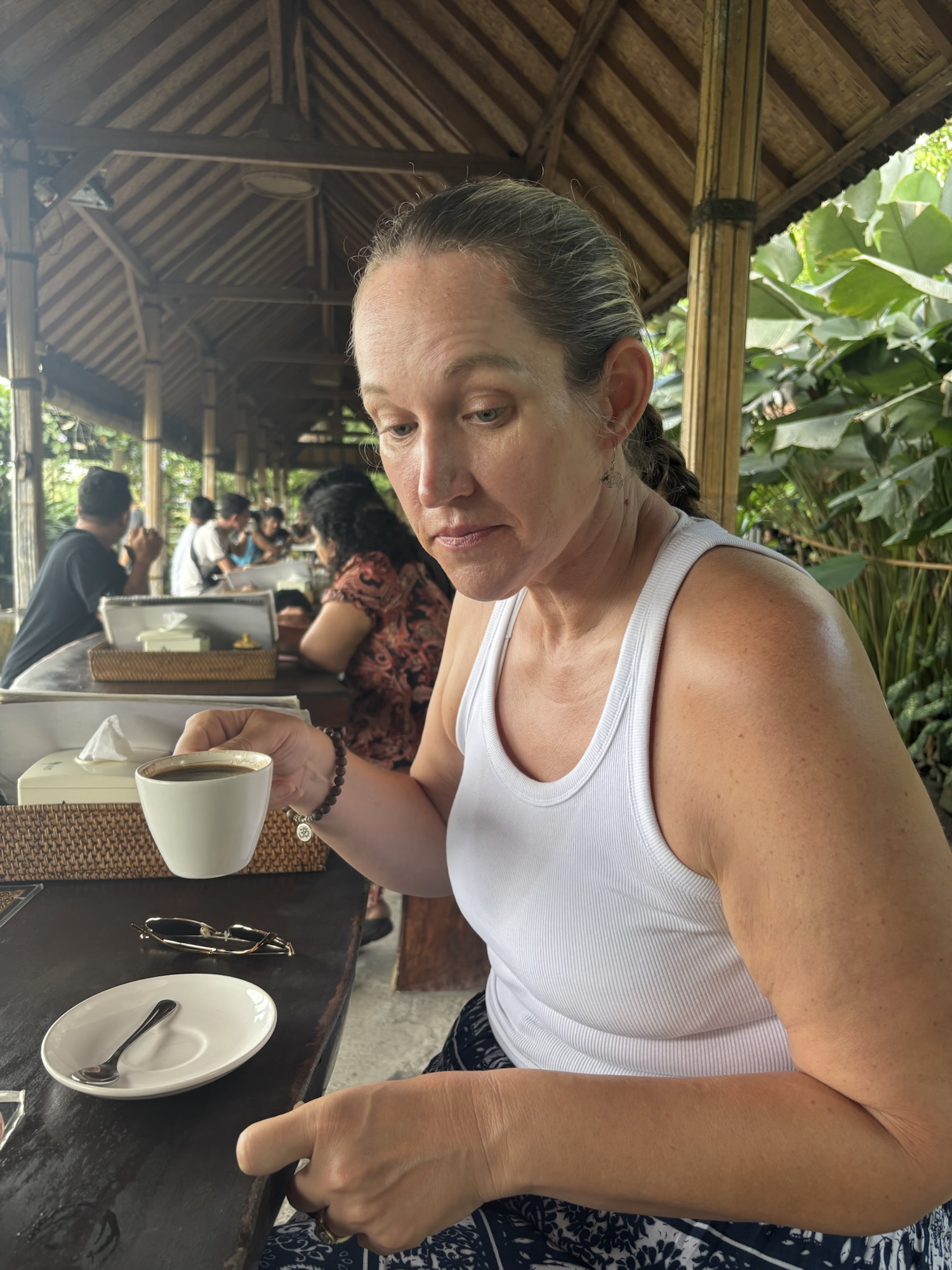
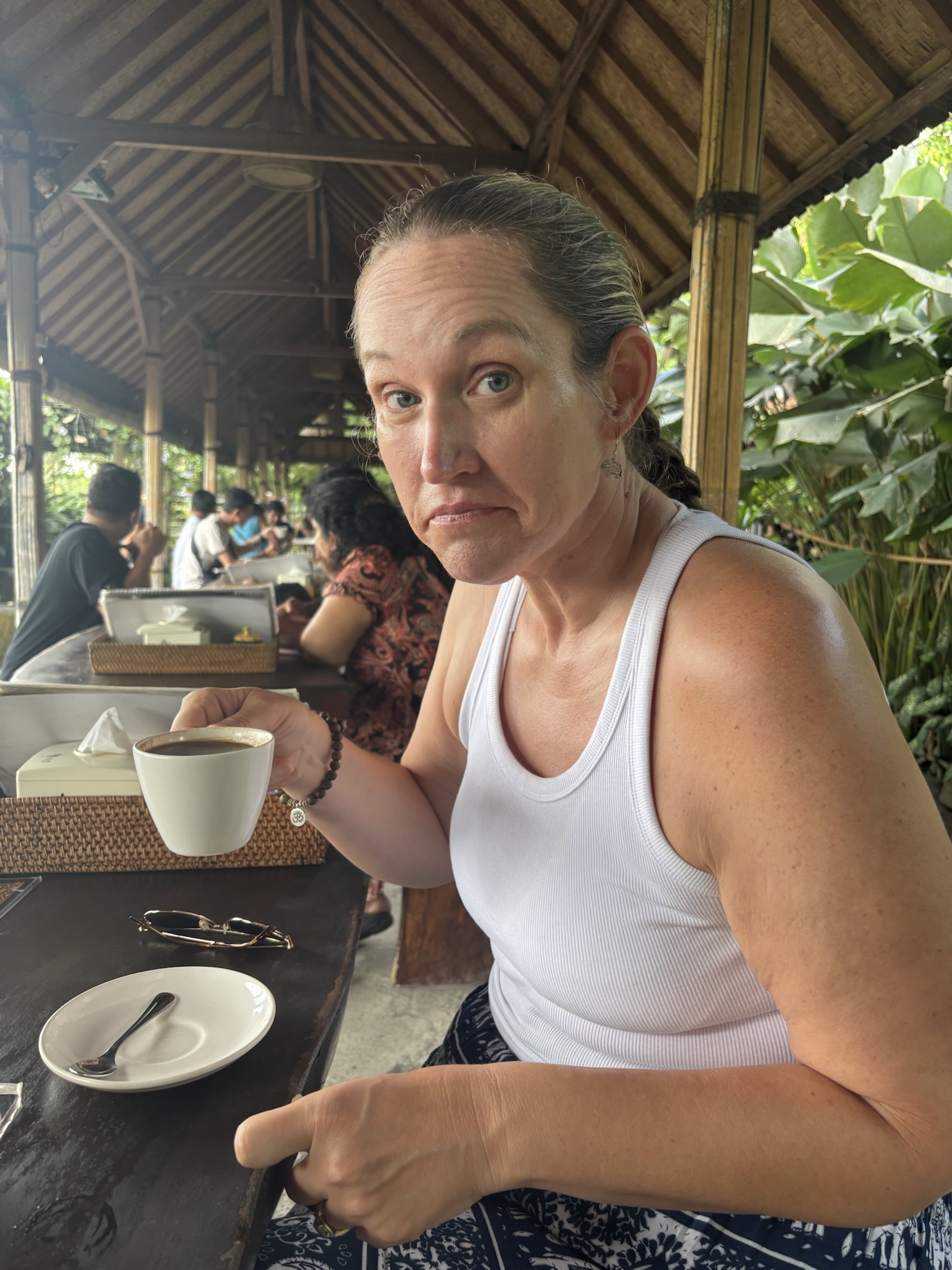
Below is a series of my reactions trying the Luwak Coffee. After our experience at the “plantation” and seeing the quality of the coffees after purchasing some of the avocado coffee prior to leaving, I doubt very much their quality of Luwak Coffee. Not to say that it wasn’t Luwak Coffee, only that it was likely heavily processed and the instant powder they used is probably not the most authentic Luwak Coffee experience.That being said, it was a pretty decent cup of coffee, just not mind blowing or the best I’ve ever had.
As I mentioned, we did buy some of the avocado coffee, figuring we could add it to our own black coffee to tone down the sweetness, if we wanted a little treat. The coffee powder was white and very much made me think of the General Foods International Coffee commercials from the 80’s which seemed so fancy at the time, but was just an instant, sweet, cafe latte powder.
Another day, we set out to find a trail near the Ubud Palace, where we had seen a Balinese Dance performance a few weeks earlier. We didn’t have time to check out the Palace during the performance, so we took a few minutes to walk around before heading onto the trail. The Palace is really just like a medium sized temple. Still cool to check it out though.
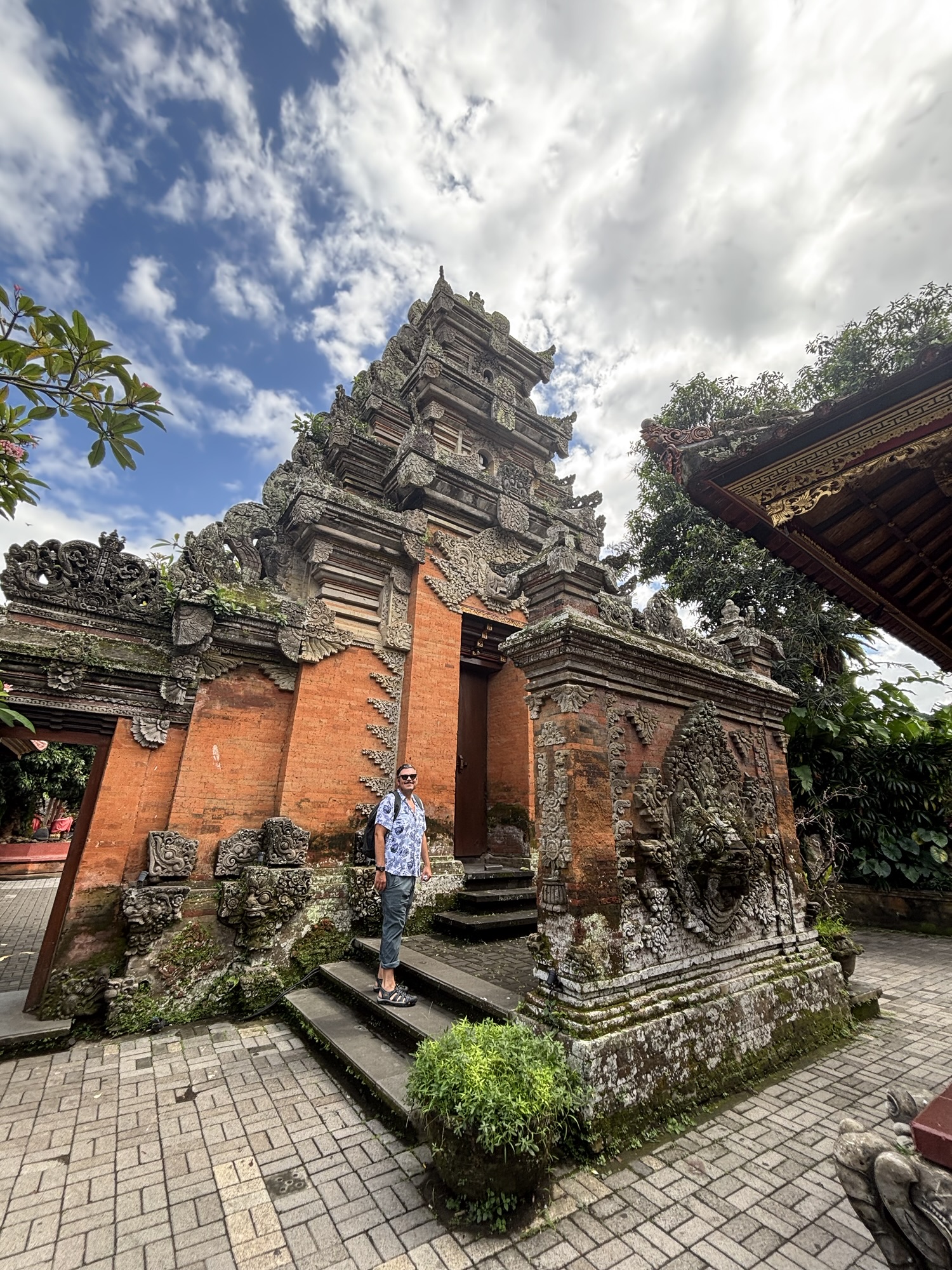
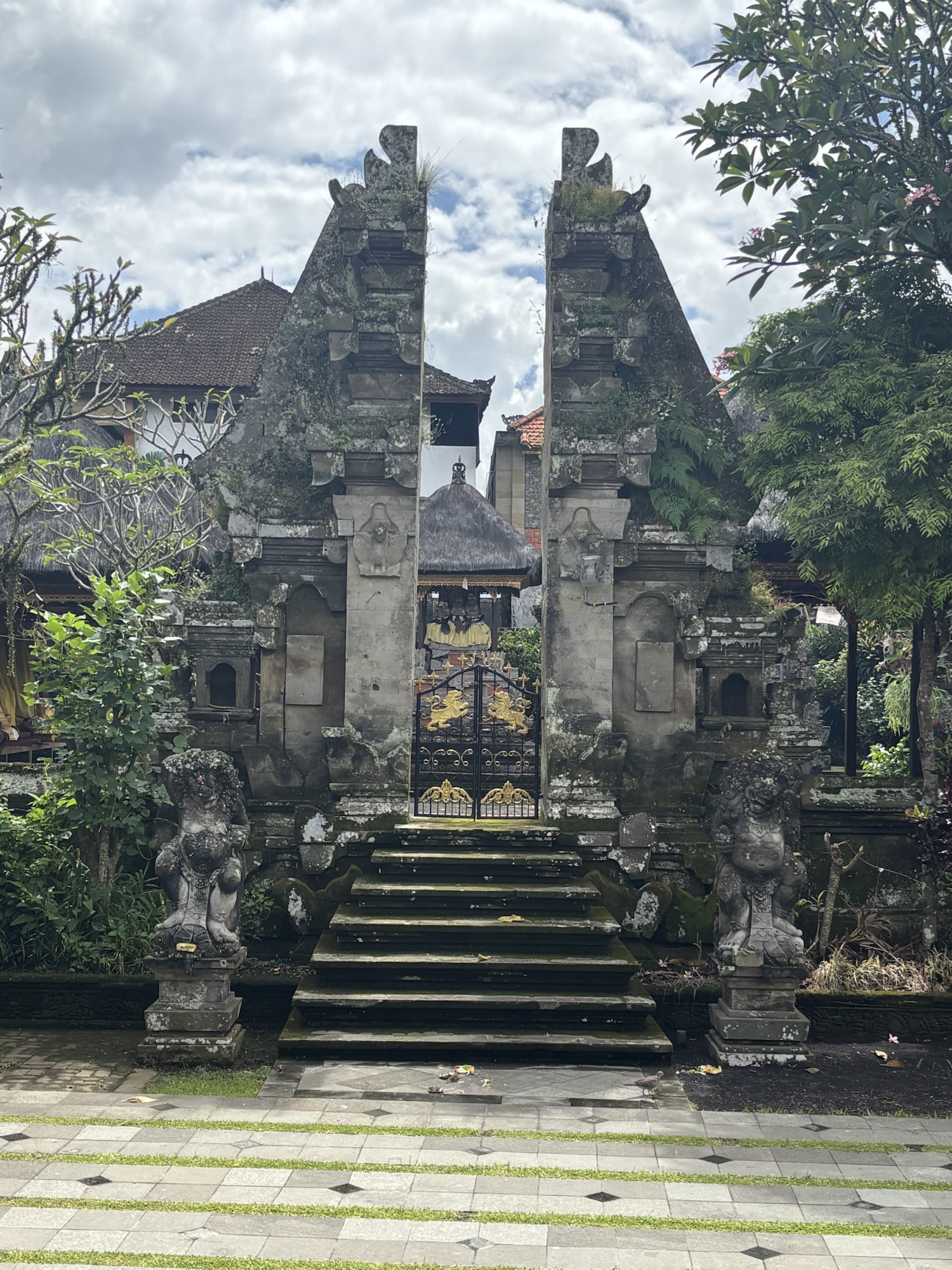
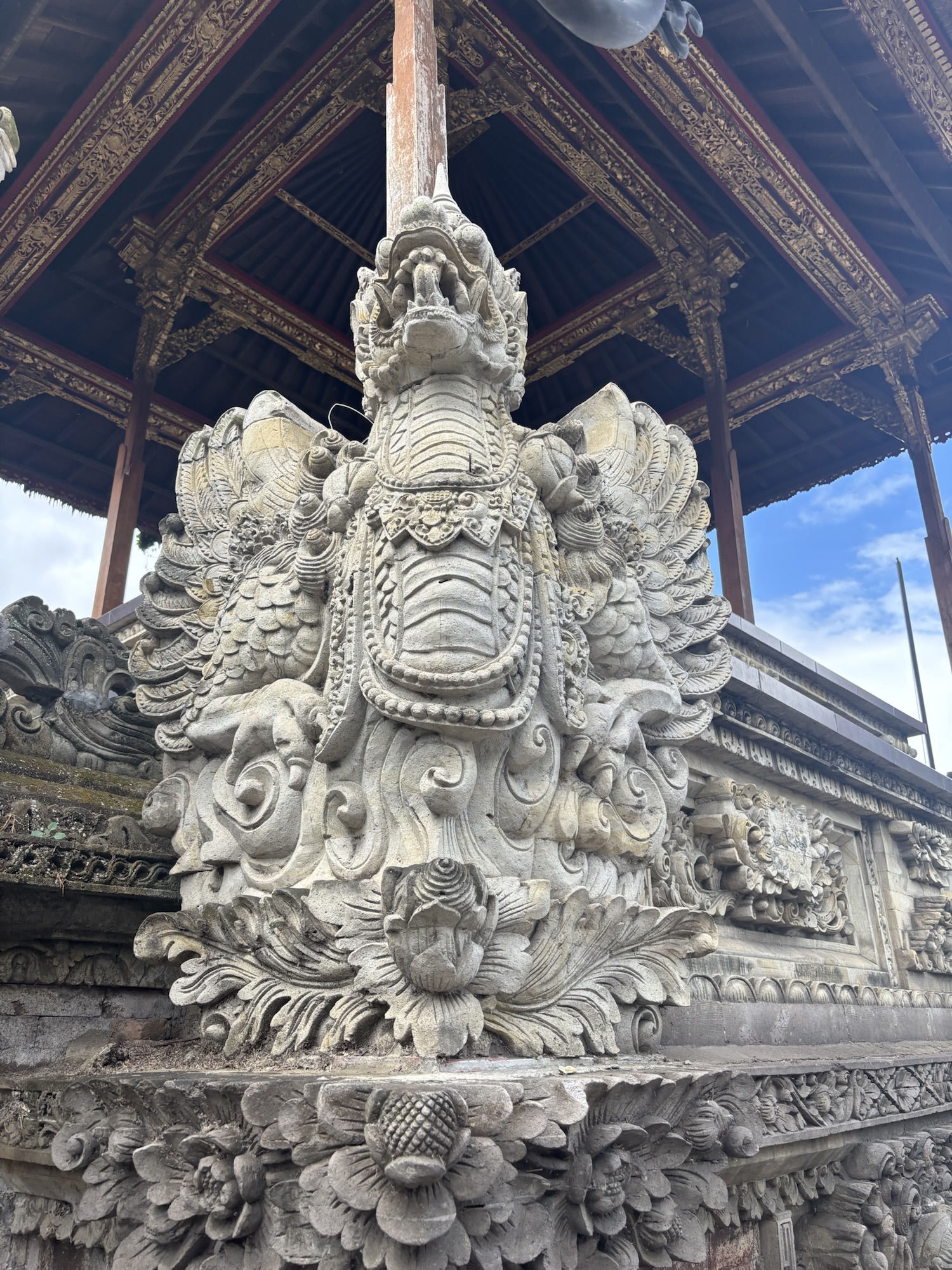
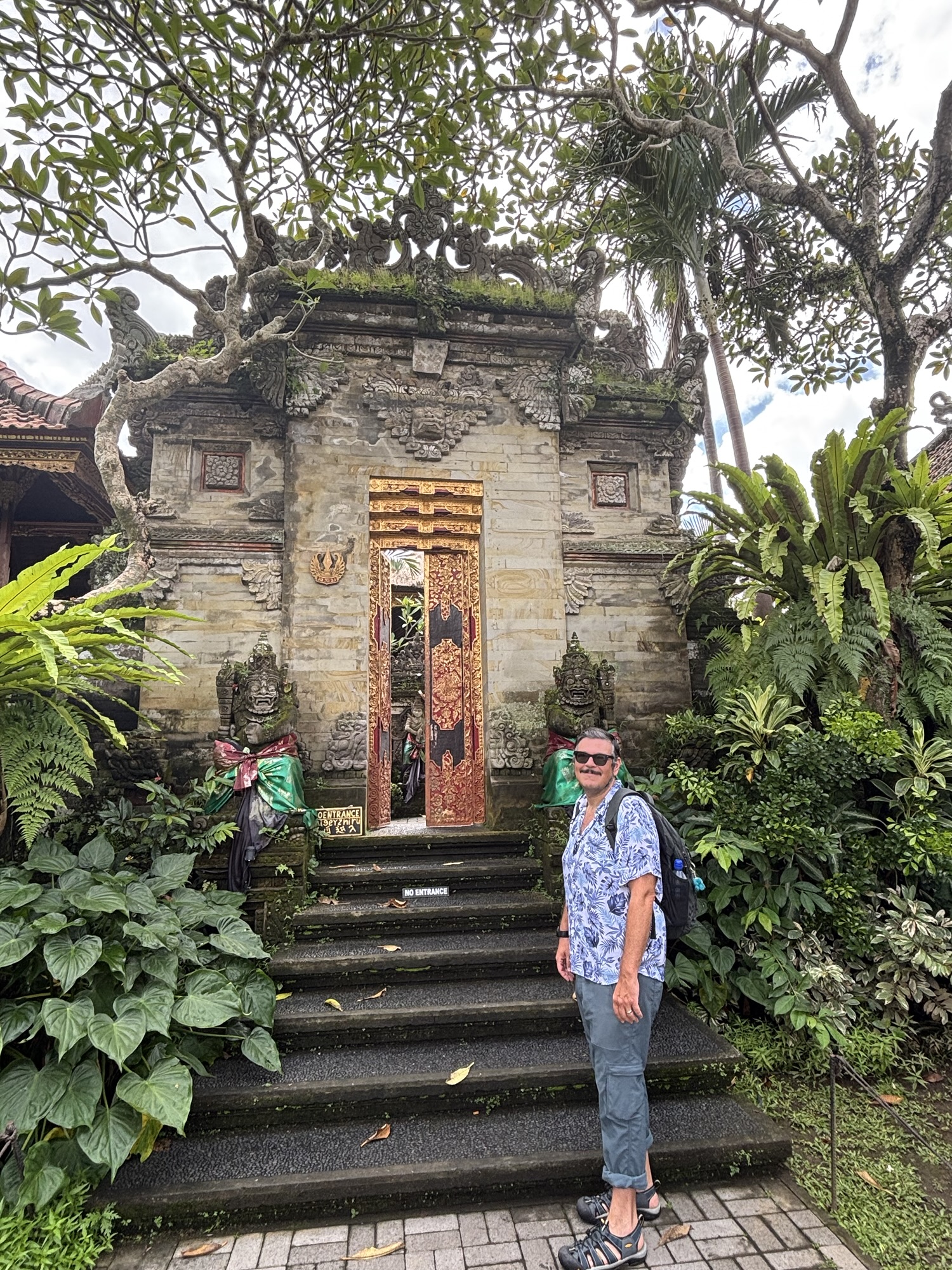
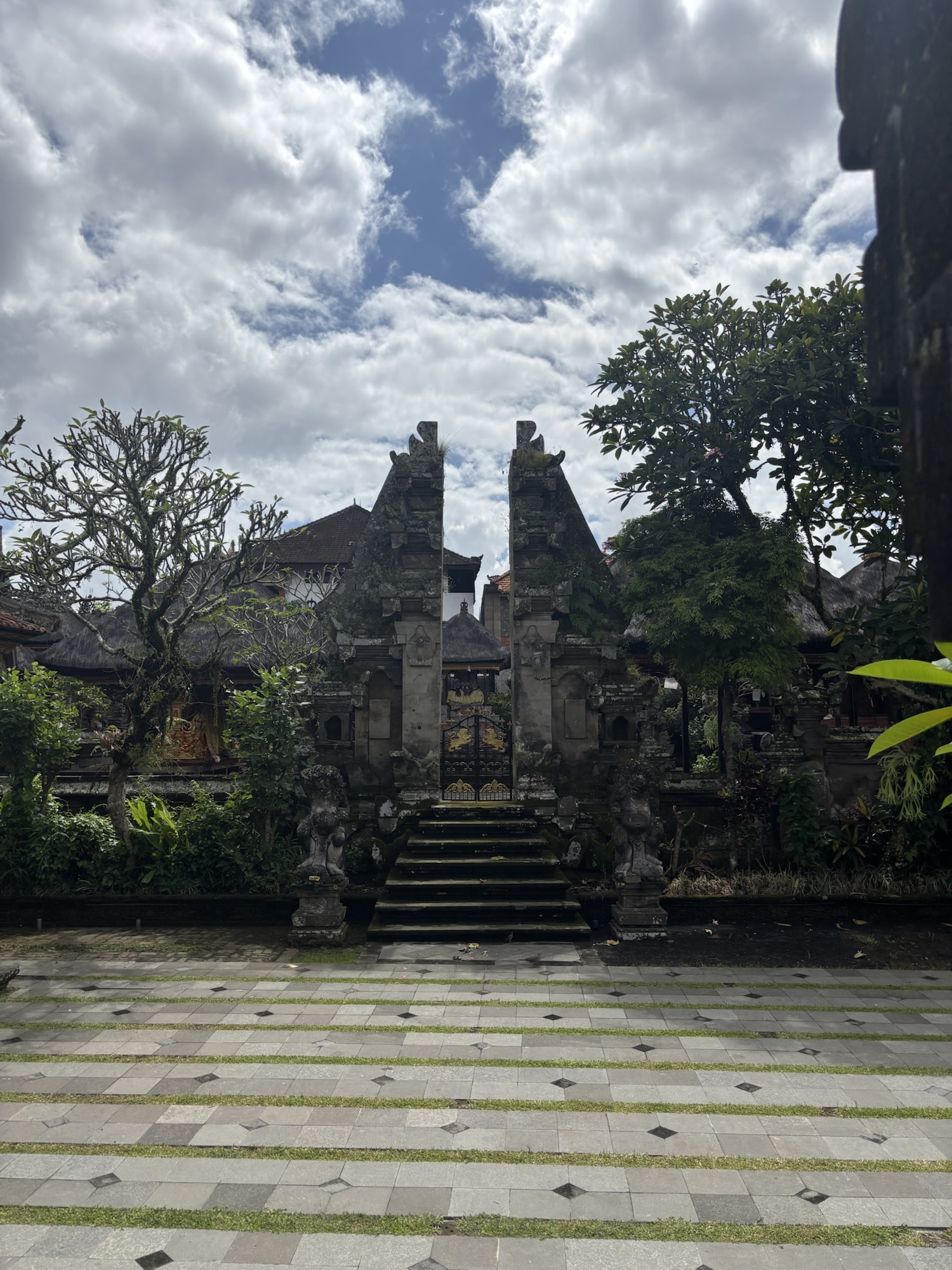
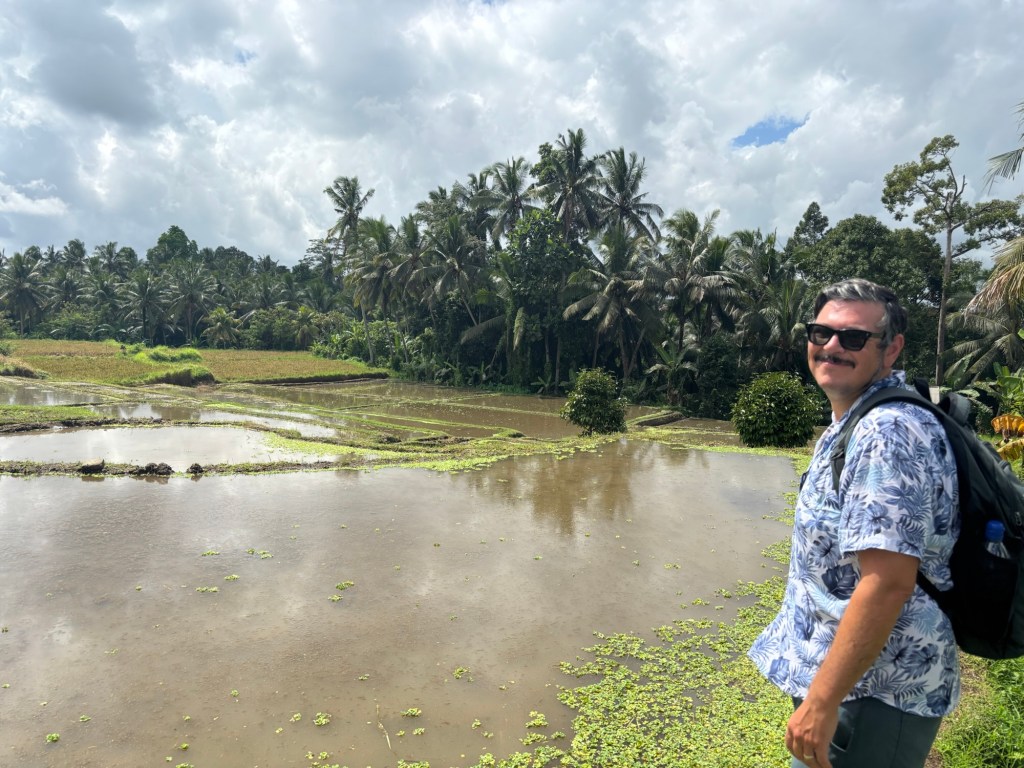
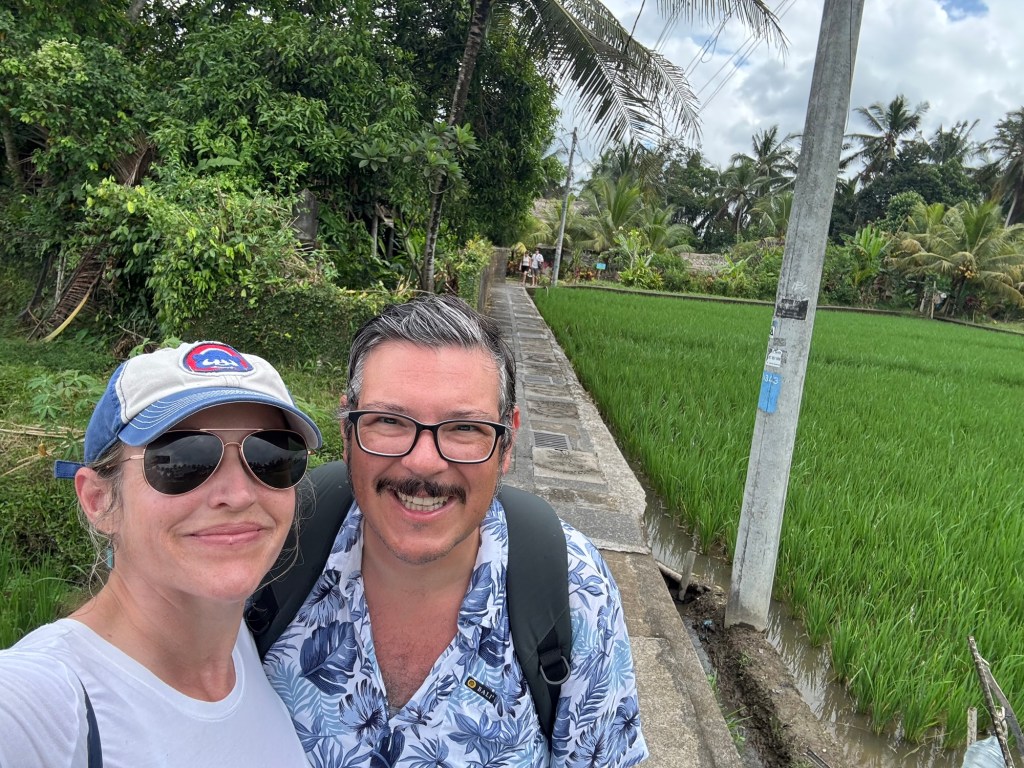
Near the temple we saw a small sign pointing us toward the trail that would take us to some rice terraces. The Sweet Orange Trail it was called. The part of the trail leading out of the city was a little janky in spots. A few missing sidewalk chunks and weak, muddy boards here and there and I thought I might go sliding down the hillside should one break under my weight. Luckily all was well and we eventually found ourselves in a field, with a proper trail that posed little fall risk.
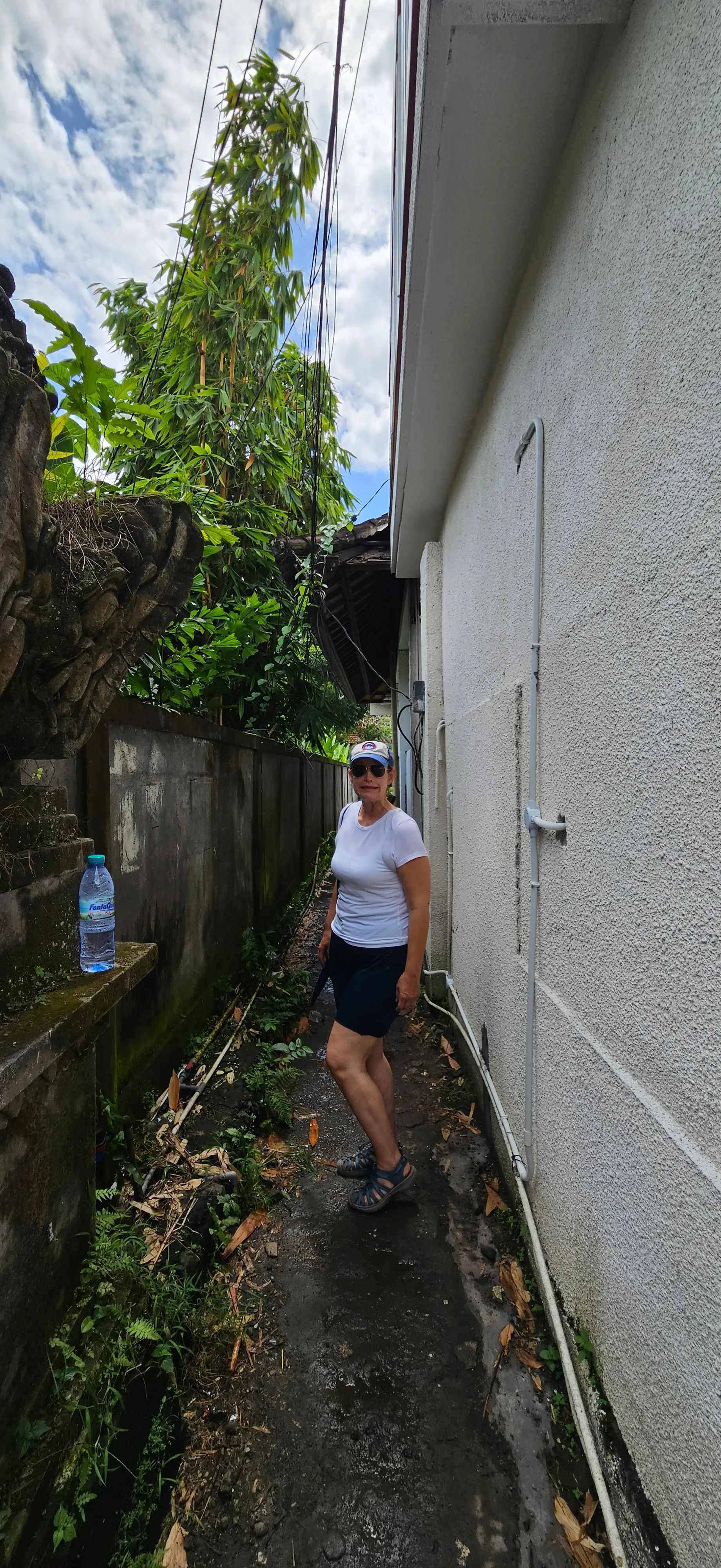
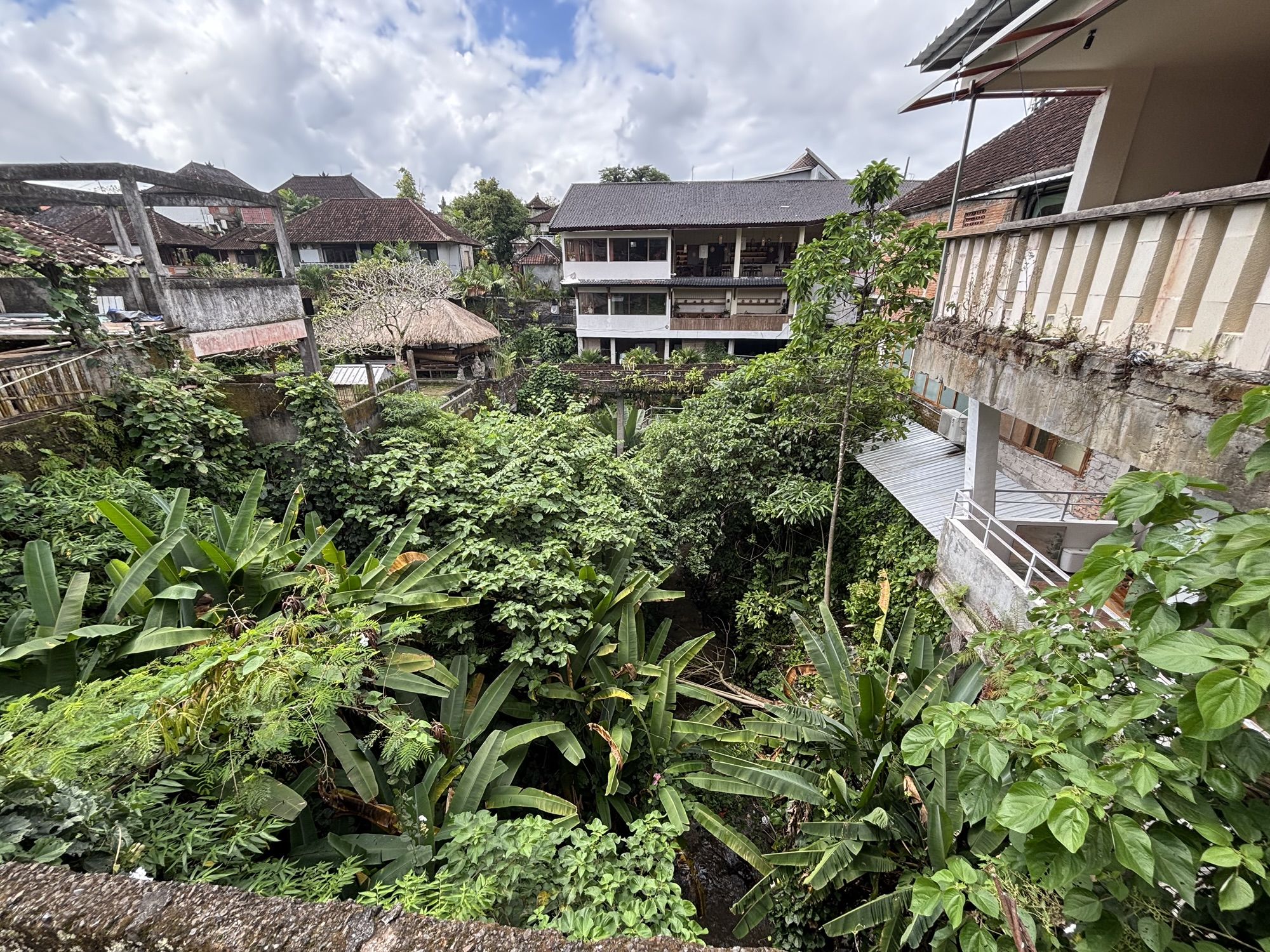
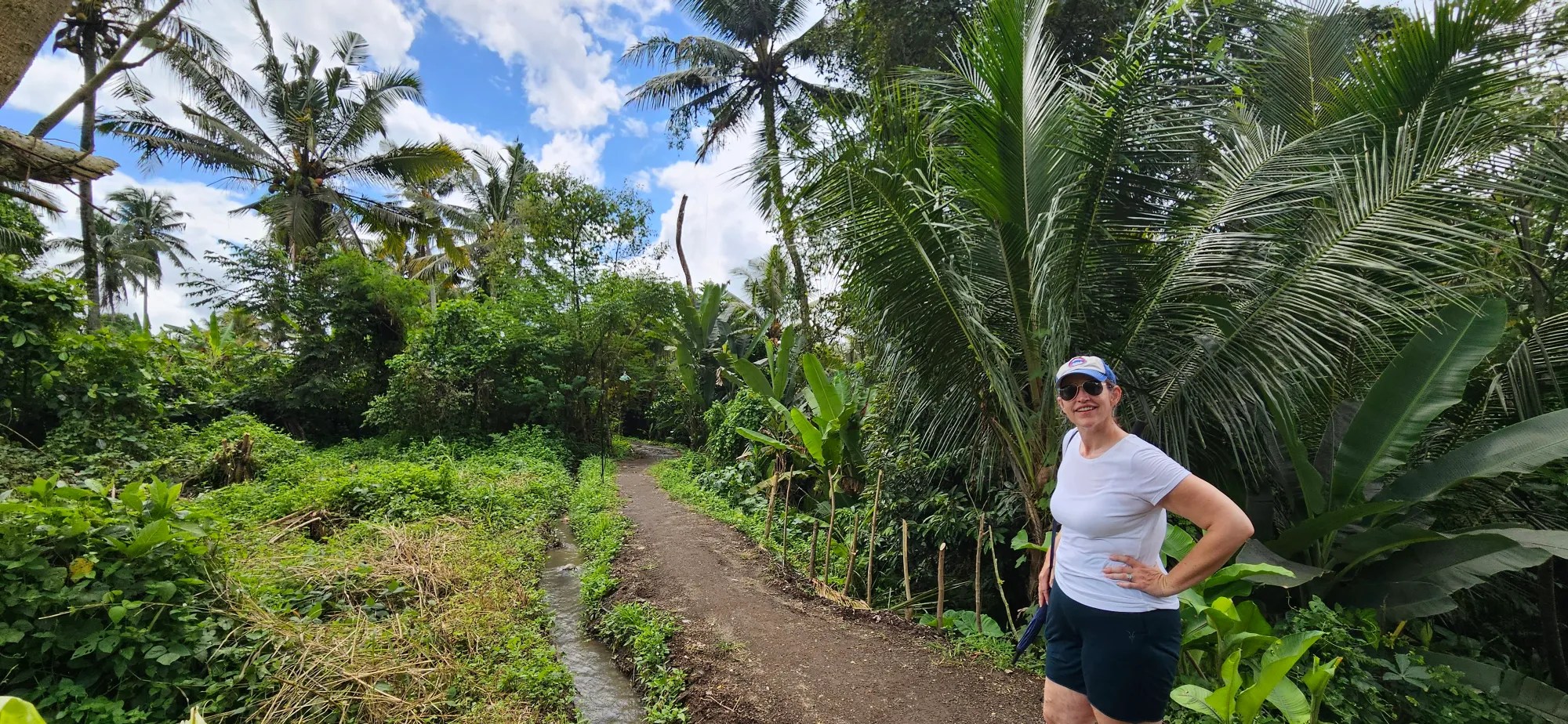
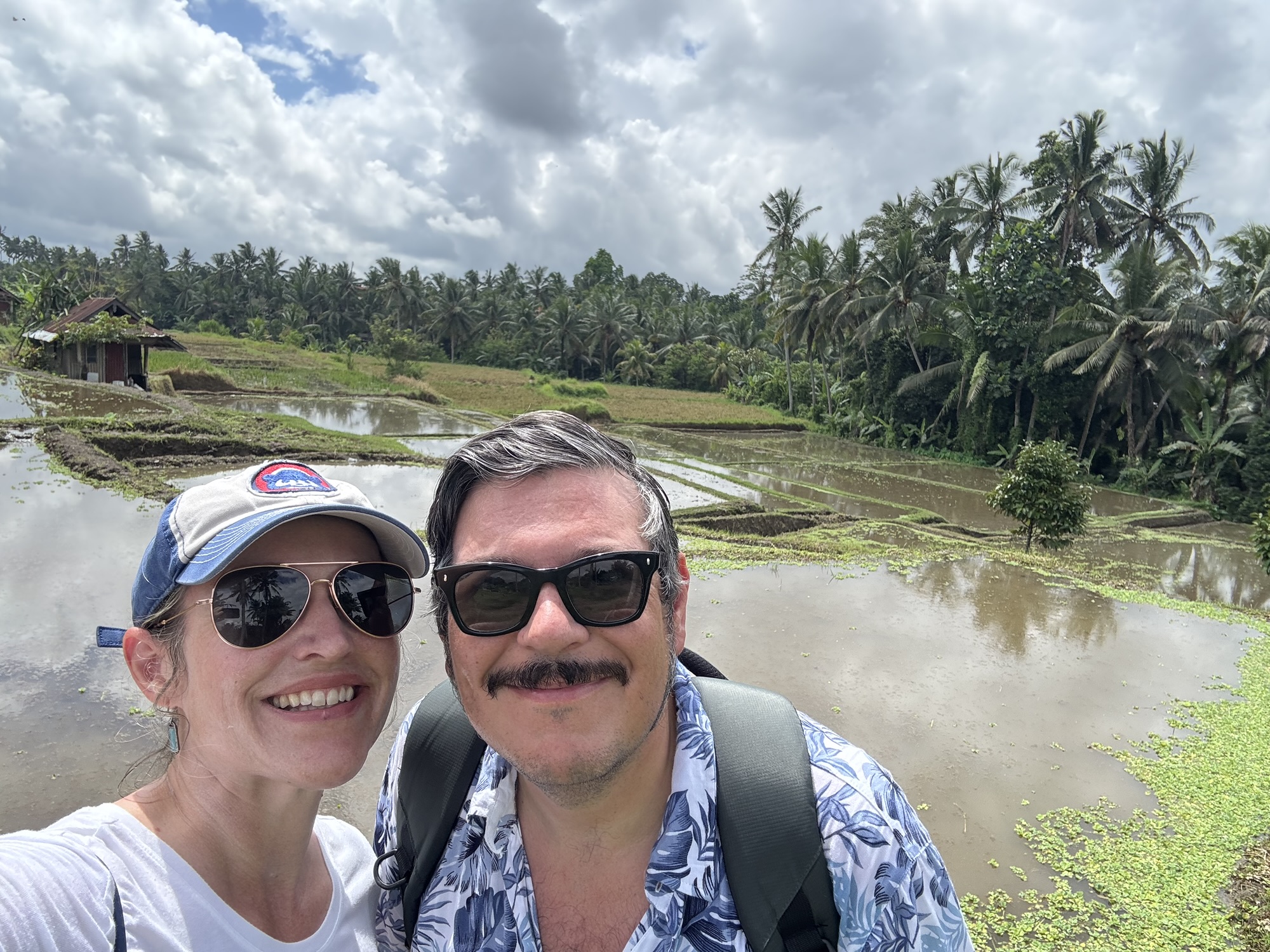
We walked the wet path along the rice paddies and came to a little spot to grab a coffee, The Sweet Orange Warung.
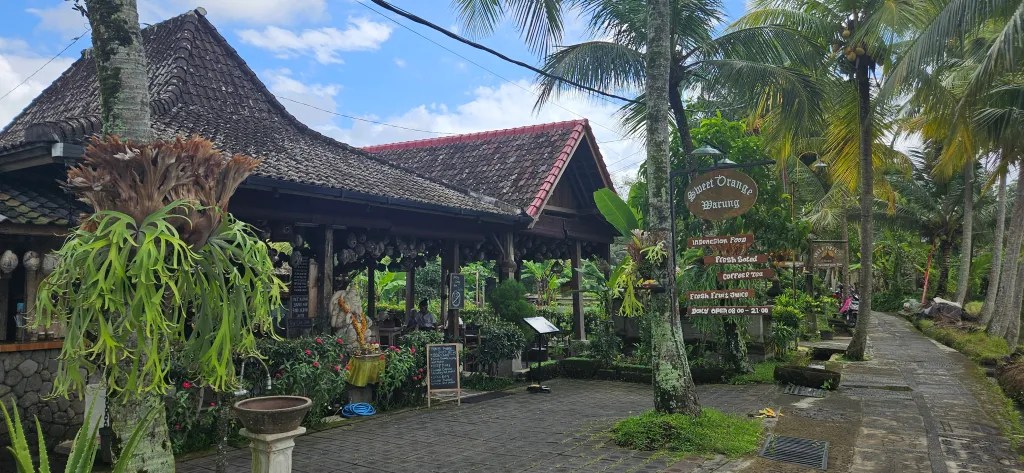
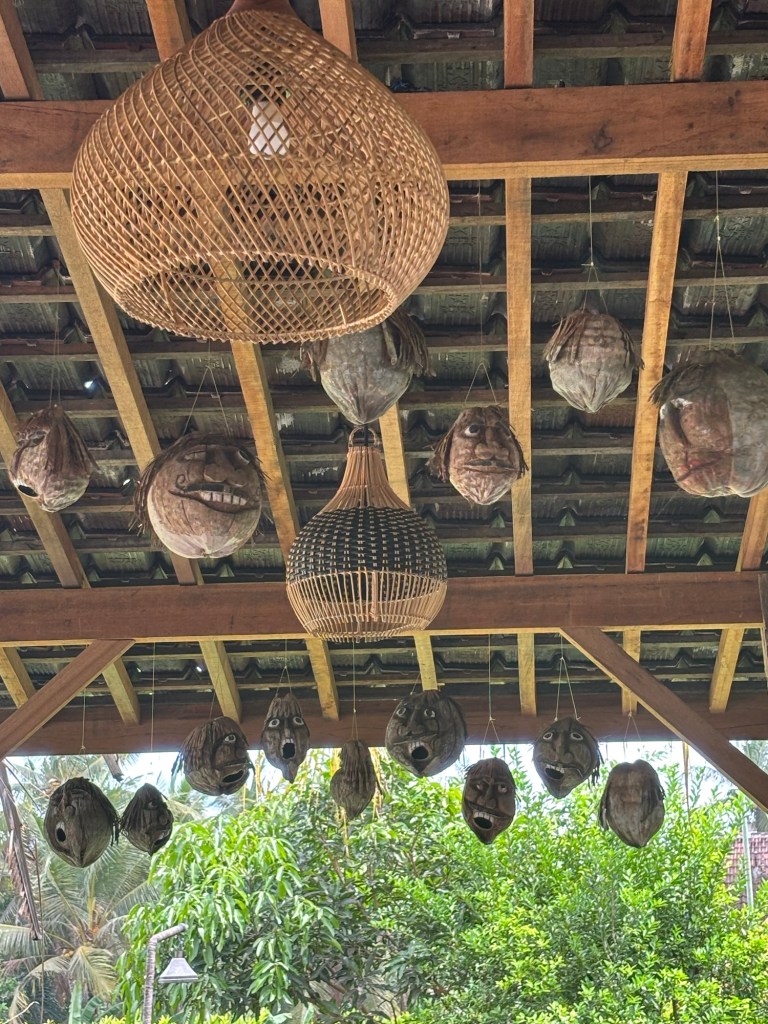
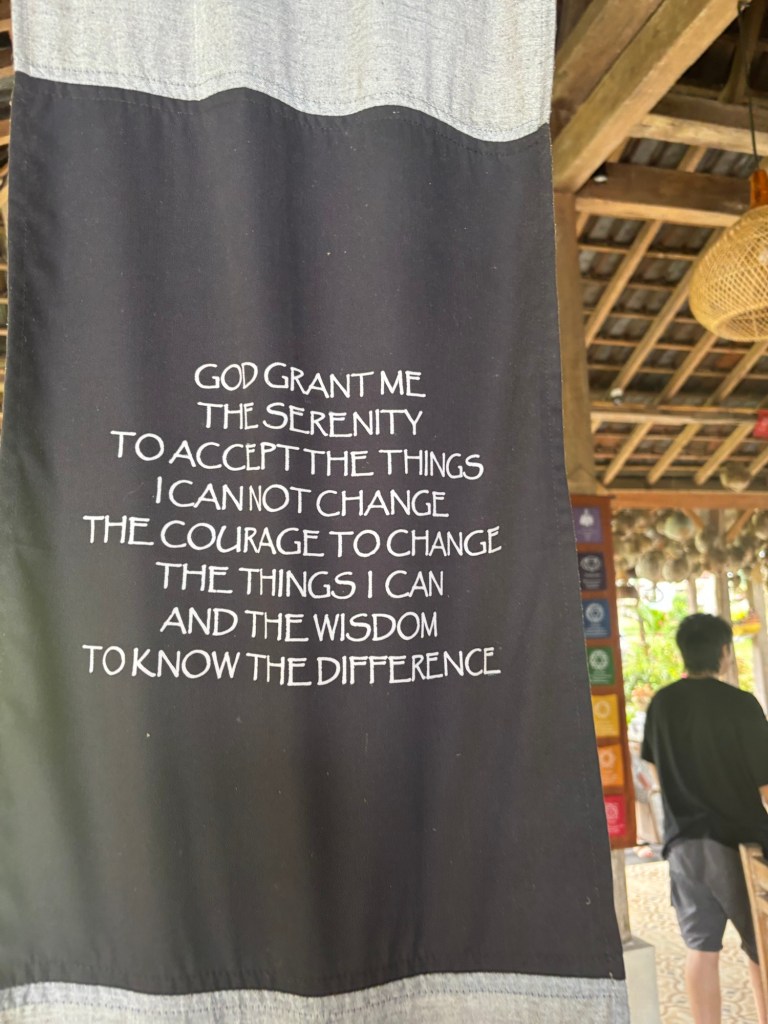
Phil had a smoothie and I had a mint and lime soda that tasted like a virgin mojito. Afterward I also got an iced coffee, because, why not? We sat and enjoyed our beverages while a little bit of rain fell. Eventually we moved along the path (not taking it back the way we came), along the rice fields and back toward Ubud.
On the way back, we found ourselves wandering through a market because, of course we did. We can’t buy souvenirs due to no extra room in our bags, yet we were always happening upon markets selling Balinese souvenirs. Most of them are mass produced nick knacks, but some are really cool and I would buy some if we could, but alas, we cannot.
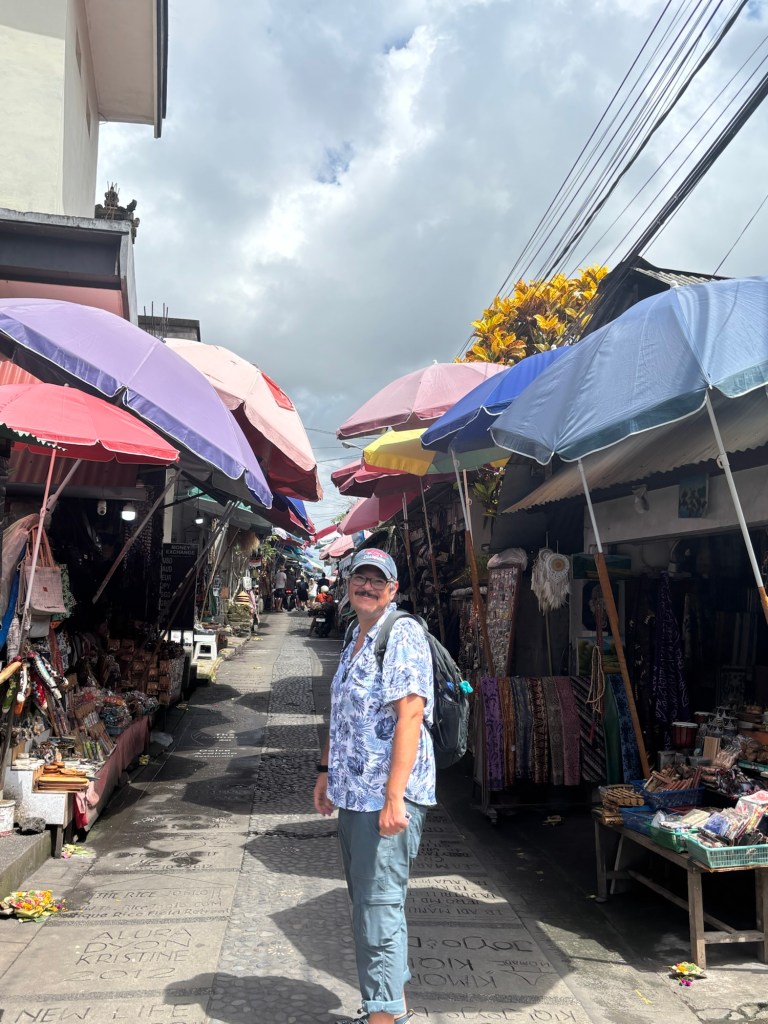
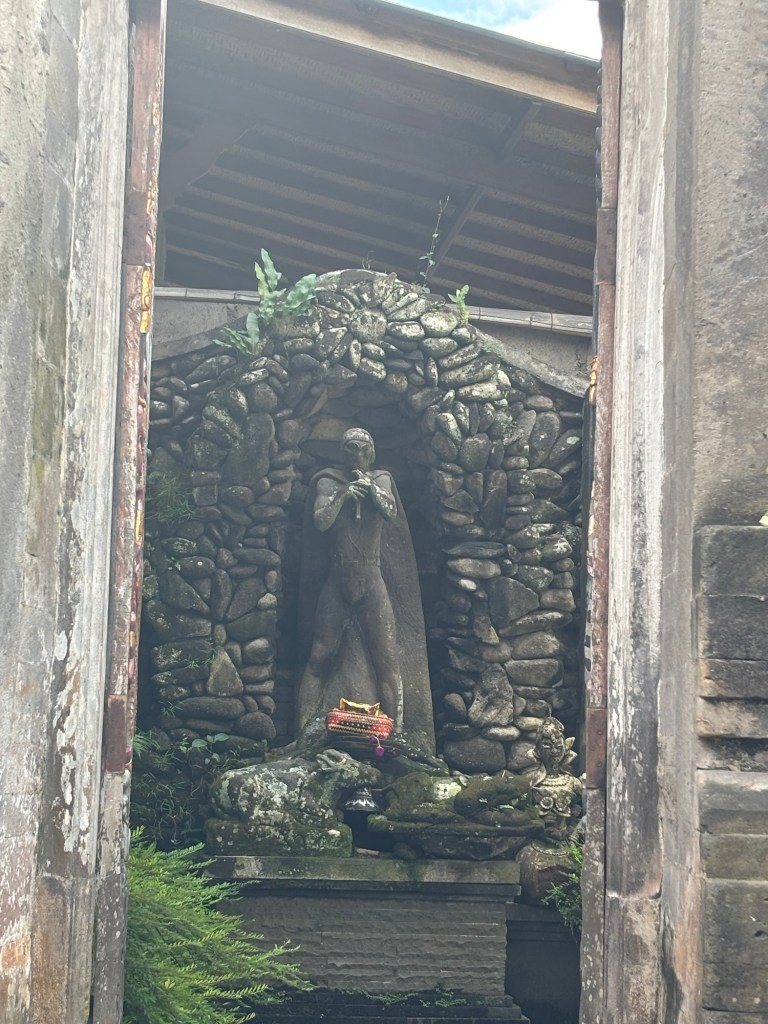
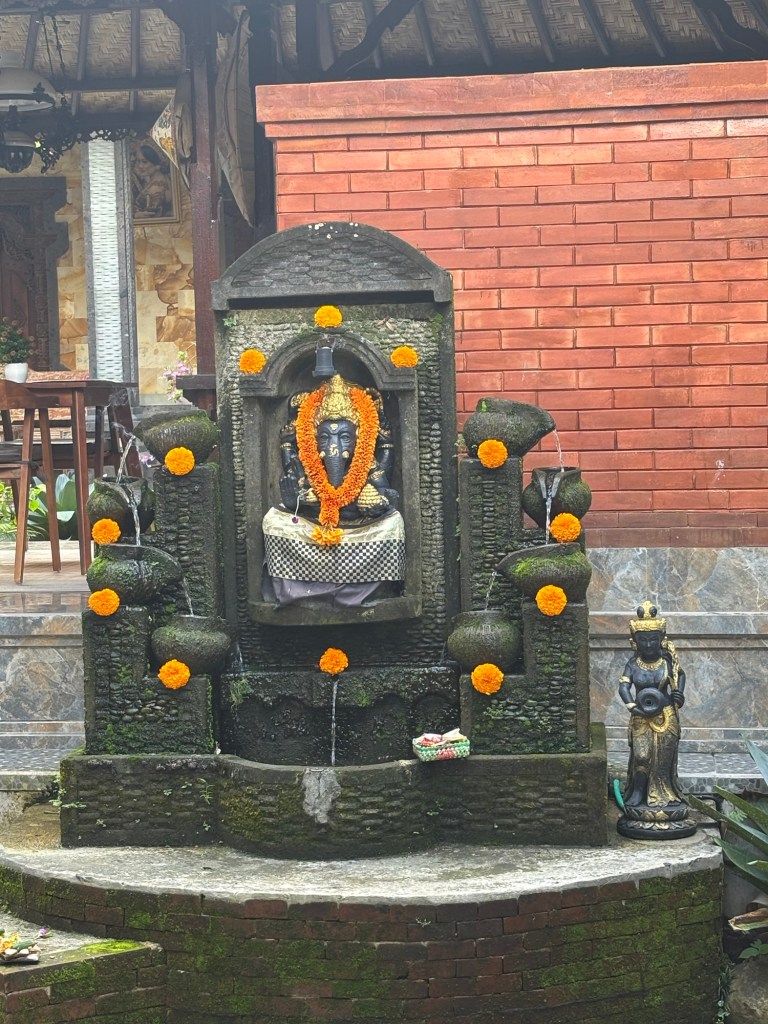
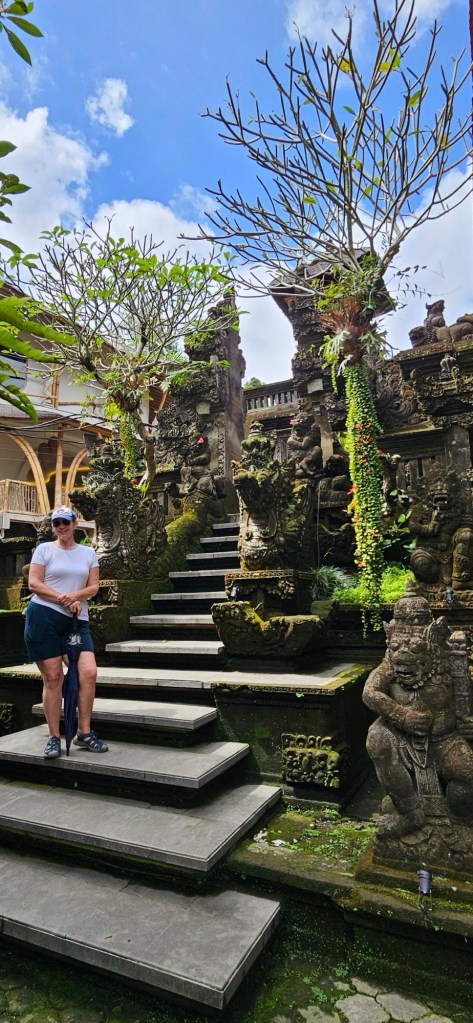
We also passed many cool, little shrines. I really like all of the shrines, large and small, around Bali. I also really like the little offering baskets called banten. You see them on all shrines but also in front of business and homes. They are placed in the morning as an offering of thanks to start the day. I like the idea of starting the day with an attitude of gratitude (that specific term is cheesy to me, but that’s what it is and it’s a good thing).
Maybe the best meal we had in Bali was at Nikuna Warung. Very near to our hotel, it offered traditional Balinese cuisine with a nice ambiance.
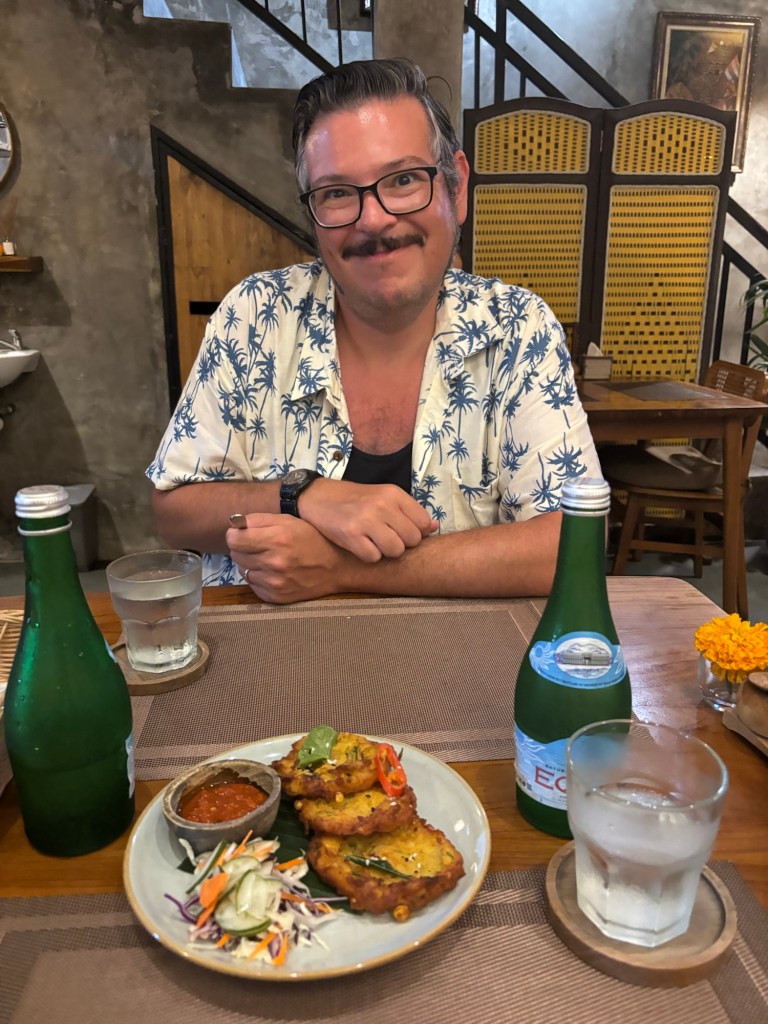
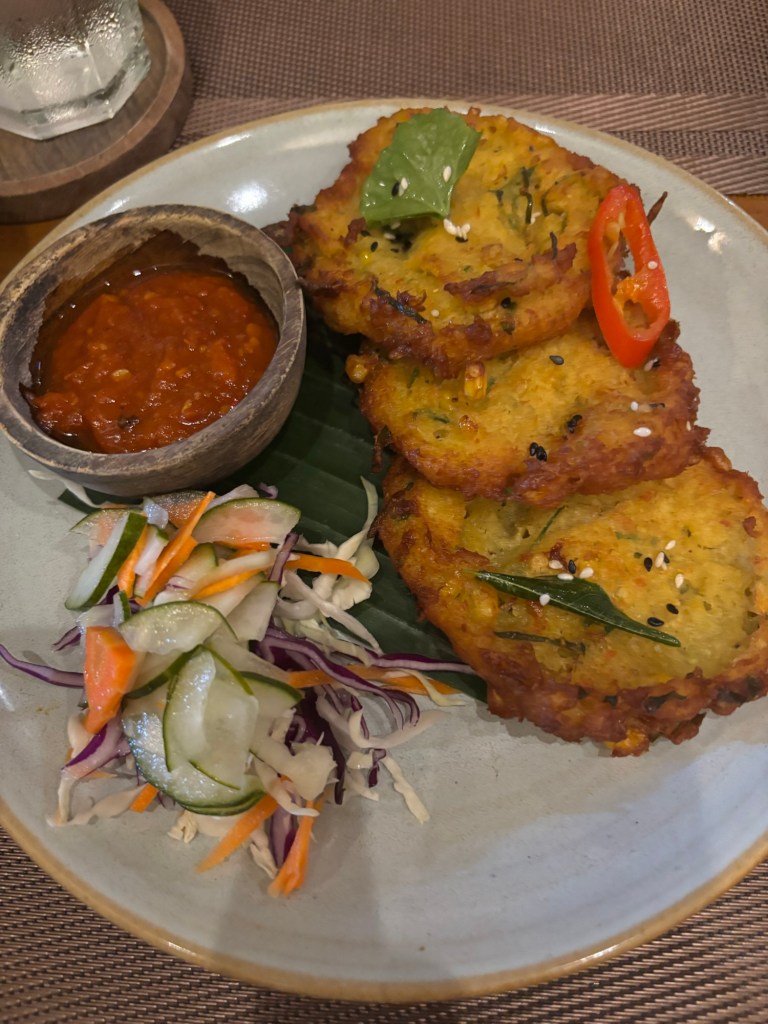
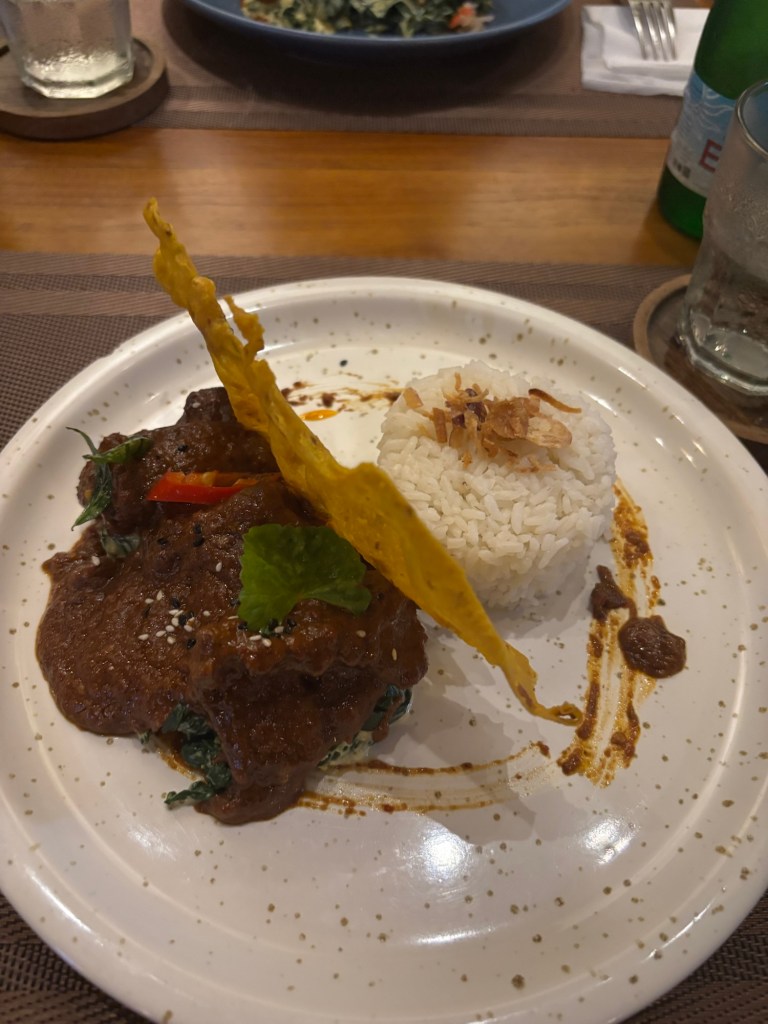
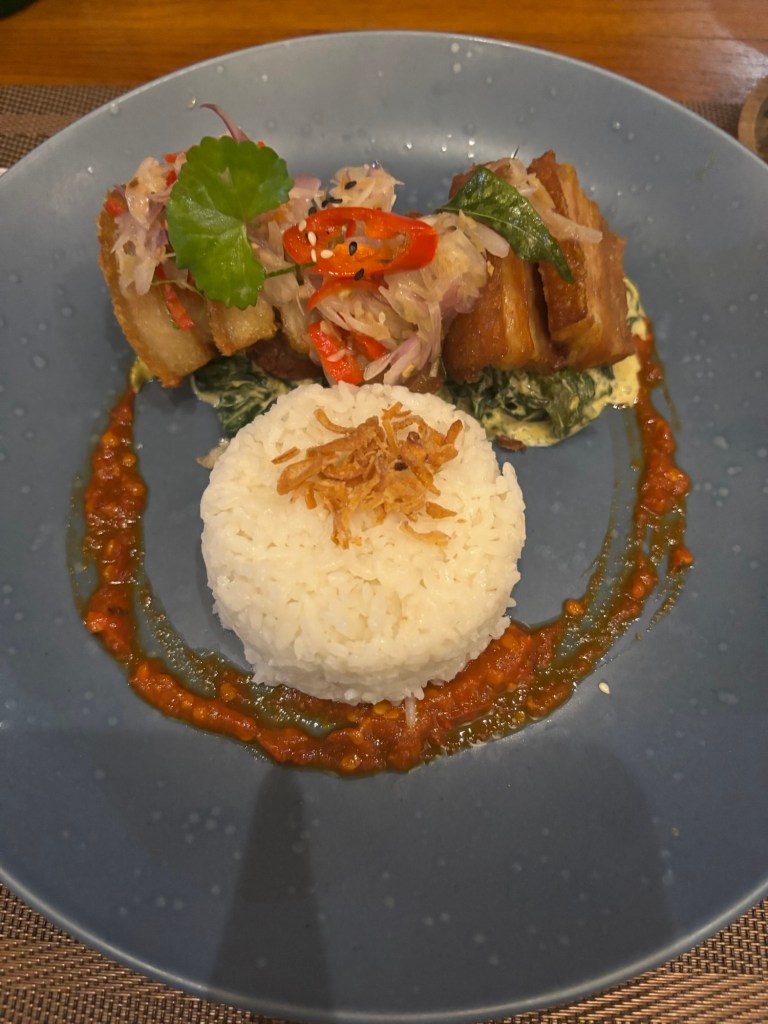
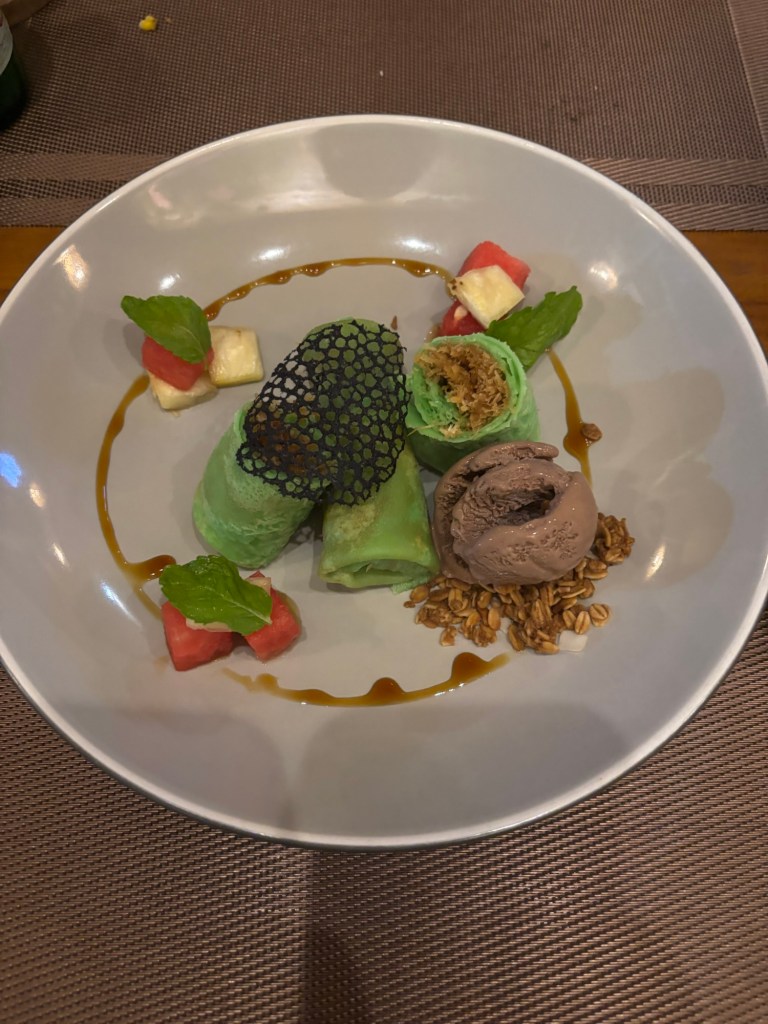
We started with some corn fritters, which were so crispy and good. Phil isn’t a big corn fan and he really liked them too. Phil had the beef rendang, which he really enjoyed and I had the pork belly, because what’s not to like about pork belly? For dessert we had dardar gulung, the little pandan and coconut pancakes that I really came to love during our time in Bali. They served them with a small scoop of ice cream. The whole meal was delicious. Our best in all of Bali.
We were winding down our time in Ubud. After Ubud, we originally, we were to travel to the town of Lovina in the north, where dolphins jump through the surf every morning. Unfortunately, due to our need to extend our visas another 30 days, and being unable to do so online (not for lack of Phil’s trying and trying and trying), we had to make a trip to the immigration office in Denpasar, the Balinese capital.
Next up: Phil gets food poisoning (not from the meal above!) and we take a trip to the immigration office.


The food looks so beautiful there – I would try it for sure! I am not a coffee fan, so I would gladly skip that tour, but it sounds like a very interesting process to make that expensive coffee lol
LikeLiked by 1 person
Interesting for sure. I told Phil, “I’ll try it but I’m not spending $50 on a cup of cat sh** coffee” 😆
LikeLike
😂 love it!
LikeLike