Georgetown, Penang was a great place to begin our first visit to Malaysia. Full of charm, culture, and amazing food, Penang did not disappoint. We did not know a lot about Malaysia going in. We knew it comprised most of the Malay peninsula, on which Singapore also resides, located on the southern tip. We also knew it was a predominantly Muslim country.
What we didn’t know about Malaysia was its unique multi-cultural, multi-ethnic, and multi-religious make up. The Malay people and indigenous groups make up about 60% of the population, with Malaysian Chinese, and Malaysian Indians making up the rest of the major ethnic groups in the country. This blending of cultures is evident in the architecture, fashion, and food. Oh, the food.
We first learned a bit about Malaysia’s cultural diversity from Grace, our guide on our food tour of George Town, Penang. Grace identified as a Malaysian Chinese. She said her grandmother was Indian. She spoke Malay, Mandarain, English, Hokkien (largely spoken in Southeastern China), Cantonese, Tamil (spoken in Southern India), and Thai. Wow. She is not unique in being a polyglot. In fact, most Malaysians are bi or tri-lingual.
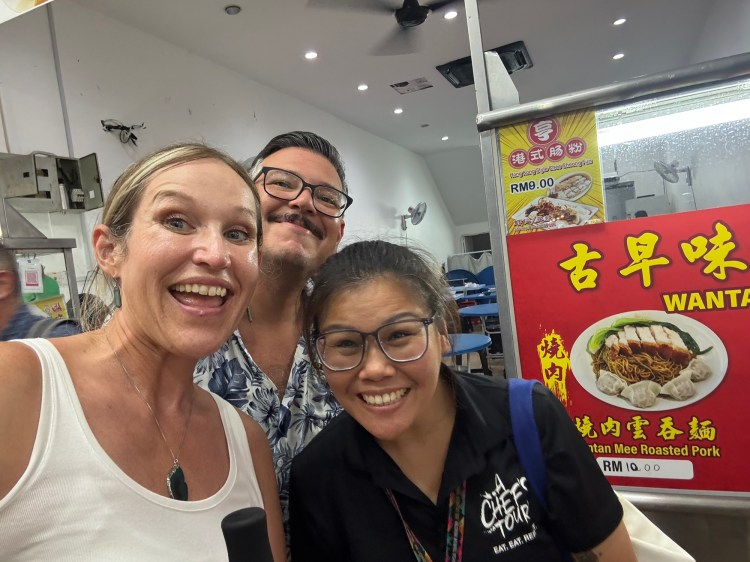
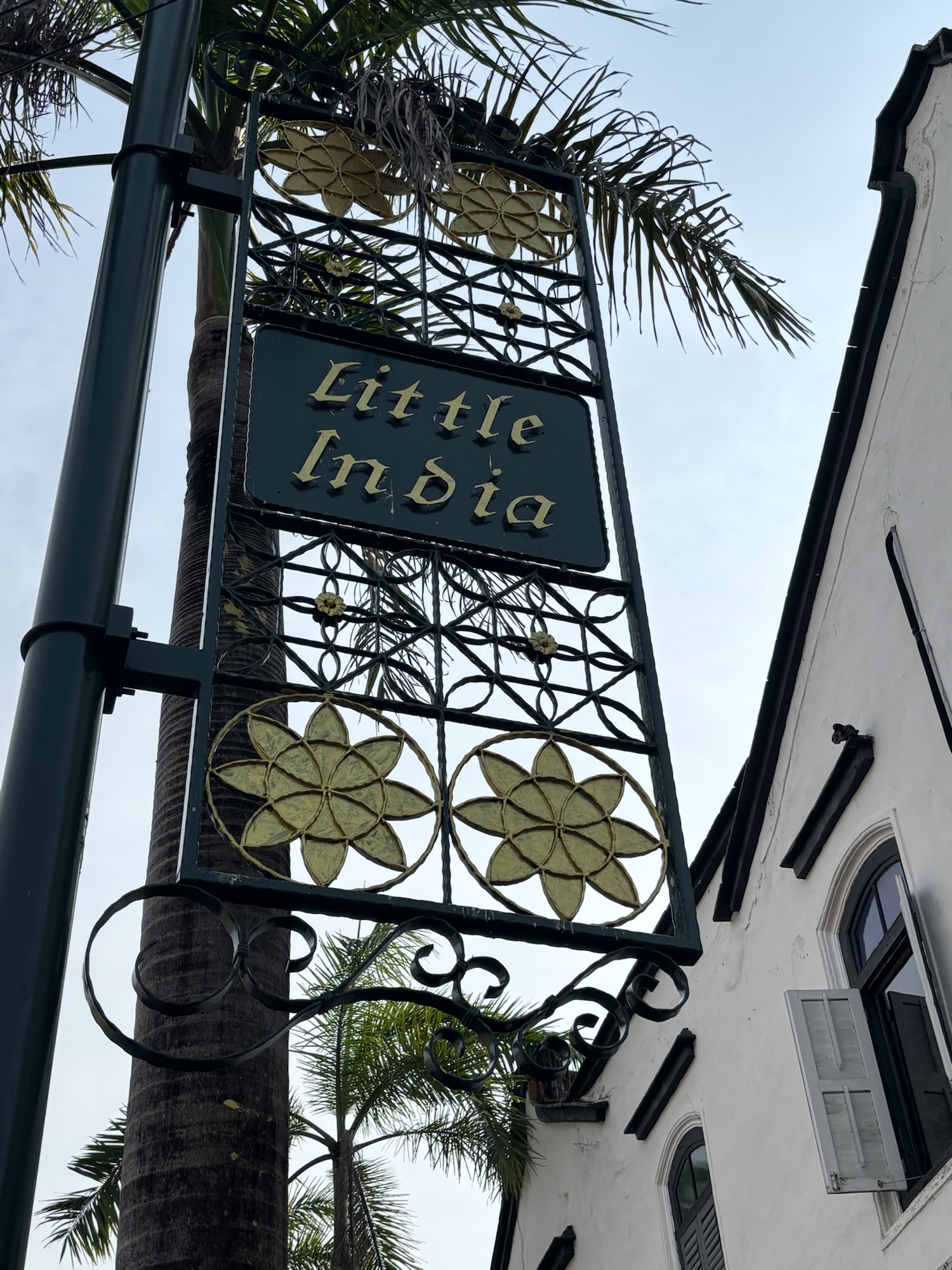
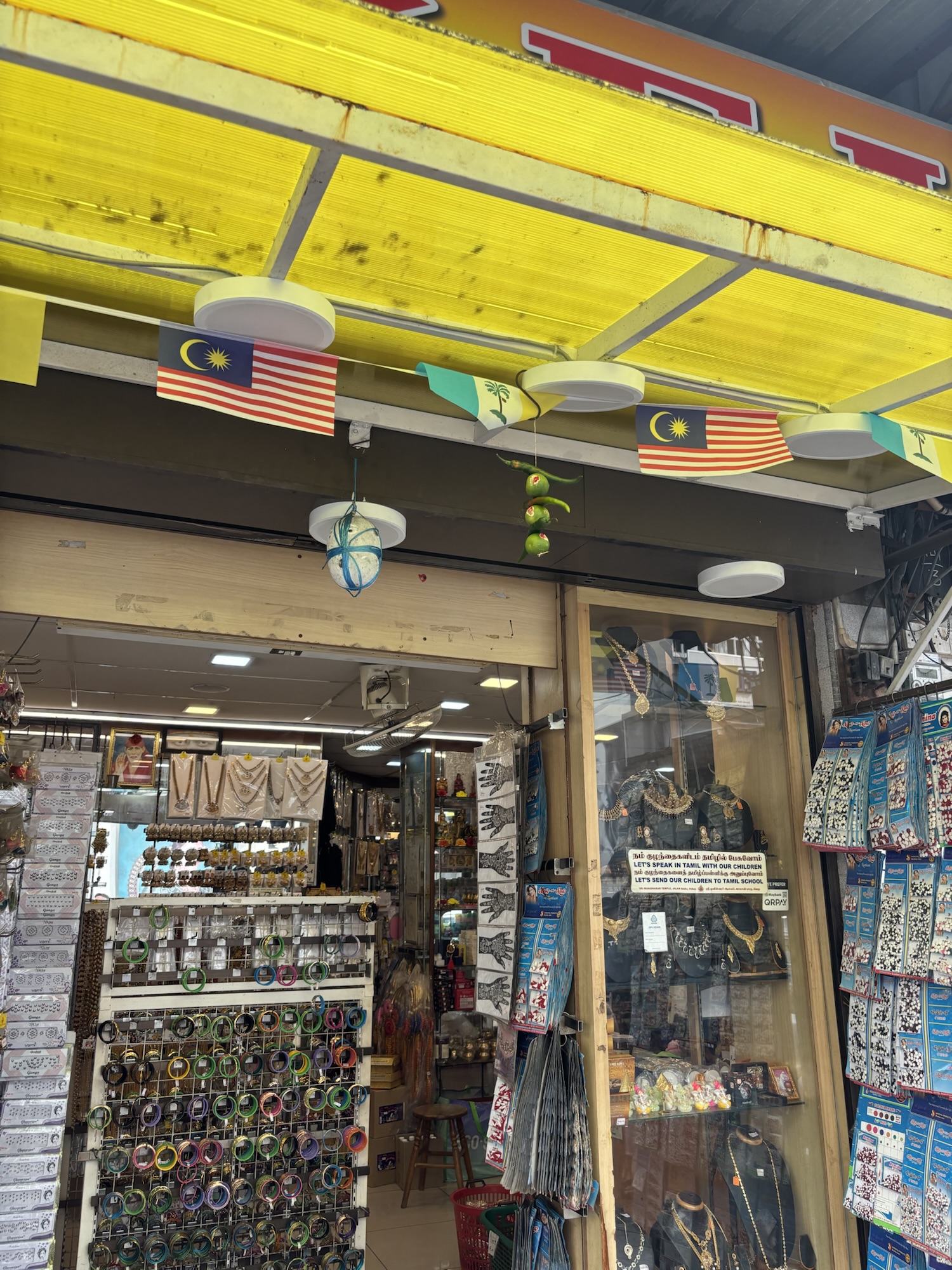
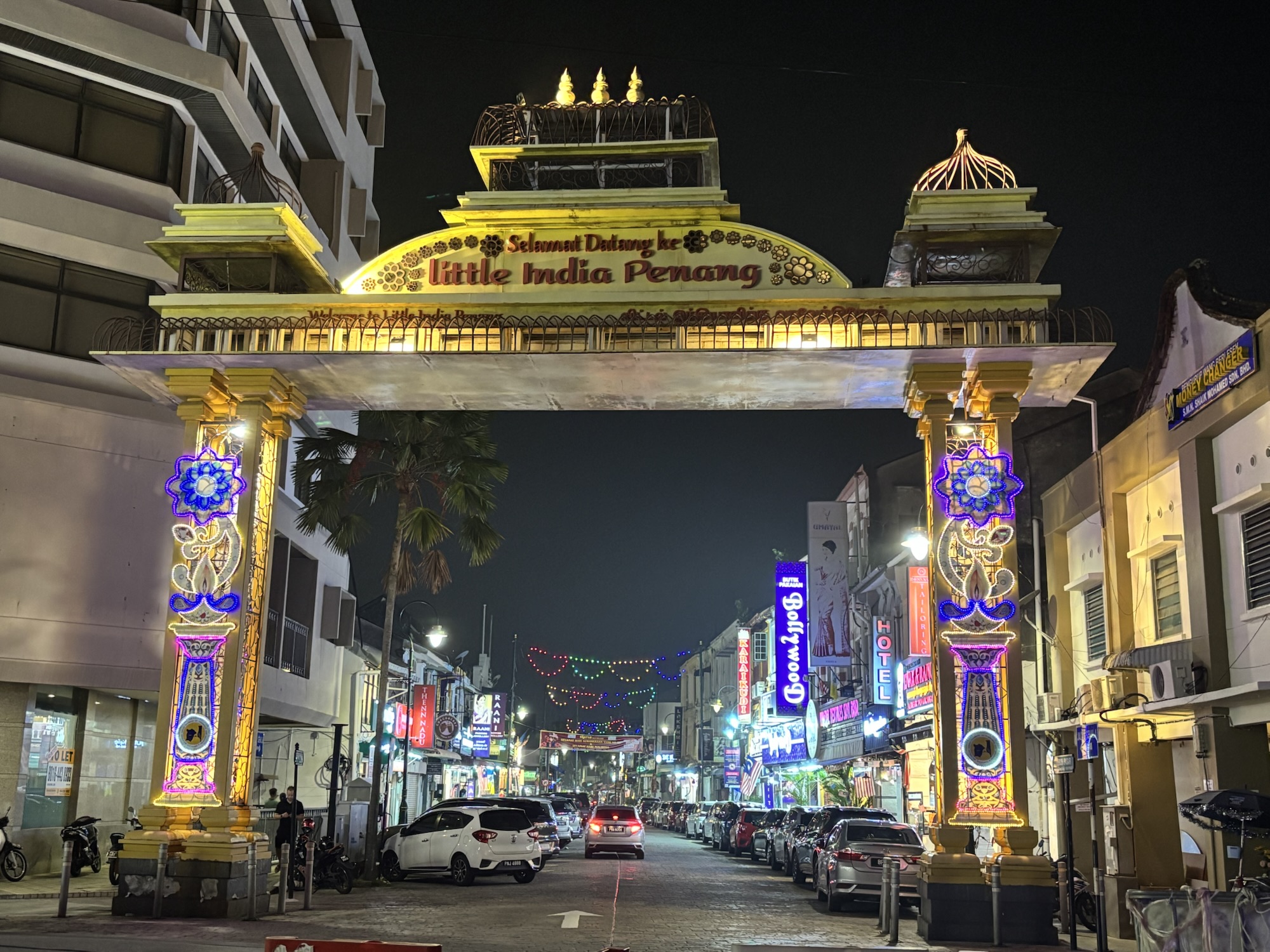
We joined Grace and two Australian couples for a walking food tour around George Town. The first stop was to a spot in Little India selling pani puri.
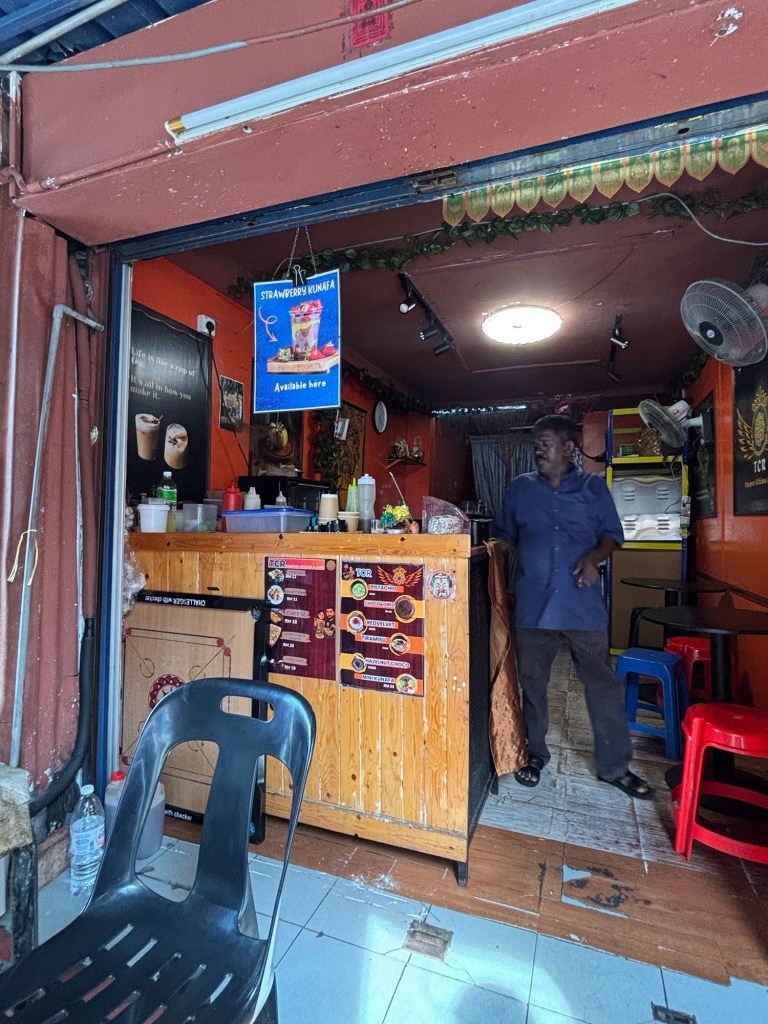
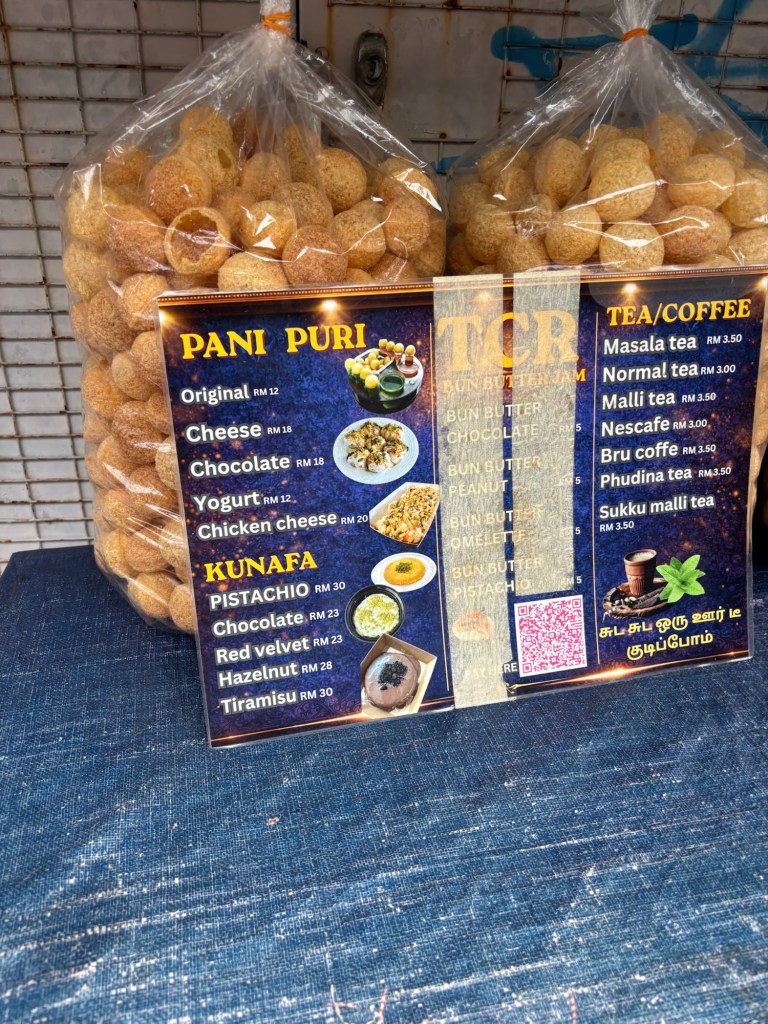
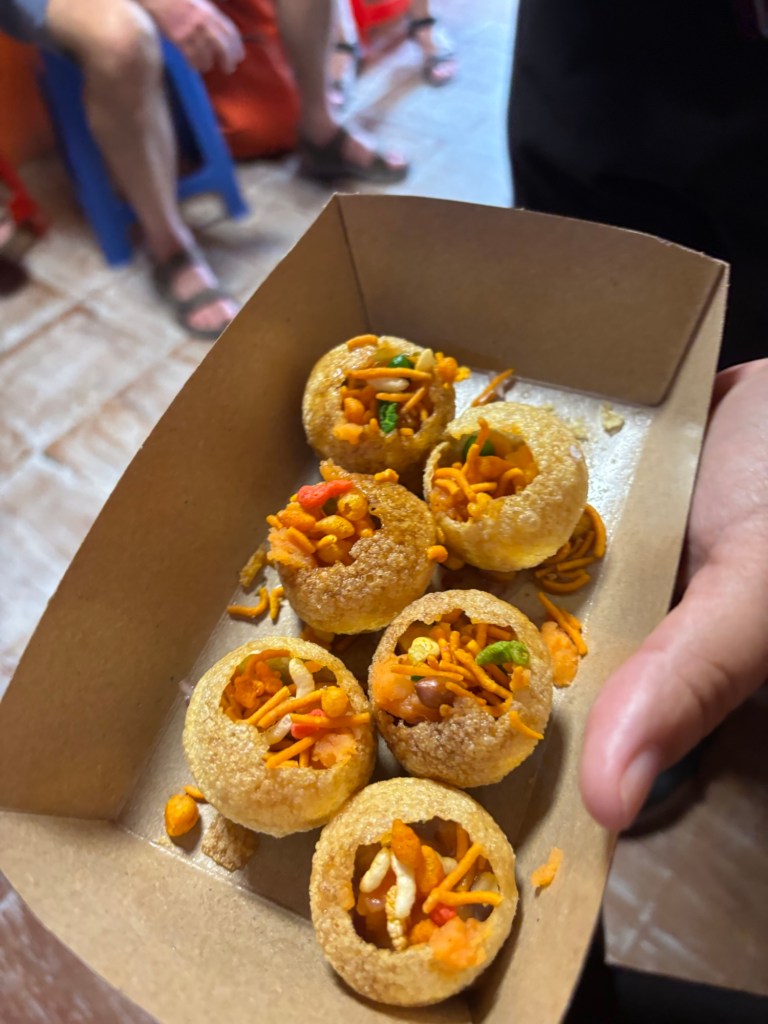
The “puri” is a thin and shallow deep fried shell made of wheat or rice flour and filled with a savory mix of potatoes, chickpeas, vegetables and herbs. The “pani”, meaning water, is a sauce, added in directly before eating. We tried two different pani, one with fresh mint, cilantro, and chili, the other was a tangy, yogurt based sauce. Both were quite tasty.
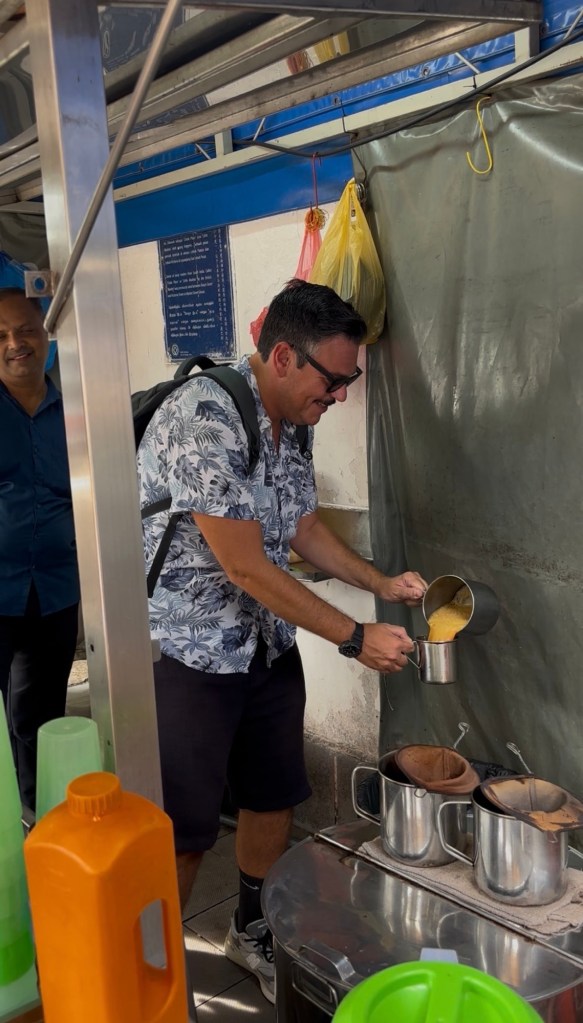
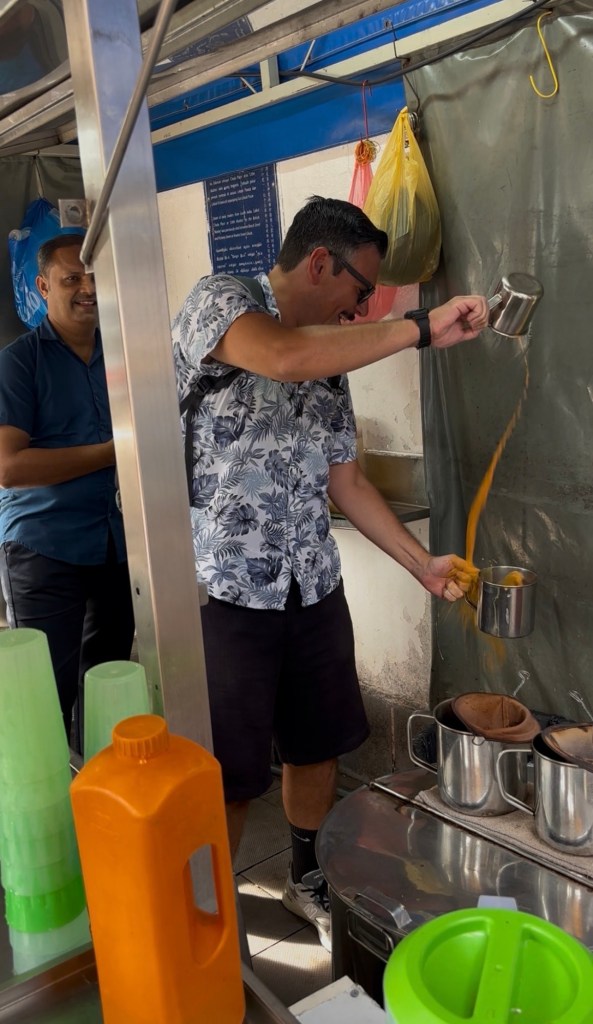
Next up in Little India was a spot selling Malaysian milk tea, or teh (tea) tarik (pulled). Condensed milk is added to black tea, then “pulled” as it’s poured back and forth in long draws between two containers from a great height (it reminded me of the pouring of cider or sidre in Asturias). This serves to aerate the tea, making it a bit foamy and cooling it at the same time. When the tea maker asked for volunteers to try the process themselves, Phil bravely did so which only caused minor burns (just kidding) and shoe splashes (not kidding).
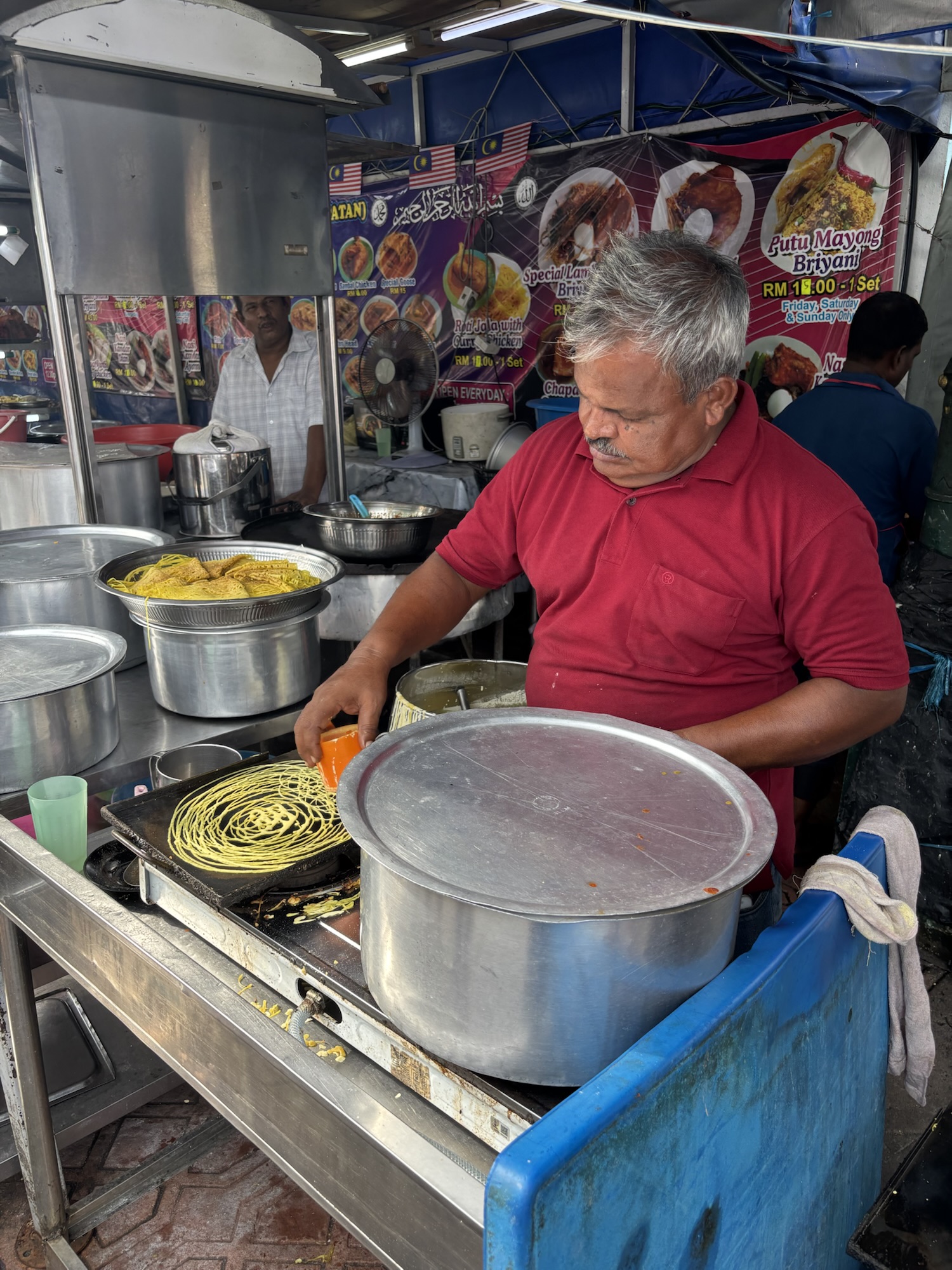
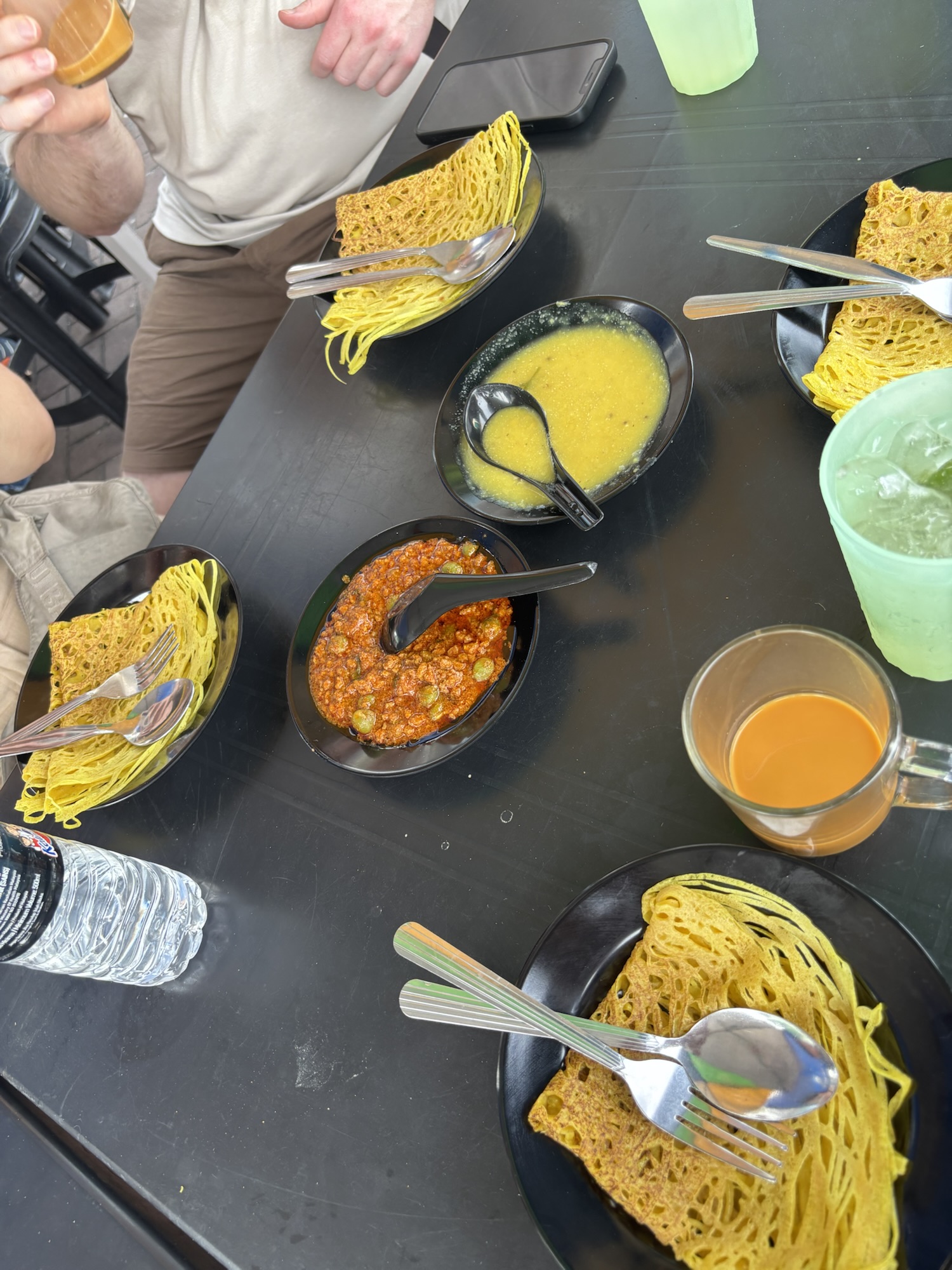
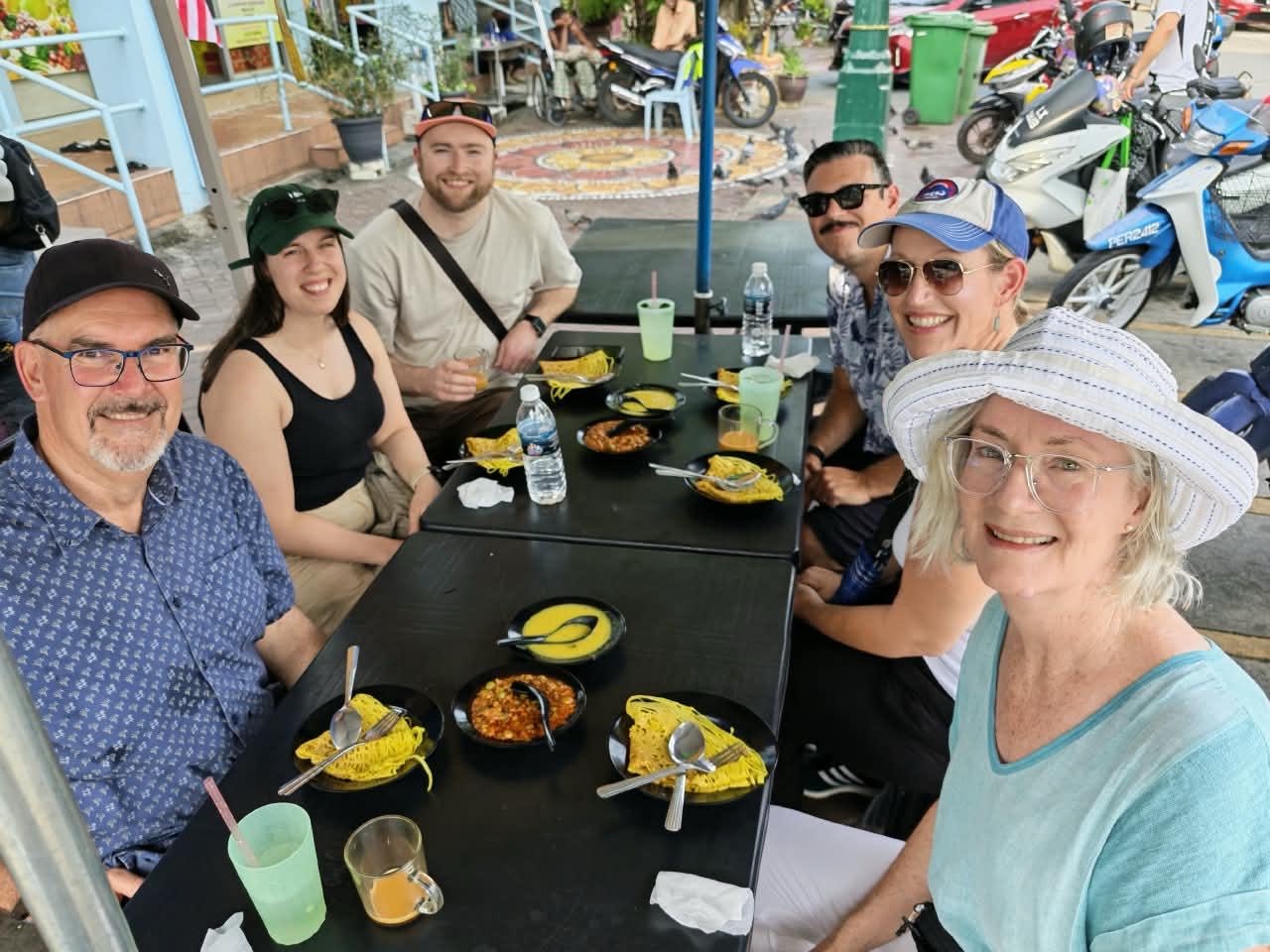
Next to the milk tea was a man making roti jala. The lacy looking bread was served with two different savory sauces. We sat and enjoyed the buttery treat with our milk tea.
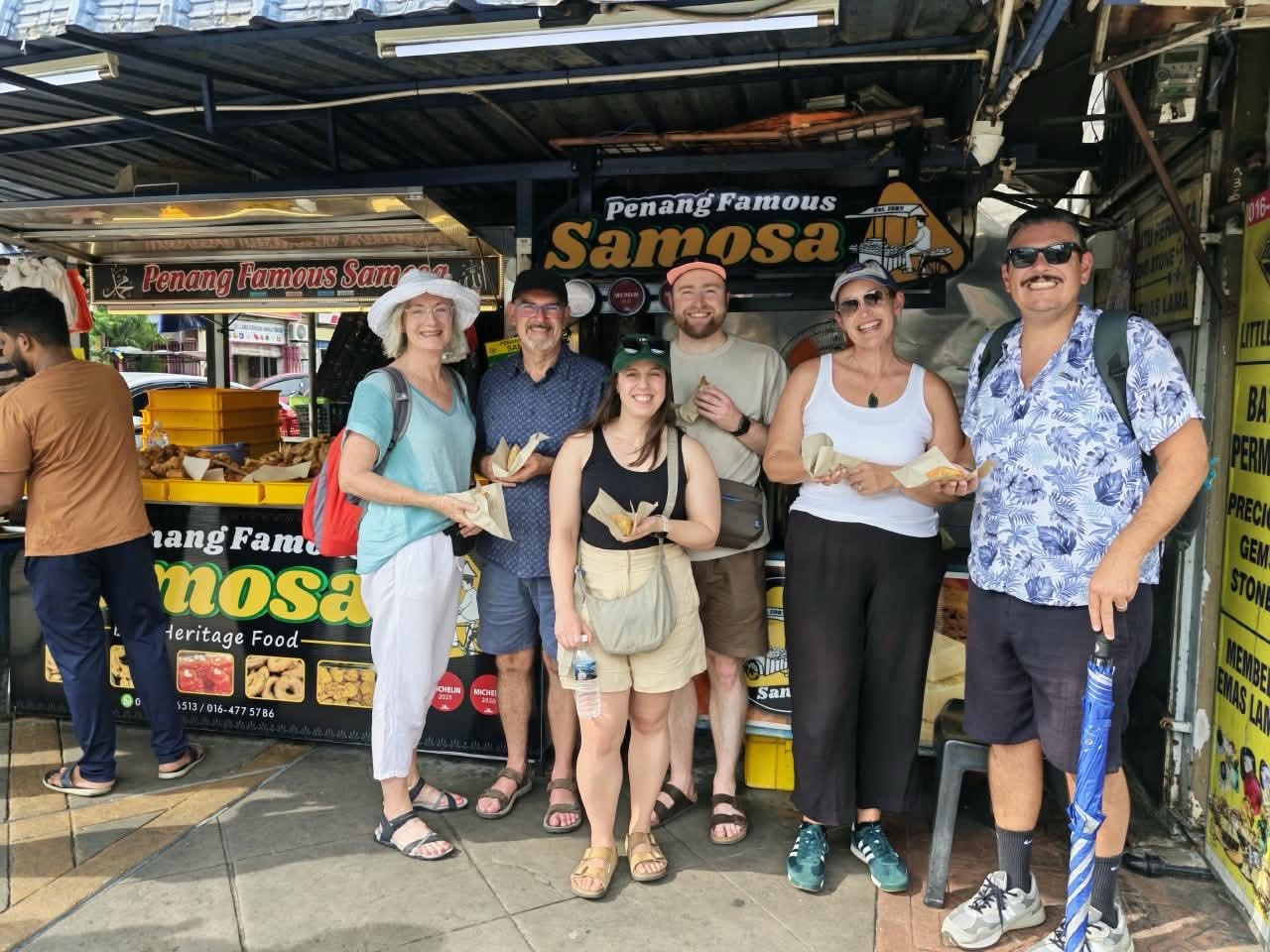
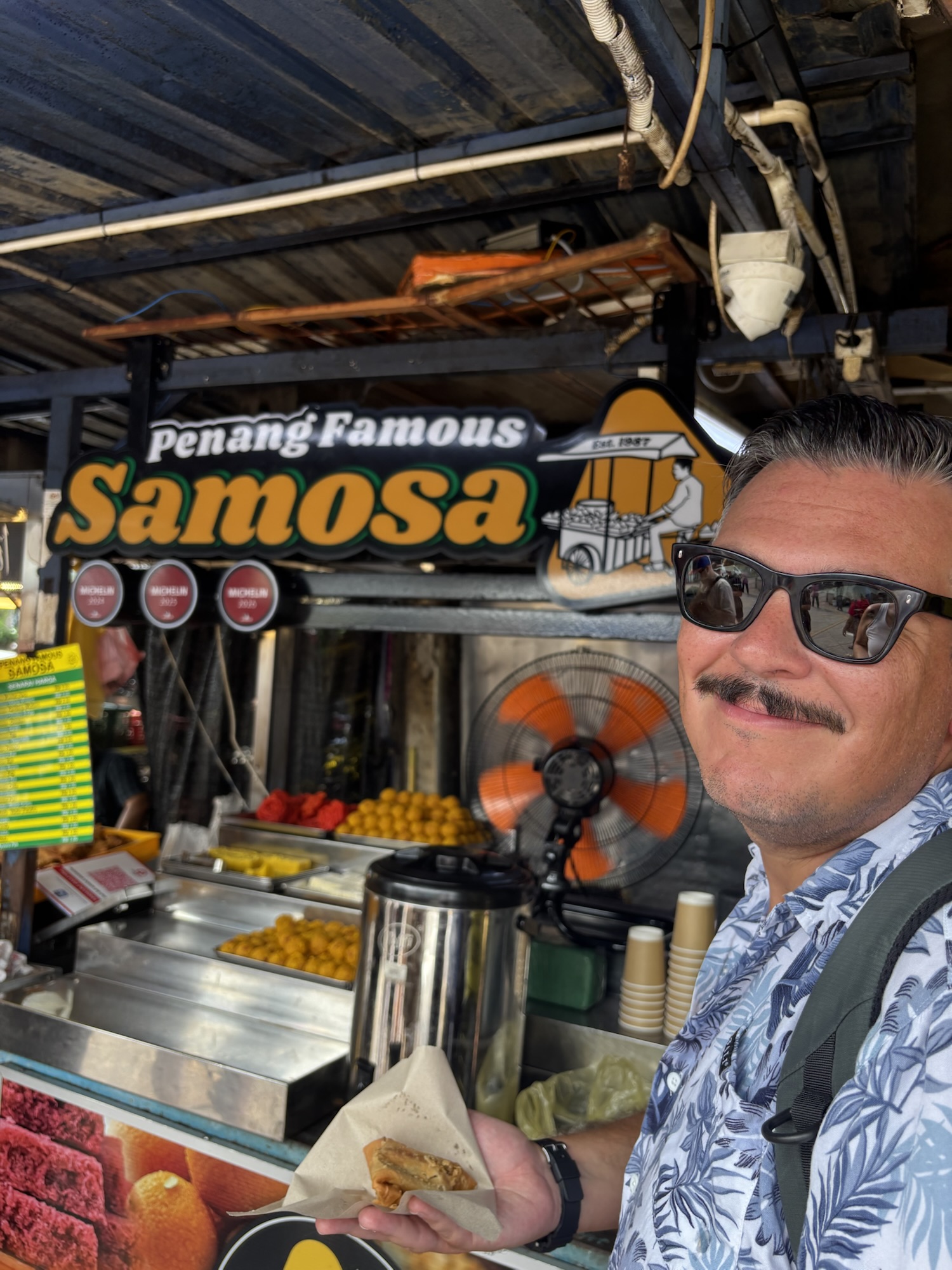
Nearby was a real highlight of the tour and a spot we returned to later in our trip; a cart selling the best samosas we have ever had. Grace told us that, unlike typical samosas, these were not served with chutney, and that is because they don’t need the dipping sauce. She was right. The flaky crust kept the filling perfectly moist. Phil and I both had the chicken samosas, as that was their specialty. They were absolutely amazing.
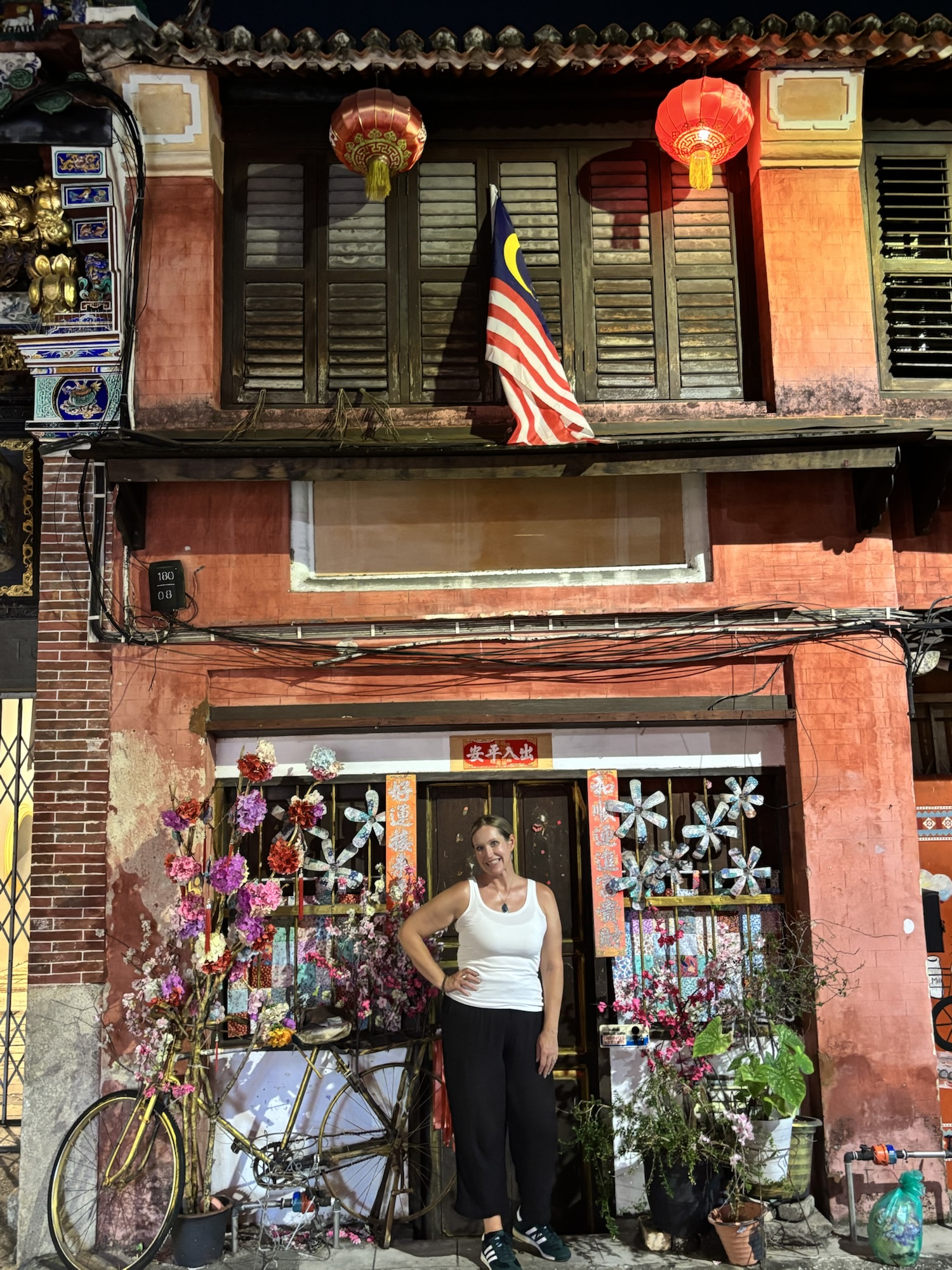
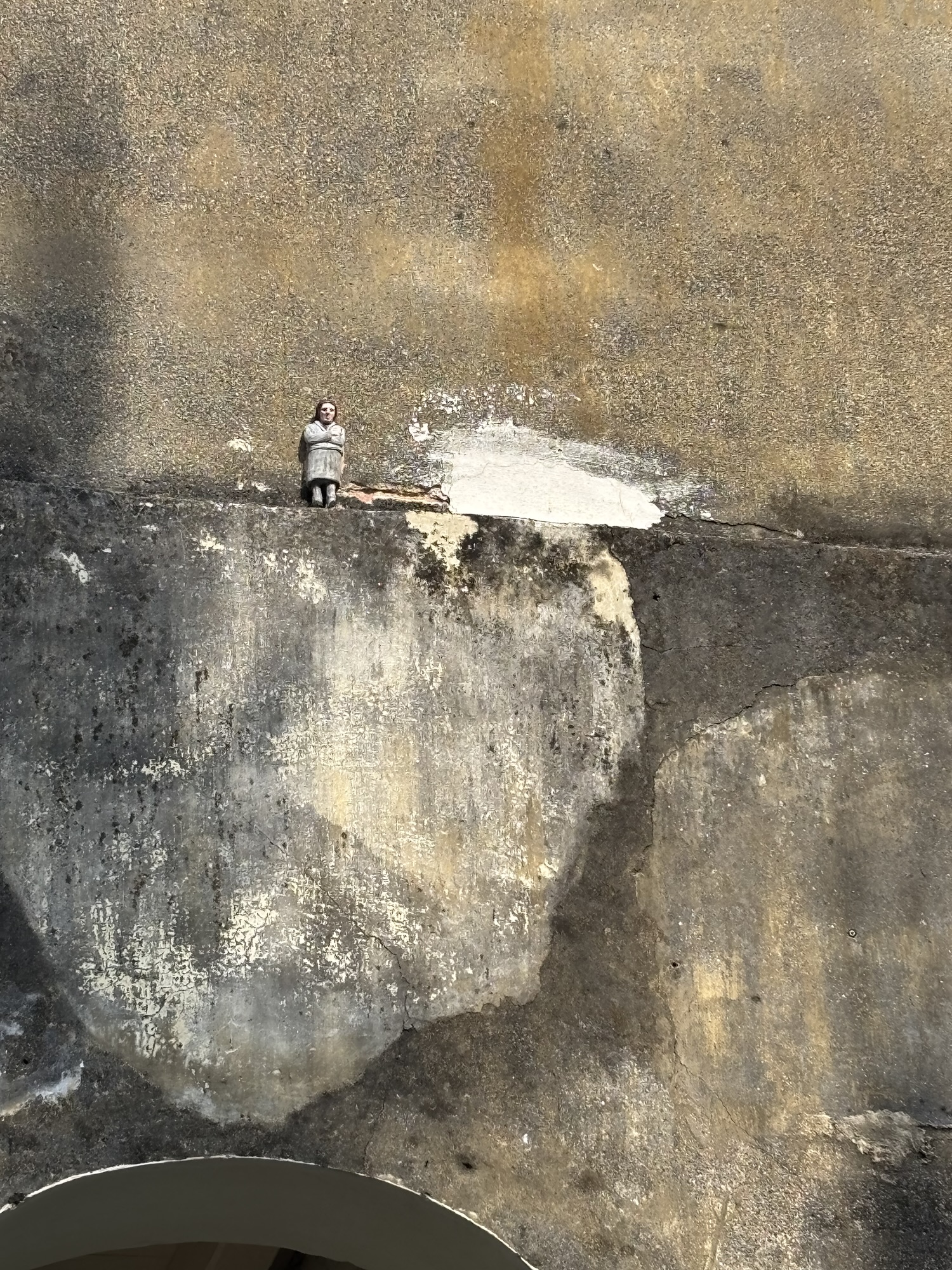
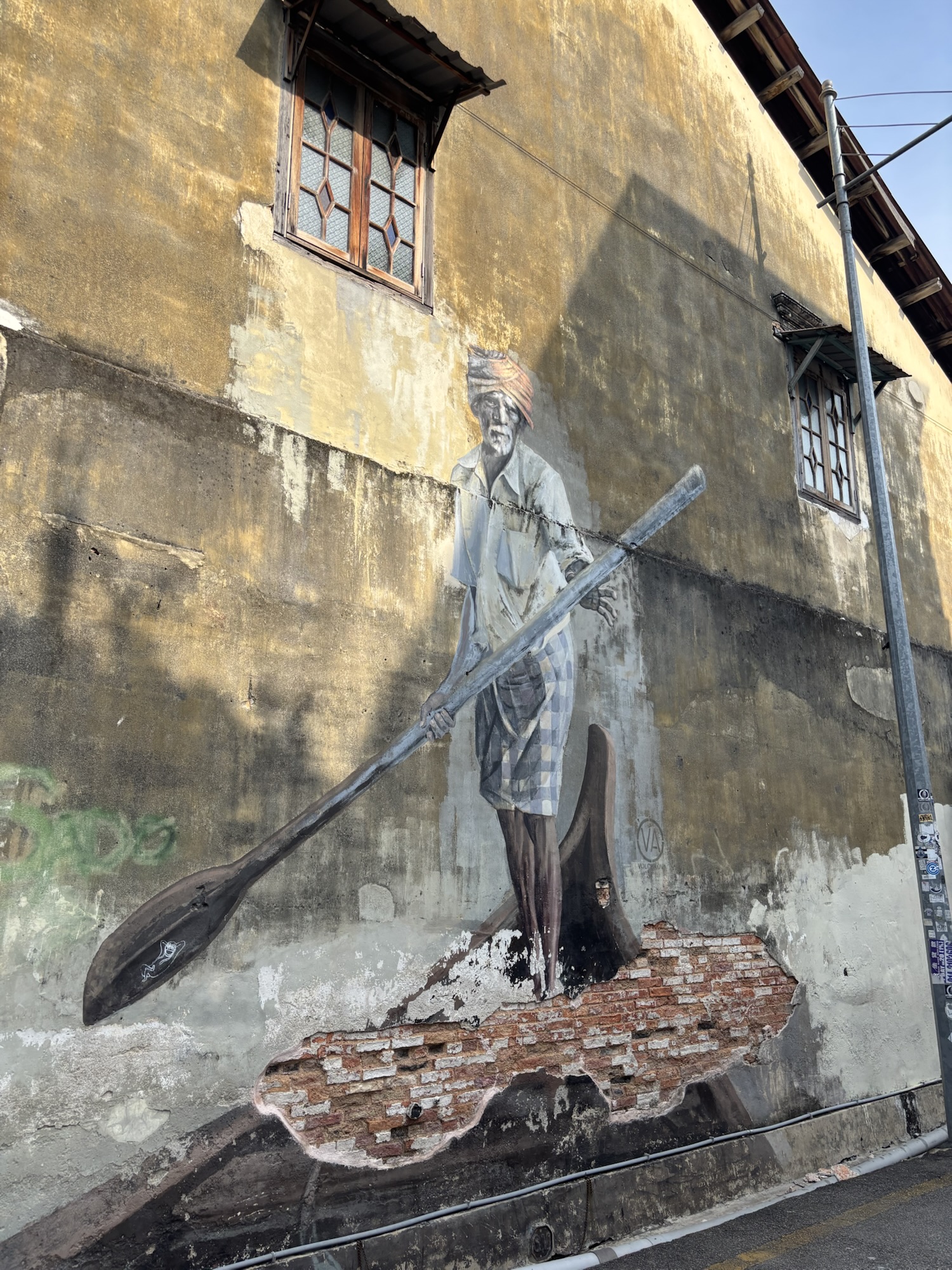
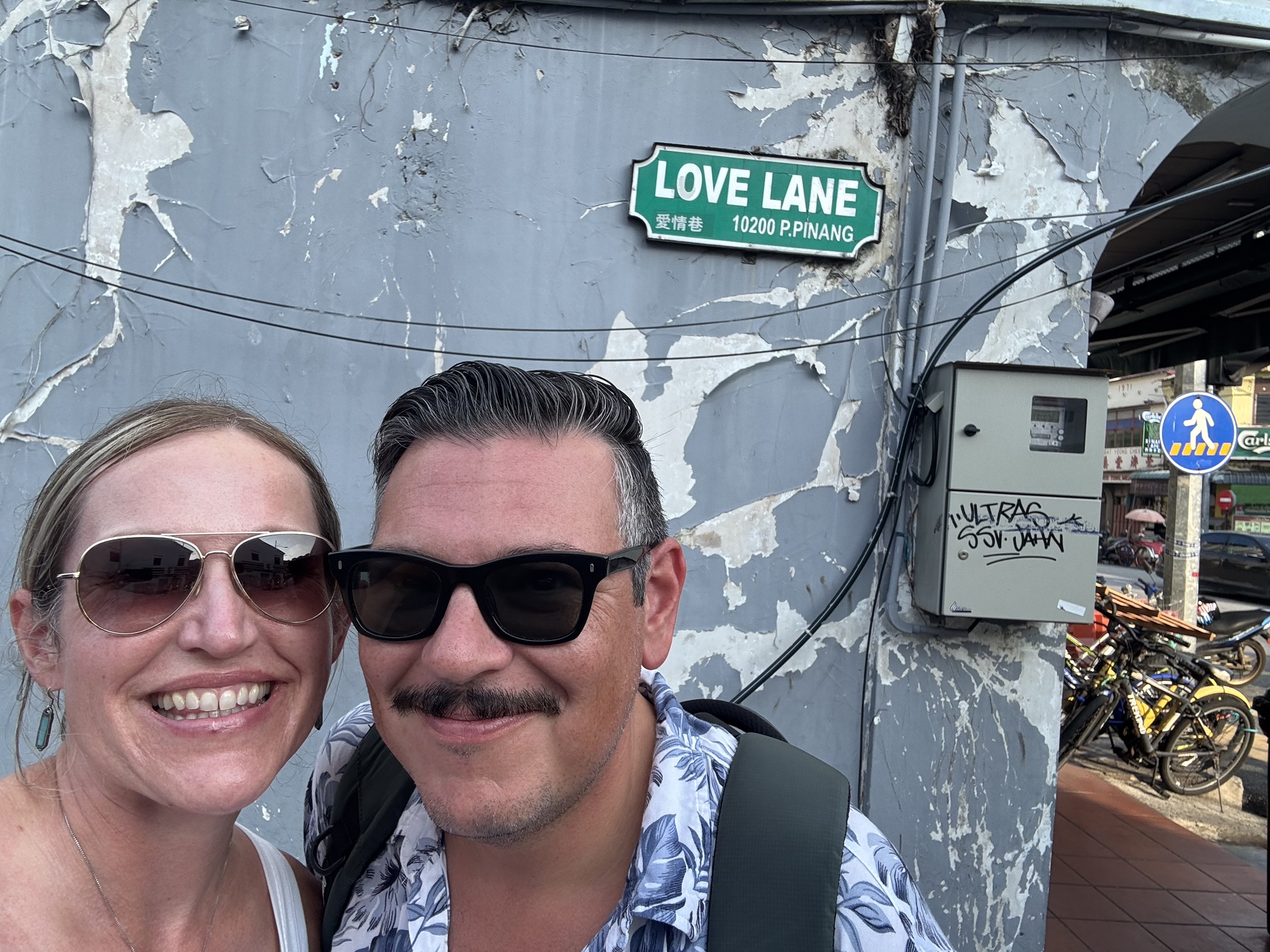
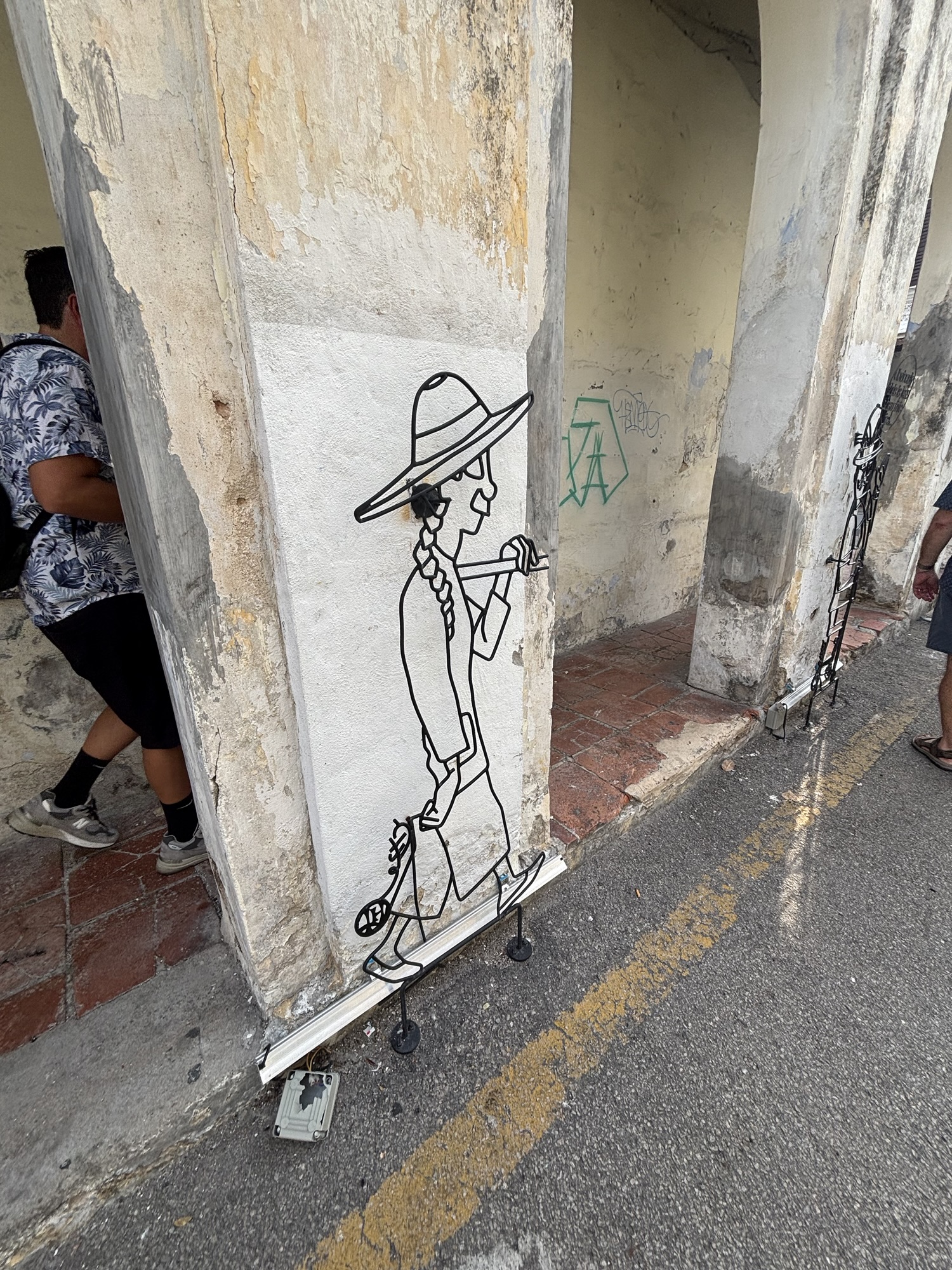
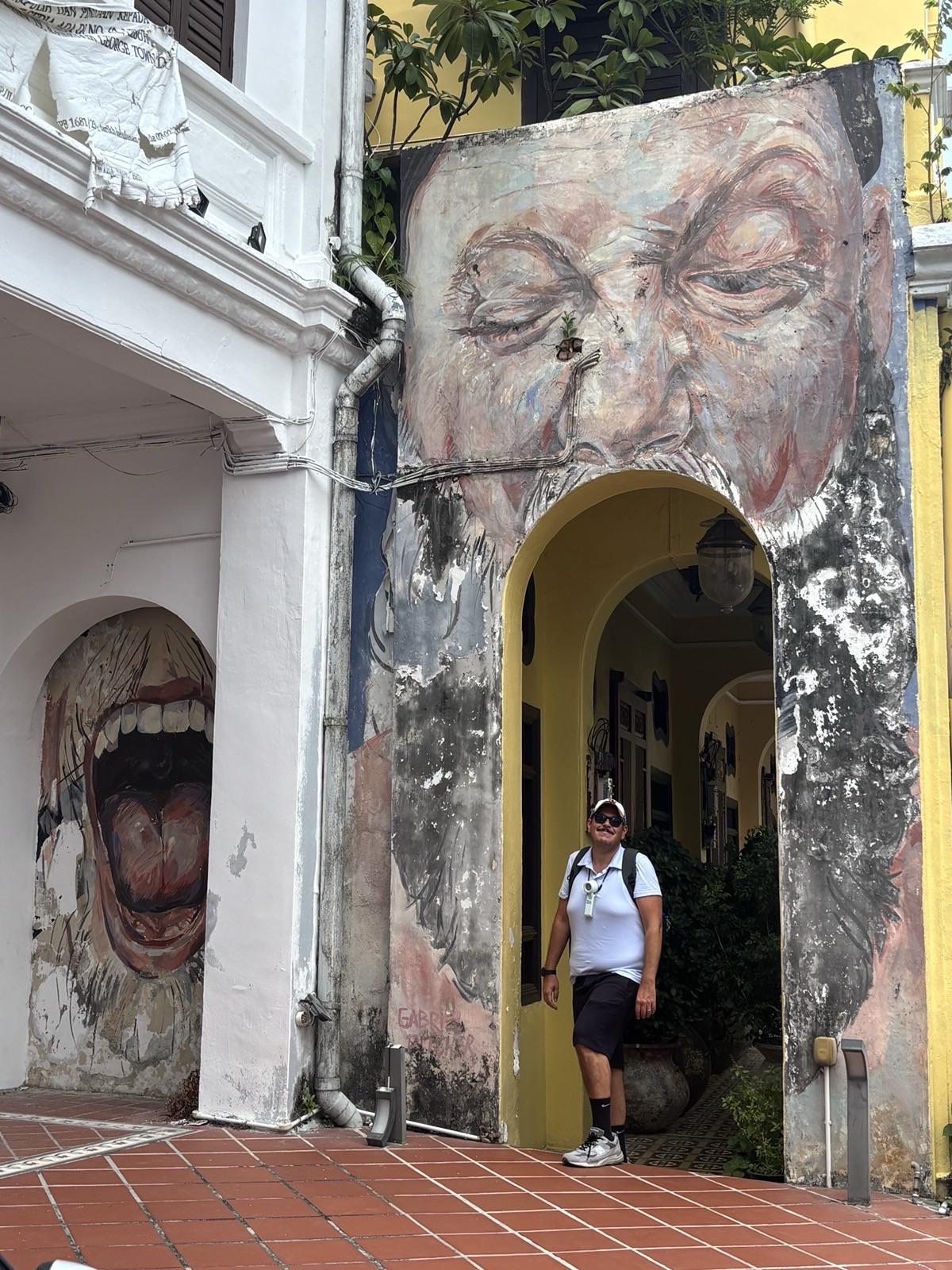
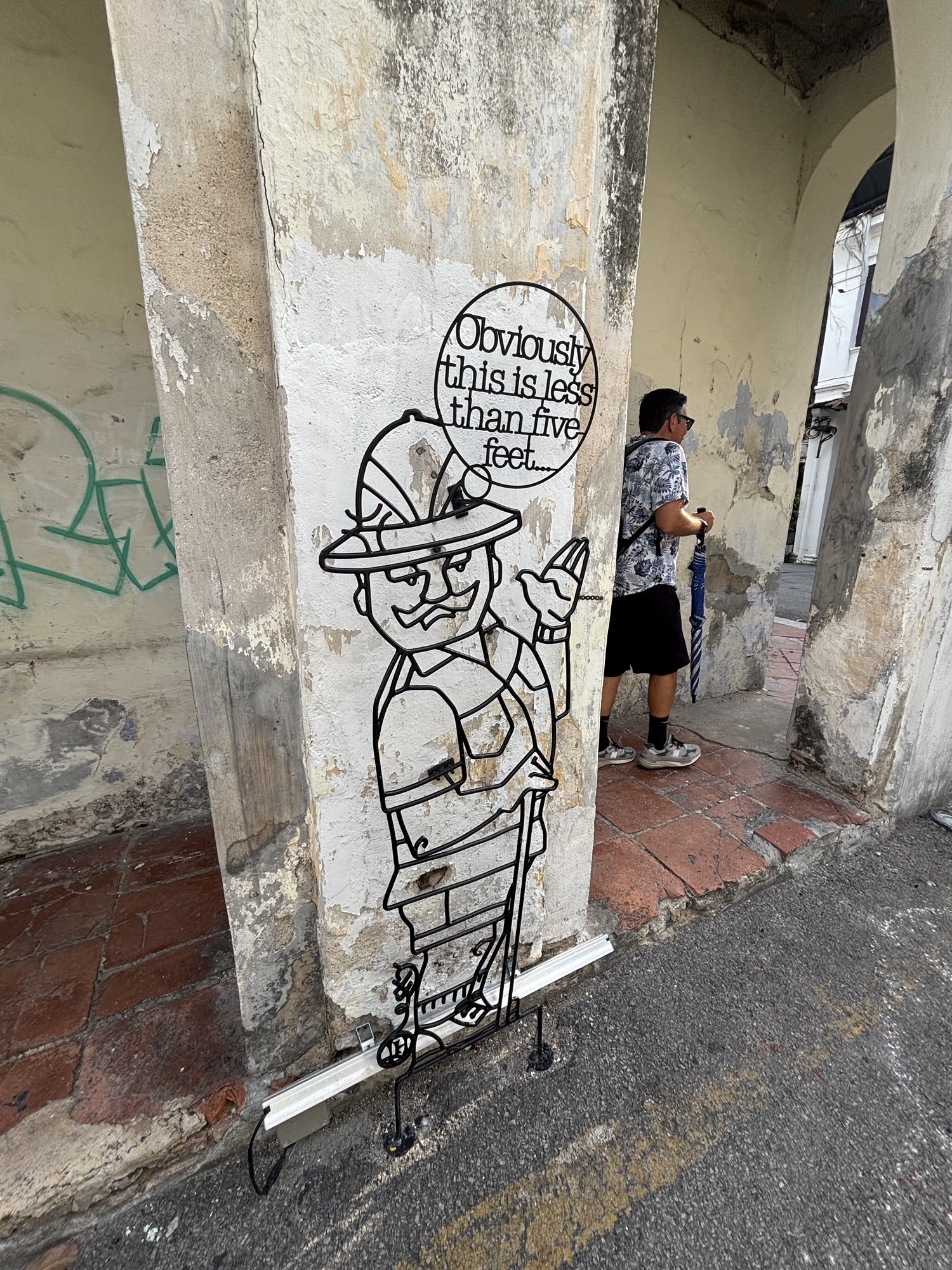
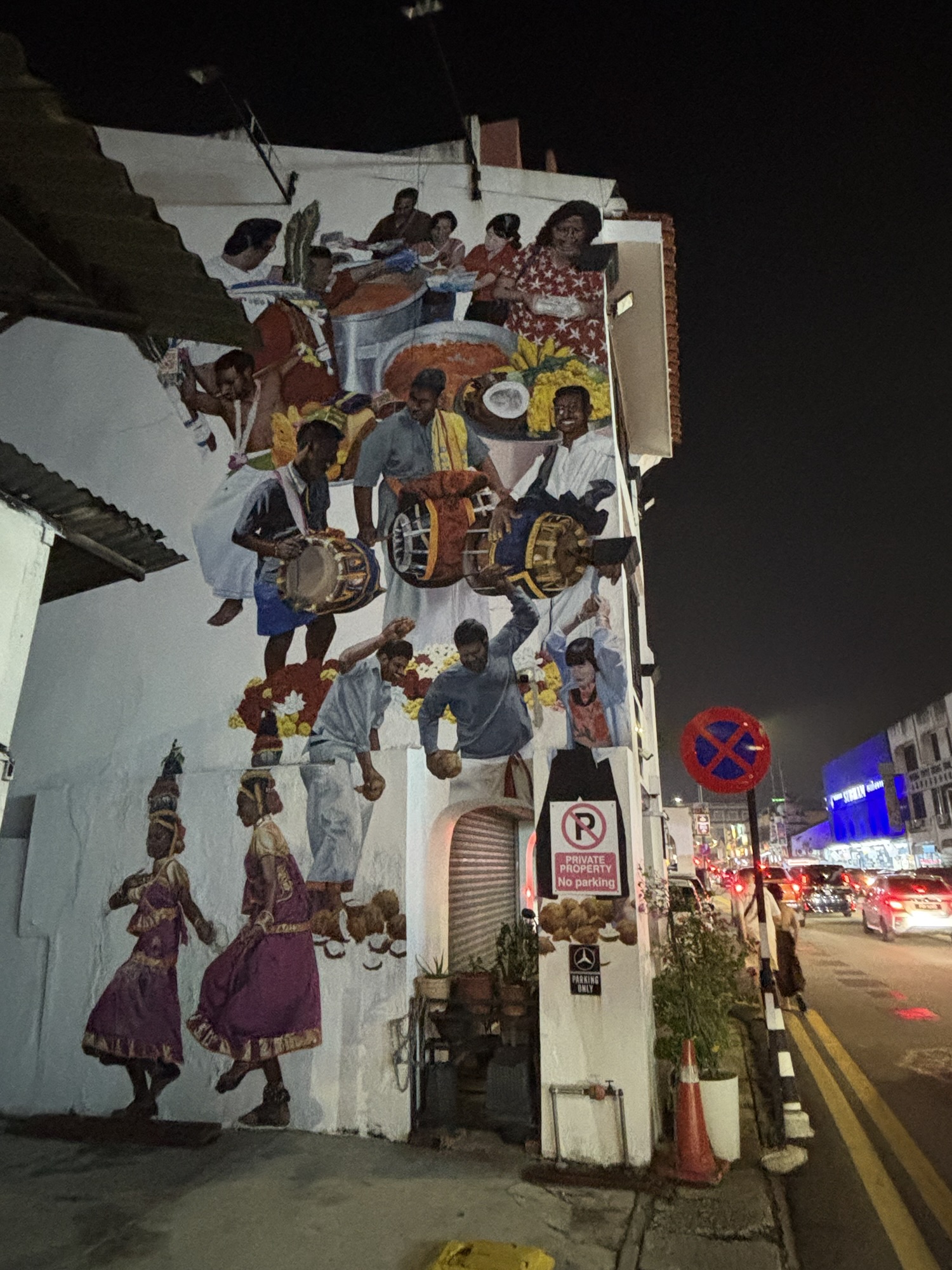
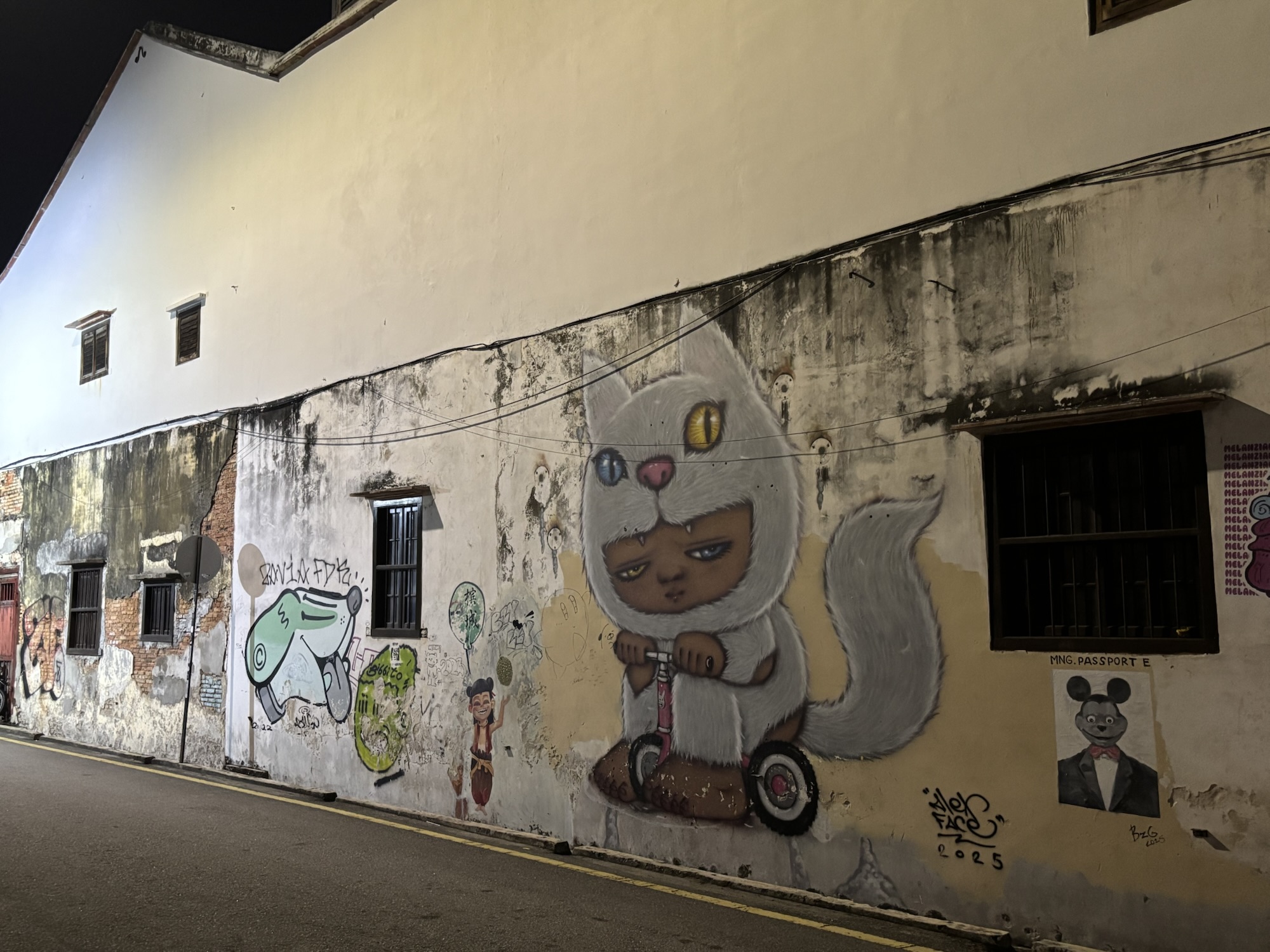
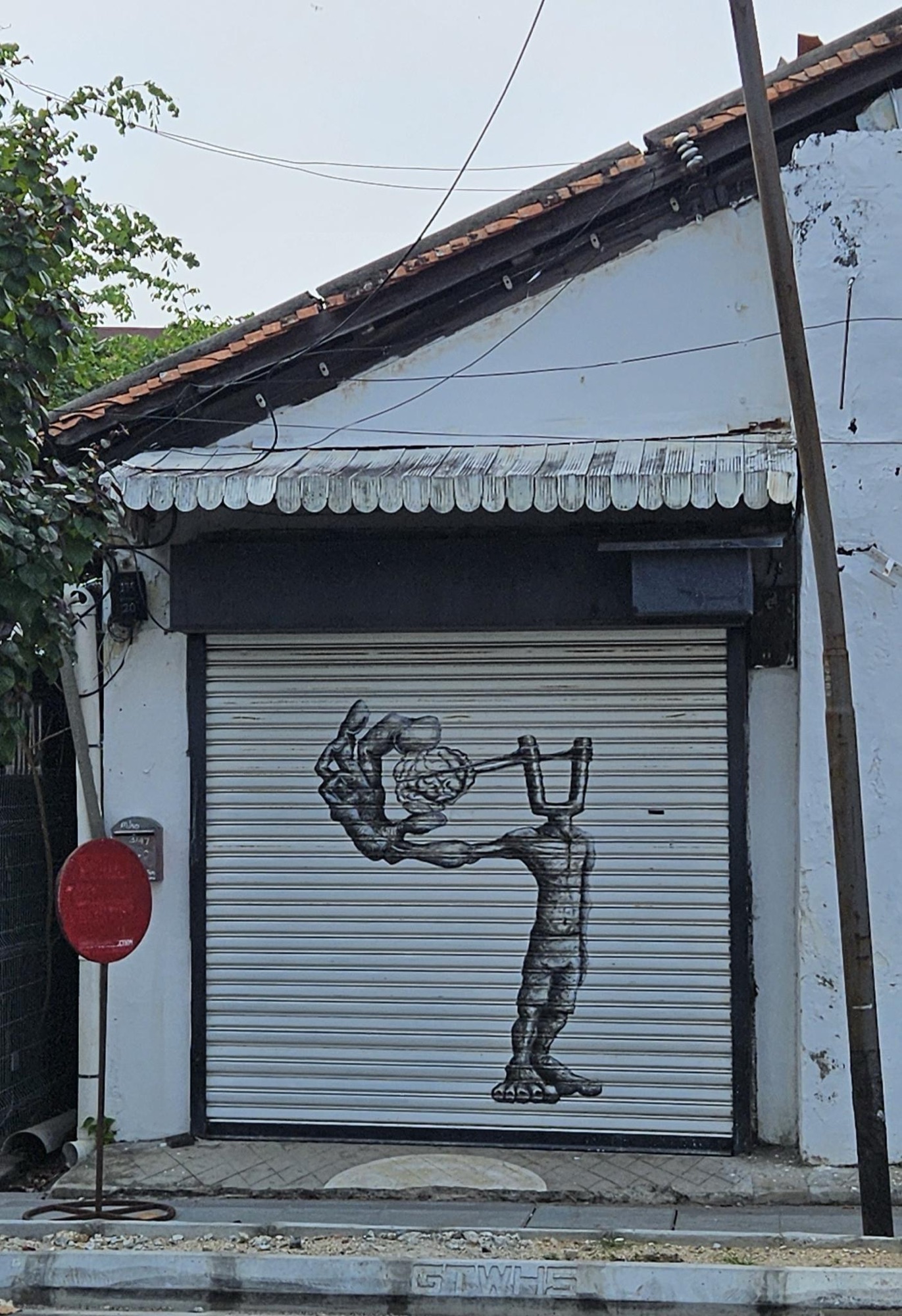
It was fun walking around George Town, taking in the unique architecture and street art, while getting a mini history lesson from Grace. We walked down the famous Love Lane, where sailors would go to meet local lovers when ashore.
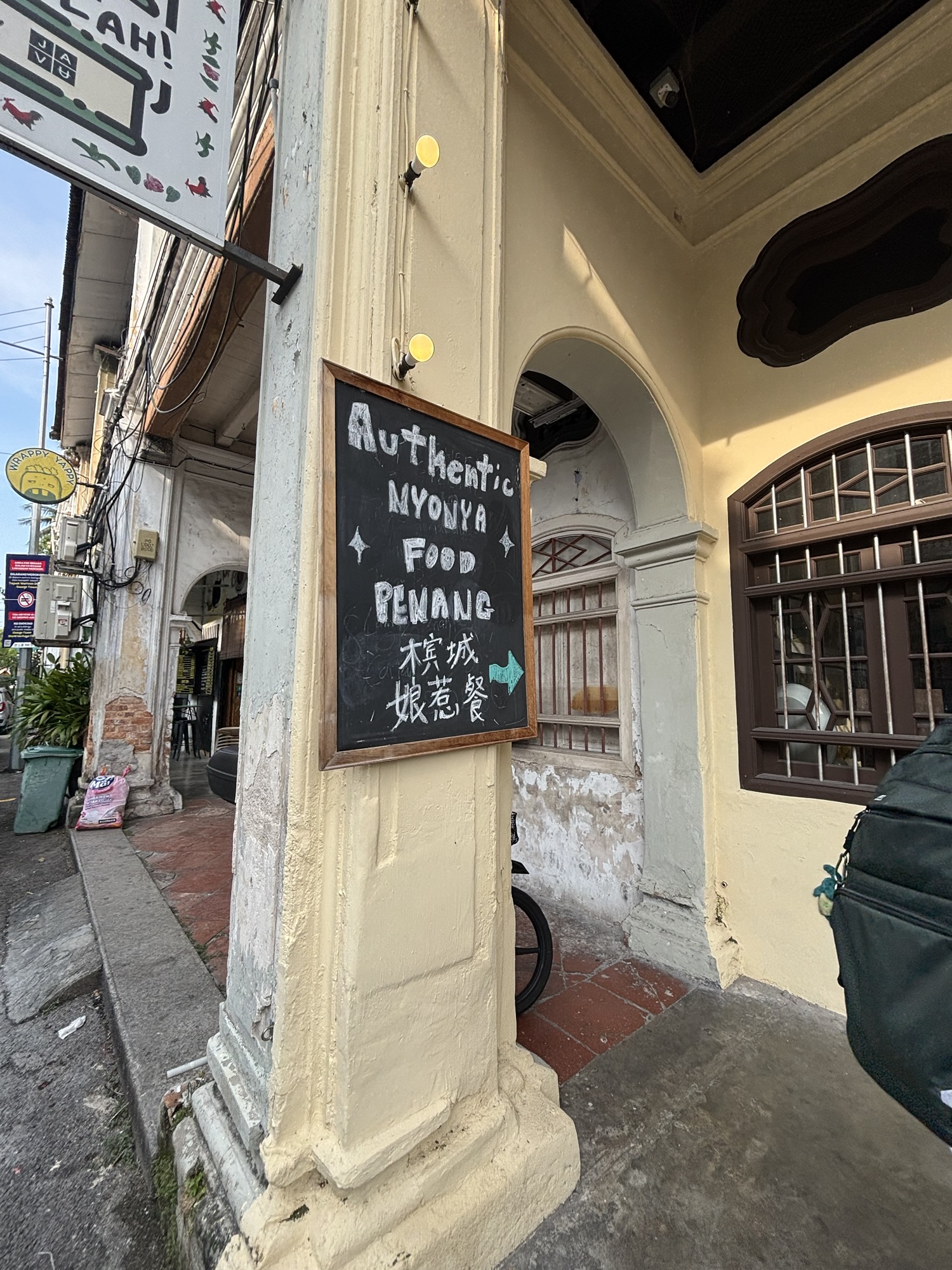
One of the most uniquely Malaysian foods is the Baba-Nyonya cuisine. Baba-Nyonya is the cuisine of the Peranakan people. Peranakan are the descendants of early, Southern-Chinese immigrants who intermarried with the native Malay (and Indonesian) women. Peranakan roughly translates to someone who is locally born, with heritage from someplace else. Baba is an honorific for Peranakan men and Nyonya for women.
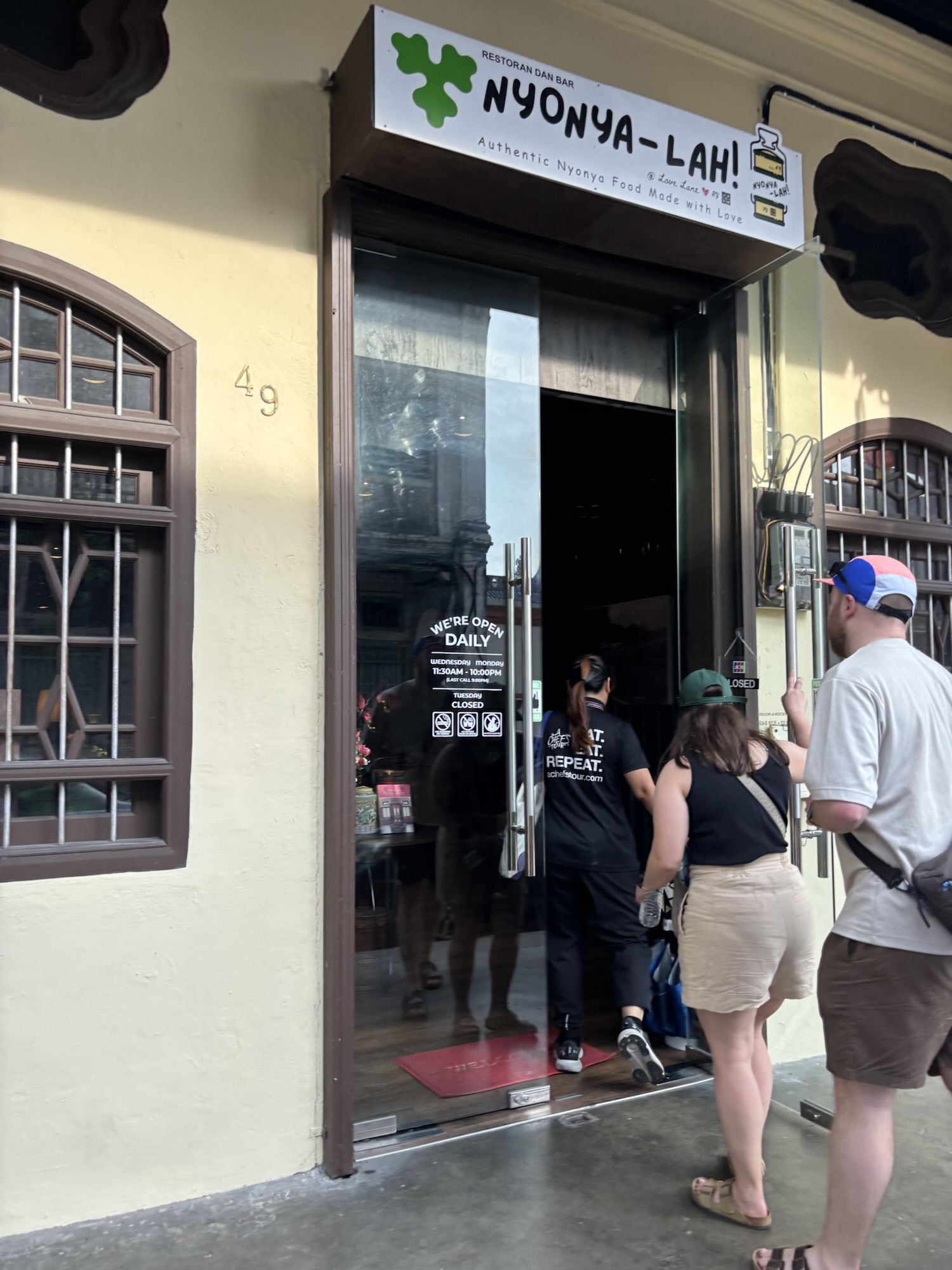
I would describe the food we had as a blend of Chinese and Indian flavors, as I was familiar with those foods prior to our trip. Traditional Malay food, we came to find out, uses a lot of rice as well as coconut milk and aromatics. These elements are present in the Baba Nyonya food as well and really complimented the other, more familiar flavor profiles. I absolutely love coconut in all of it’s savory and sweet forms.
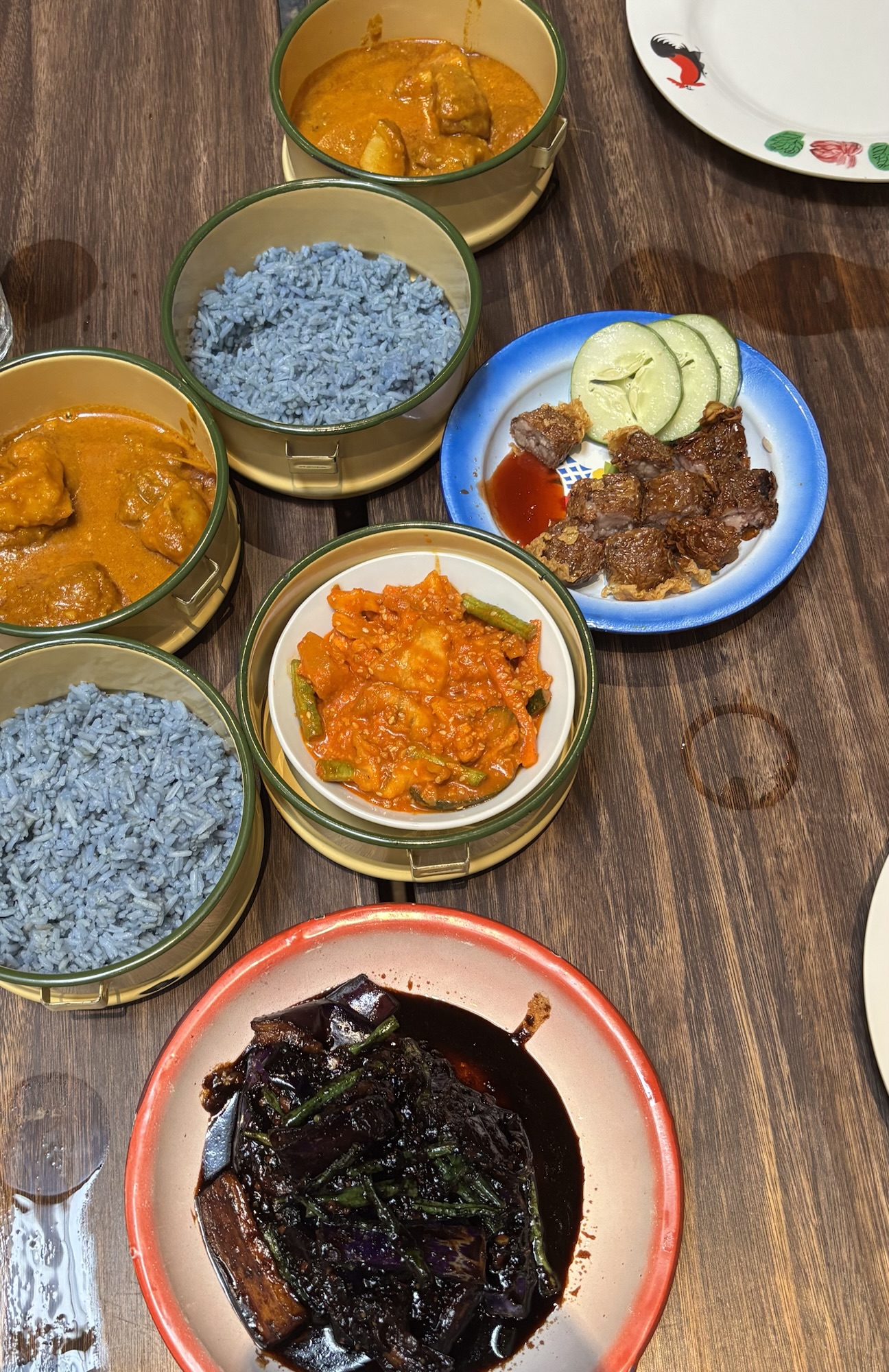
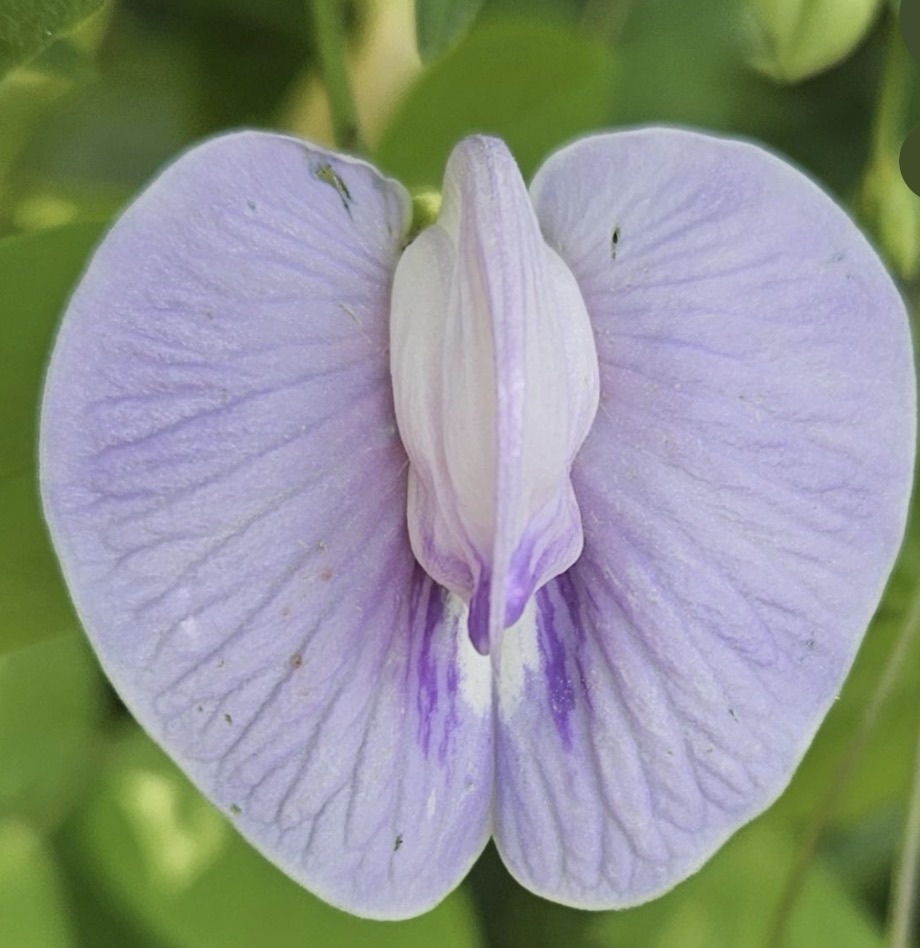
We sampled eggplant with a sweet soy sauce, spicy pickled veg, lor bak (a sausage-like dish made of minced pork heavily flavored with five spice and fried in tofu skim) which was Phil’s favorite dish, and chicken curry. We also had blue rice, dyed with butterfly pea flower, which only changes the color and has no affect on the flavor. We first encountered the butterfly pea flower in Bali, but did not know what it was called, though I was able to find it’s botanical name, Clitoria ternatea, which seems an appropriate one.
After we had eaten our fill of Baba-Nyona food, Grace led us to a local food cart selling sweet treats that has been in the same location for nearly 75 years. The location is directly in front of an open surface drain which can be a little stinky, so you know the food must be good for people to stand and wait for it.
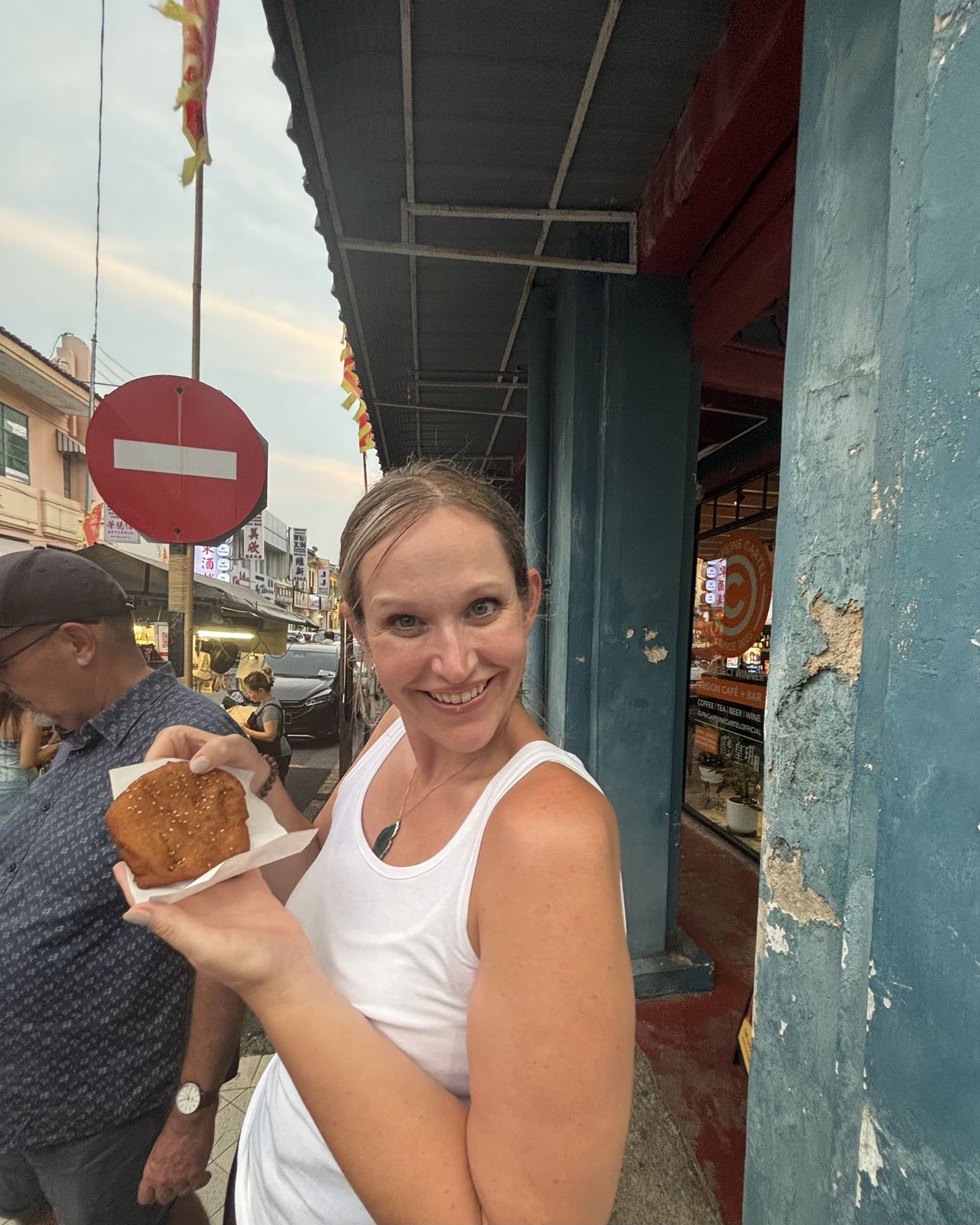
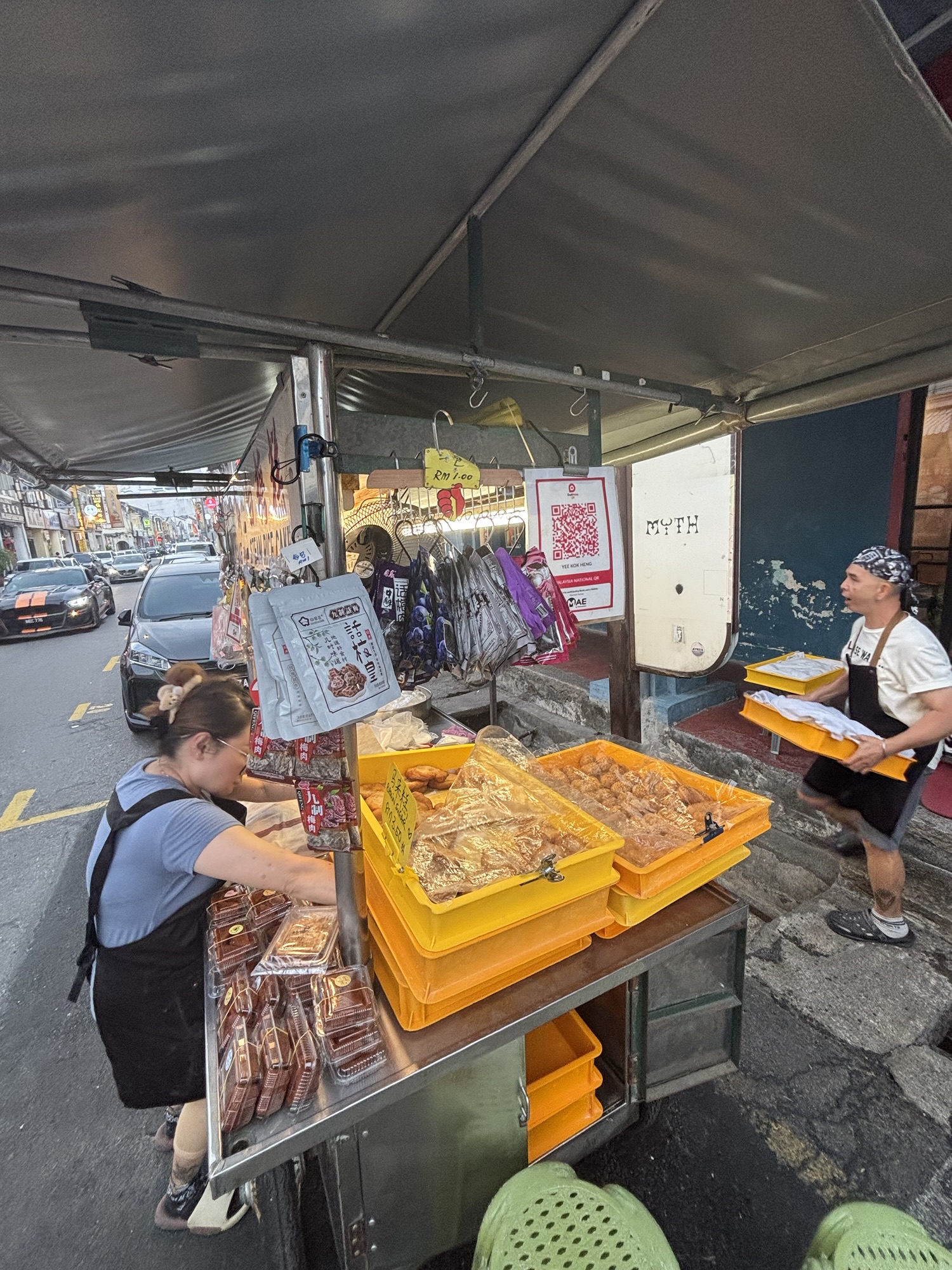
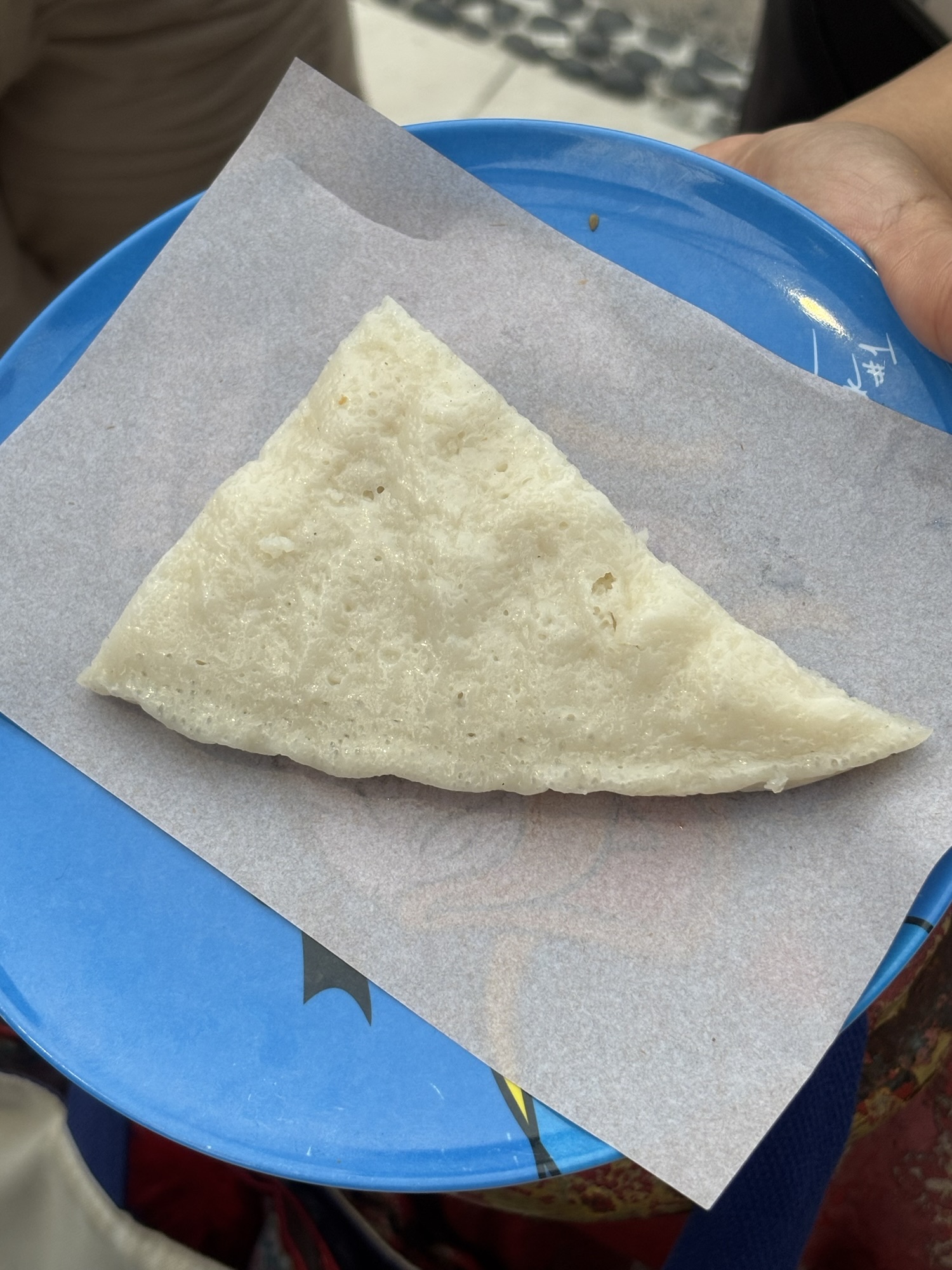
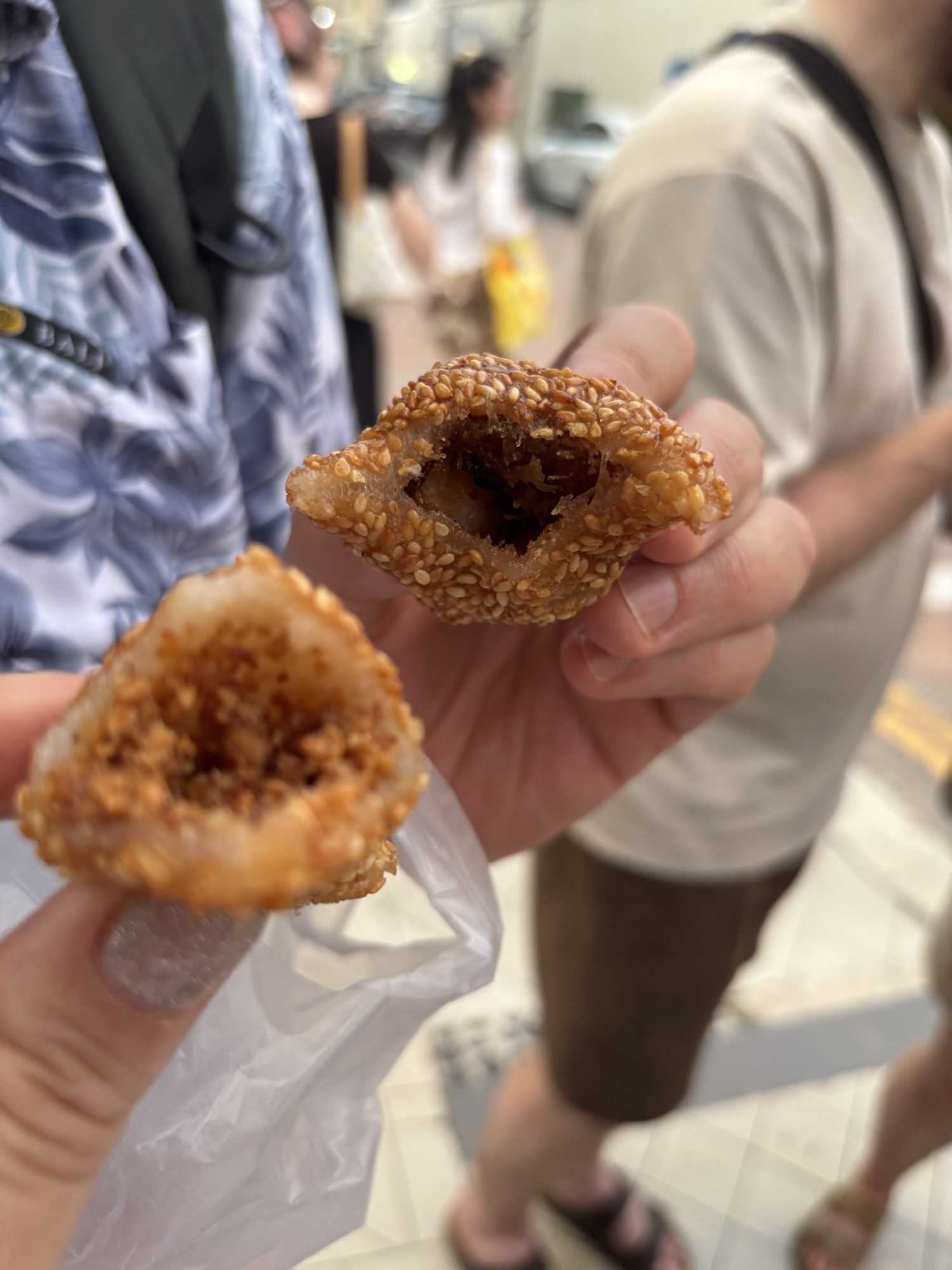
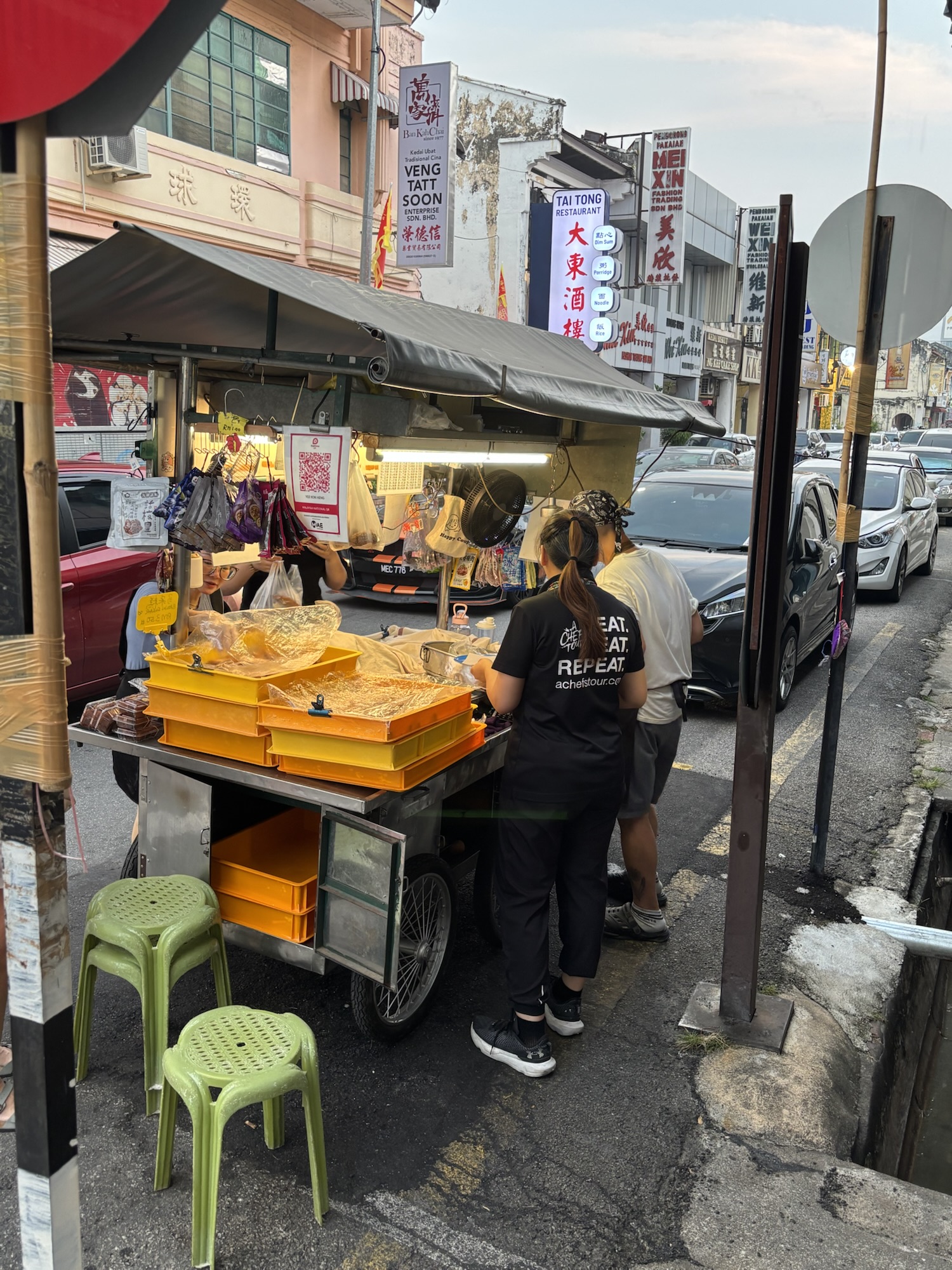
We enjoyed a traditional, steamed rice cake which was pretty good and had a very subtly sweet flavor. We also had mochi-like rice balls, one stuffed with coconut and one with peanut. Both were quite tasty. We also had what Grace called “Chinese donuts” which were also made with rice flour, fried, and were crispy and chewy but not really sweet. Fried dough is always a win in my book.
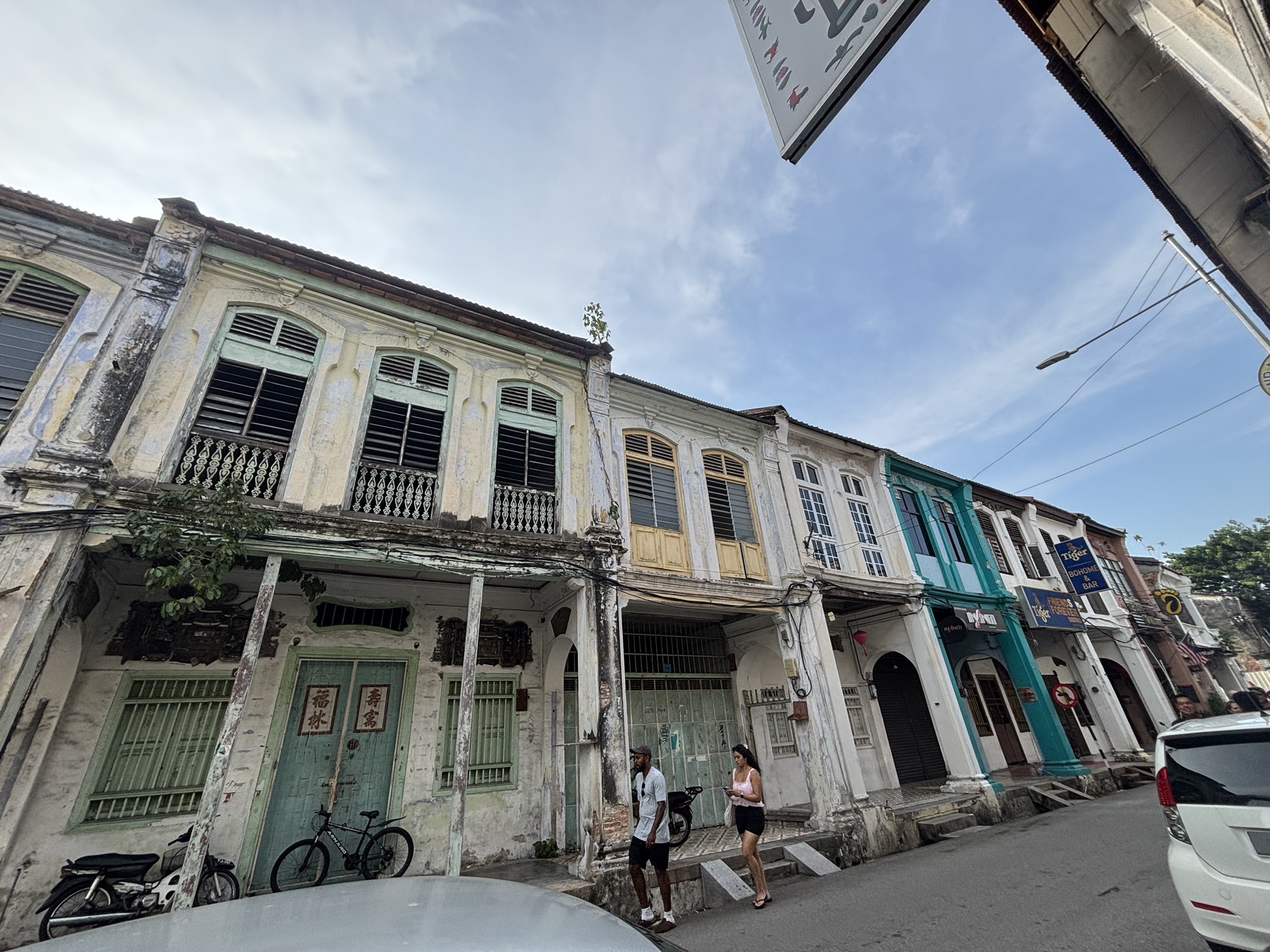
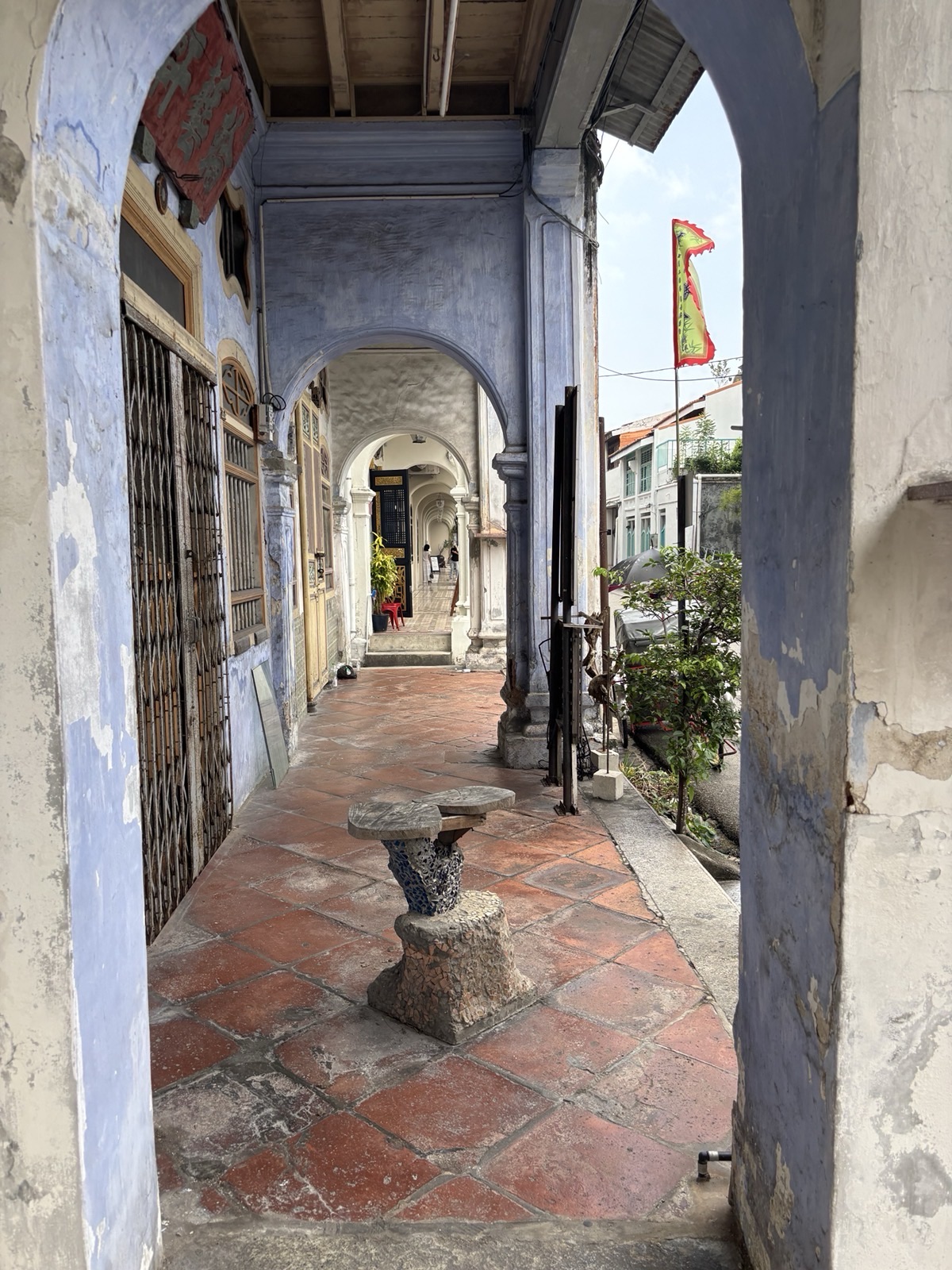
We walked on, crossing into Chinatown, with it’s heritage houses or shop houses as they were called. Some had seen better days while others have been beautifully restored as private homes or businesses.
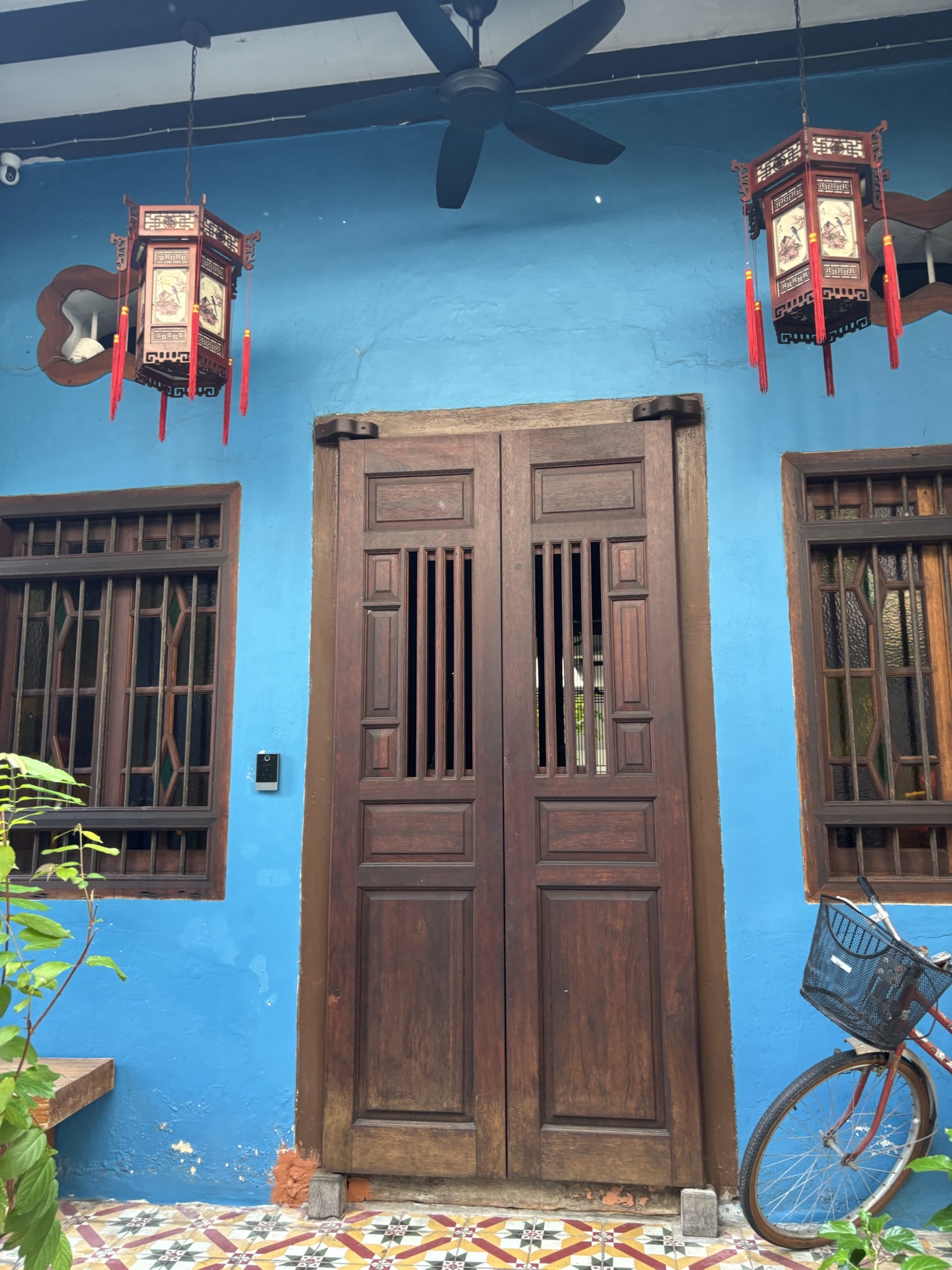
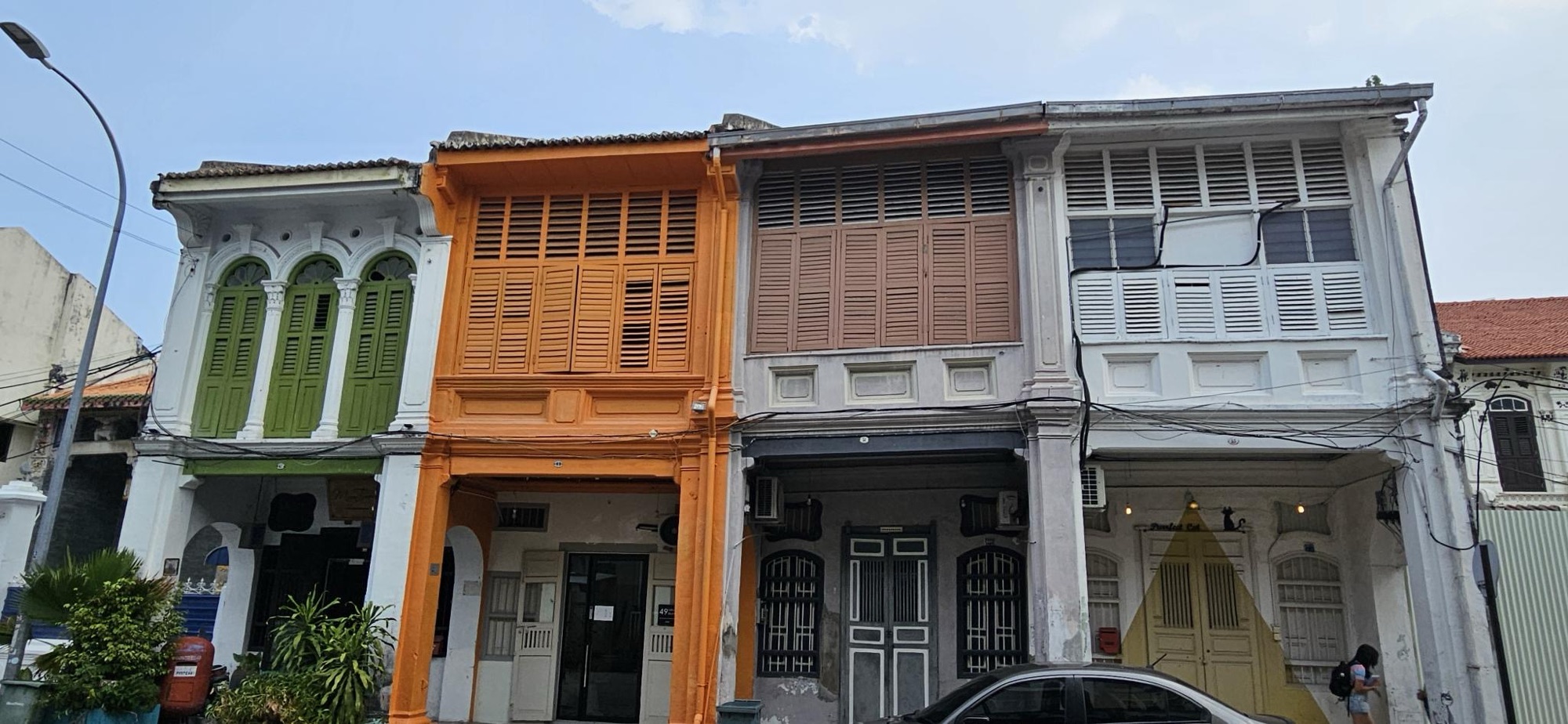
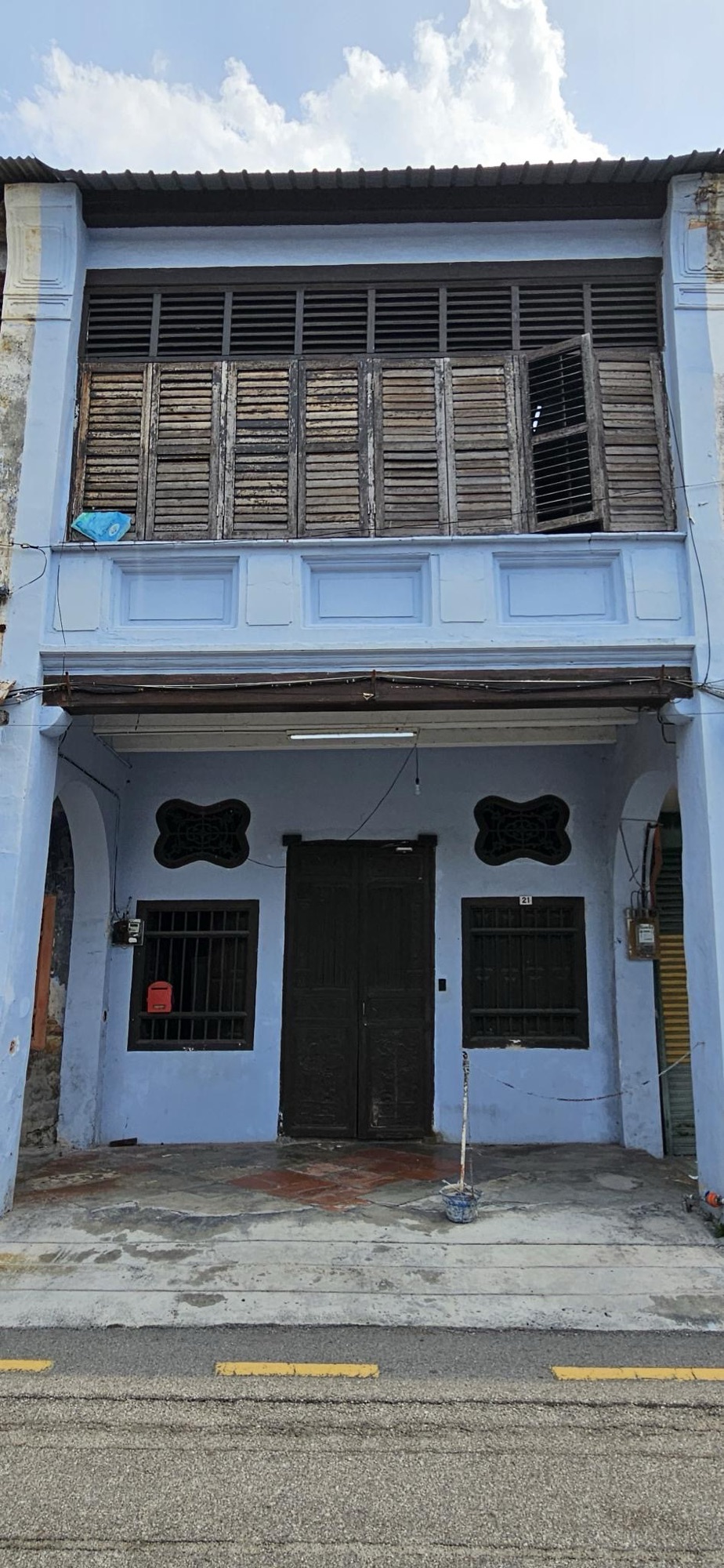
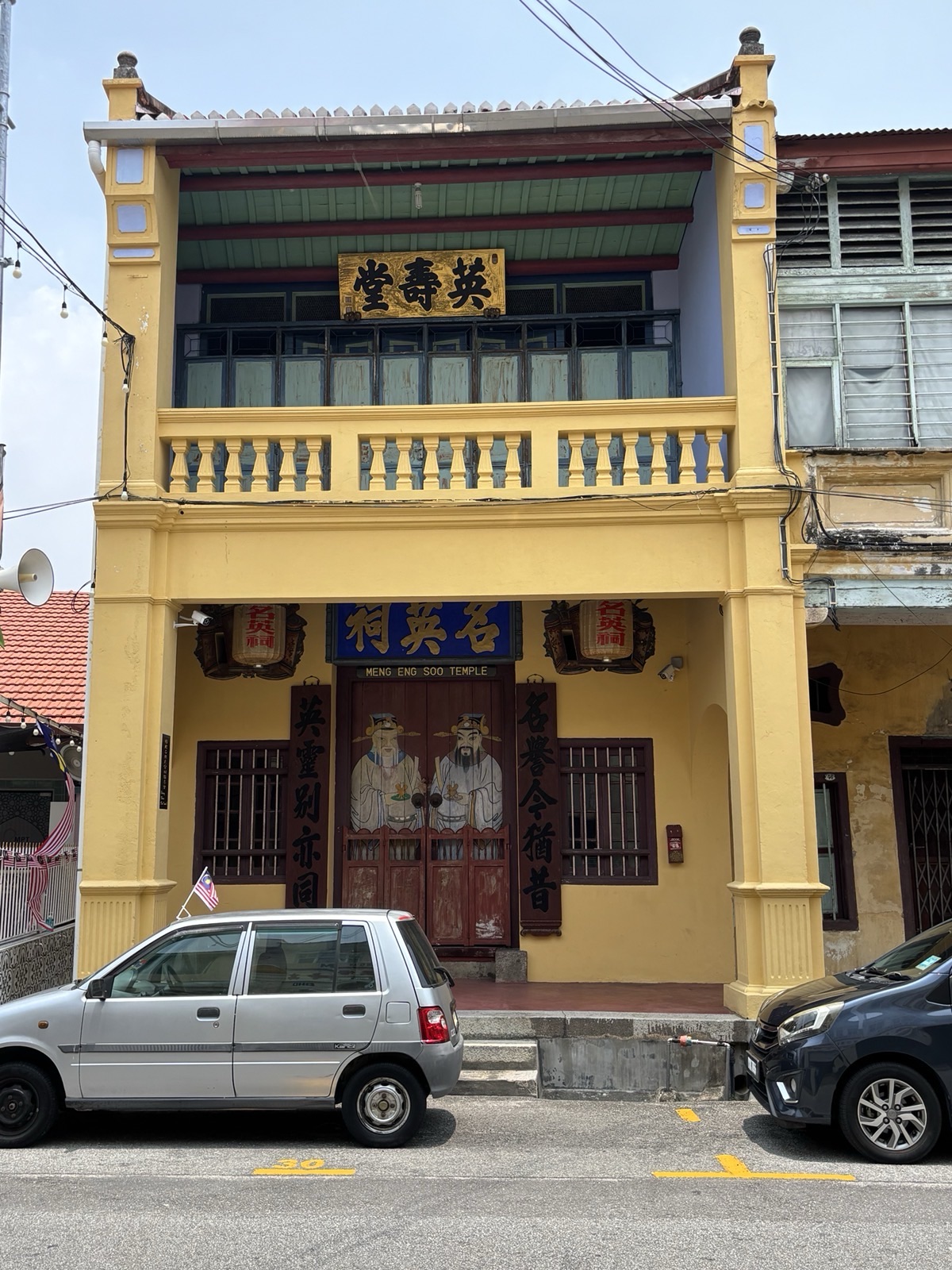
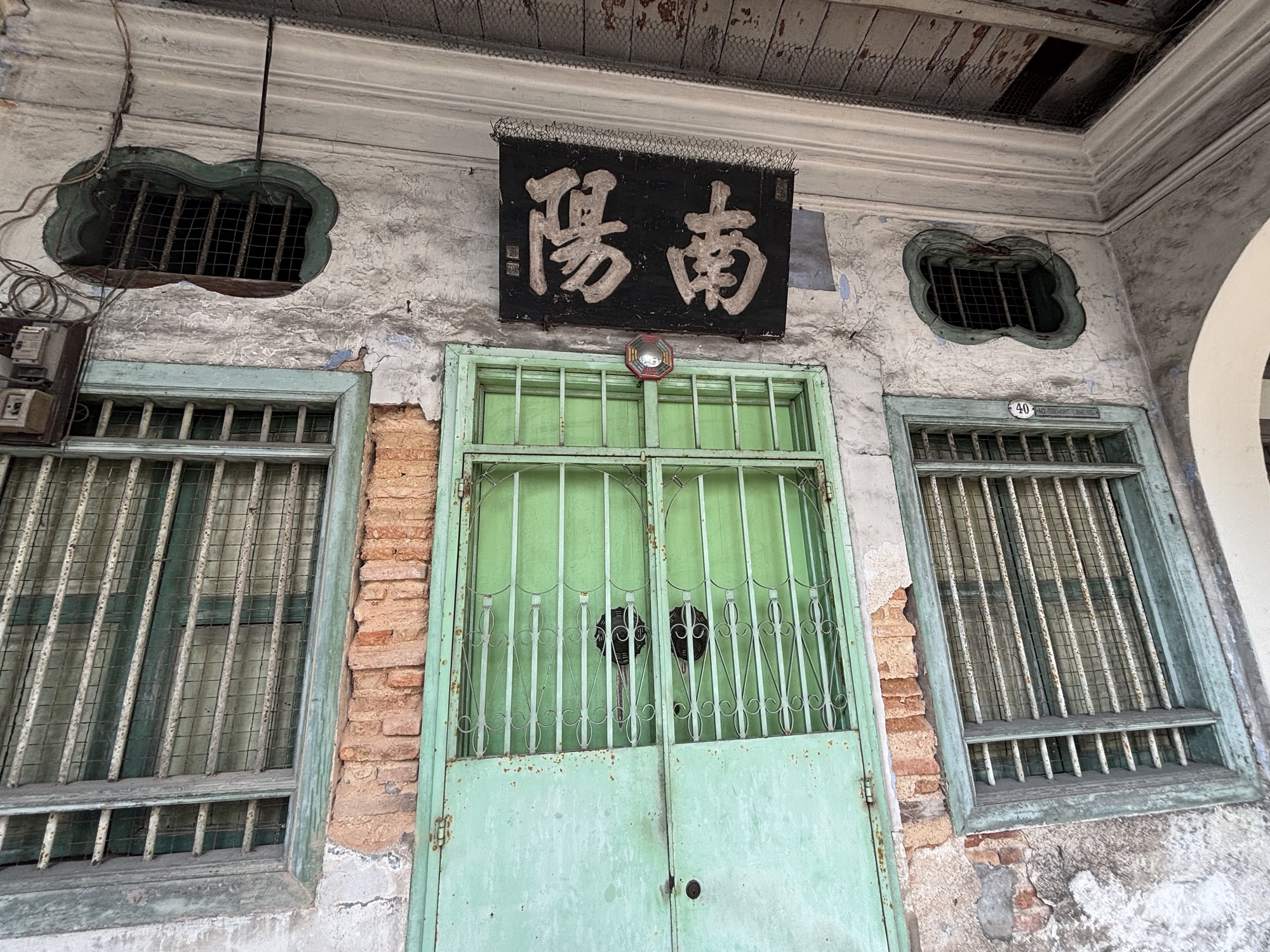
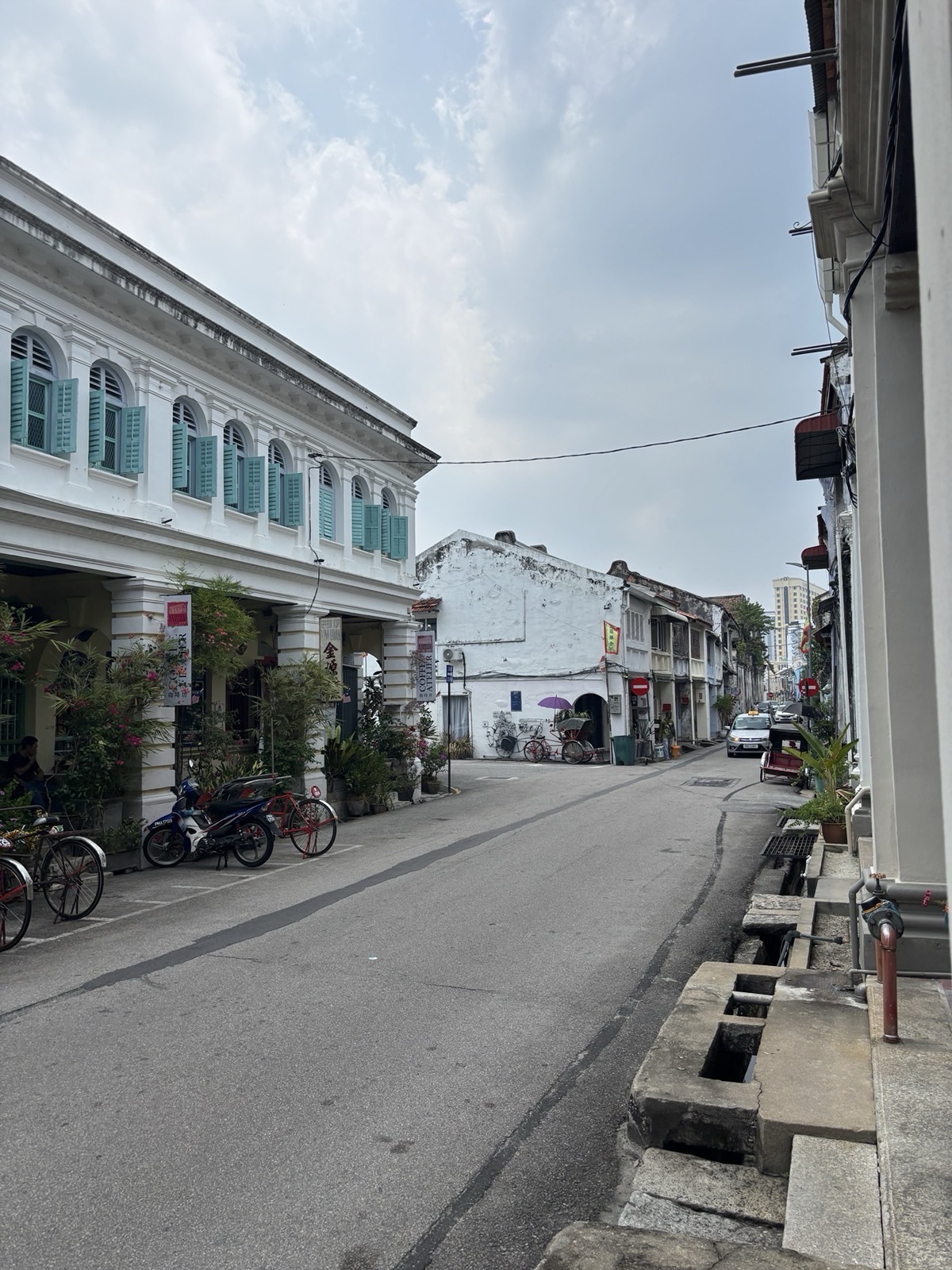
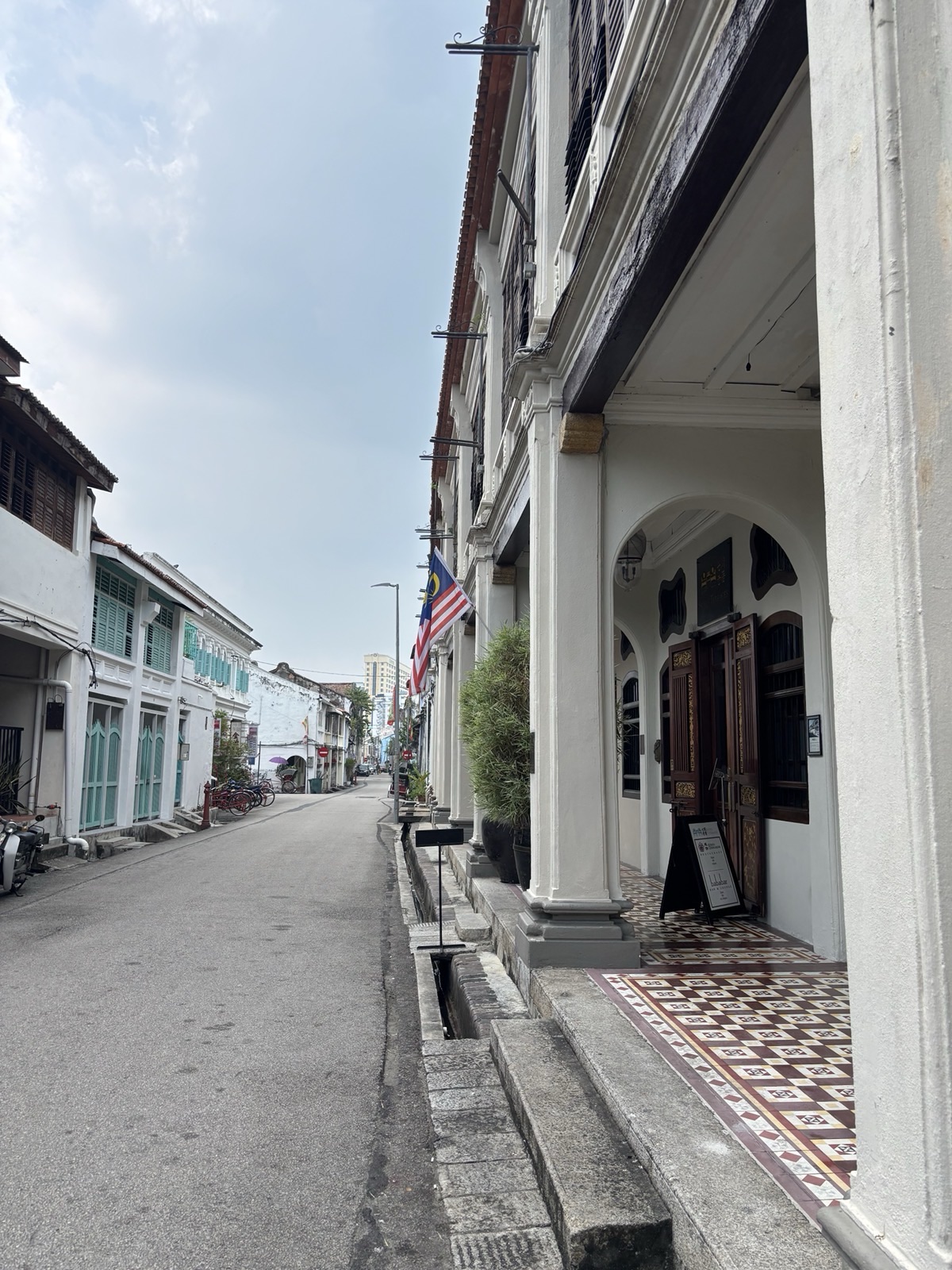
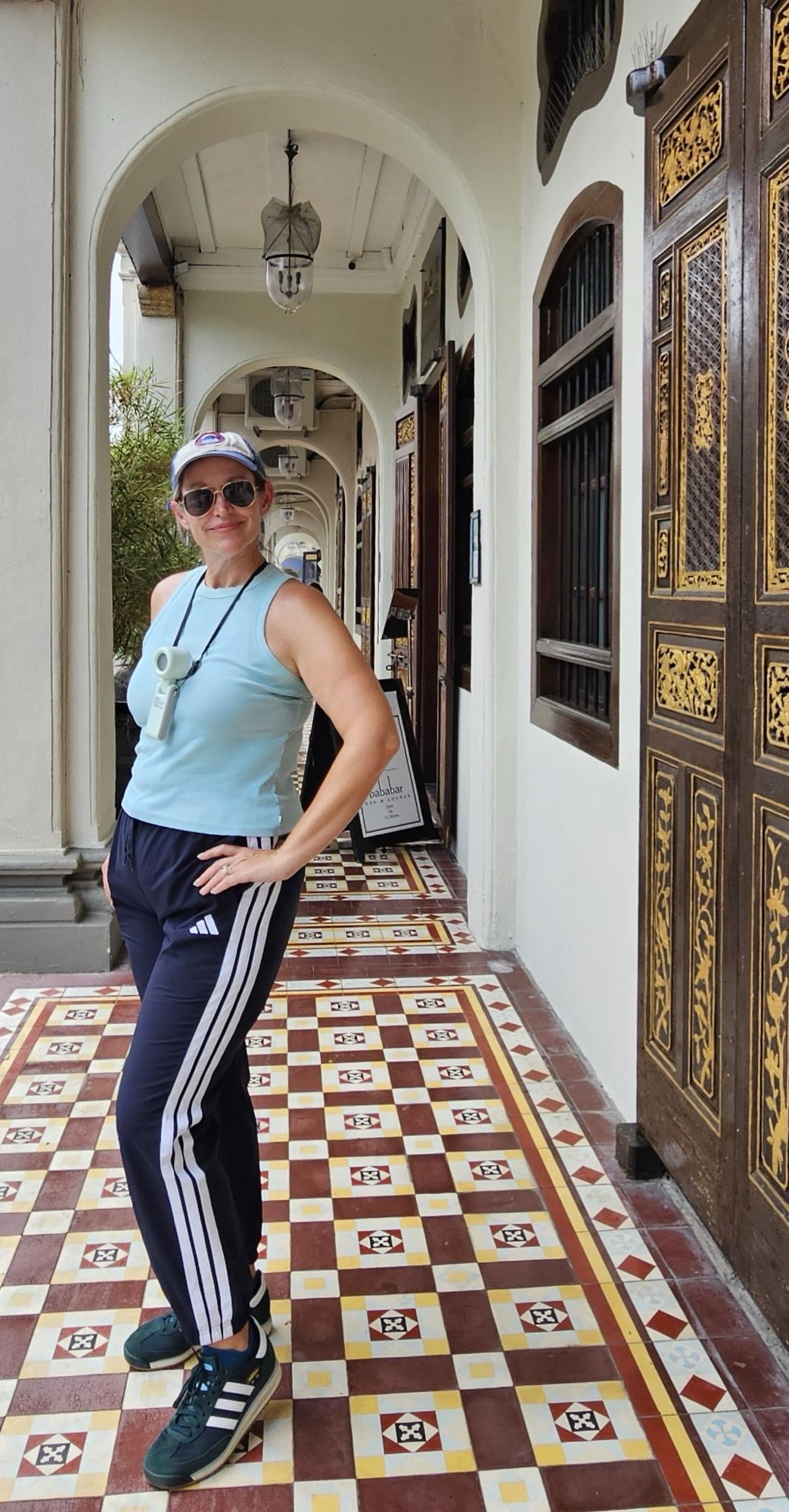
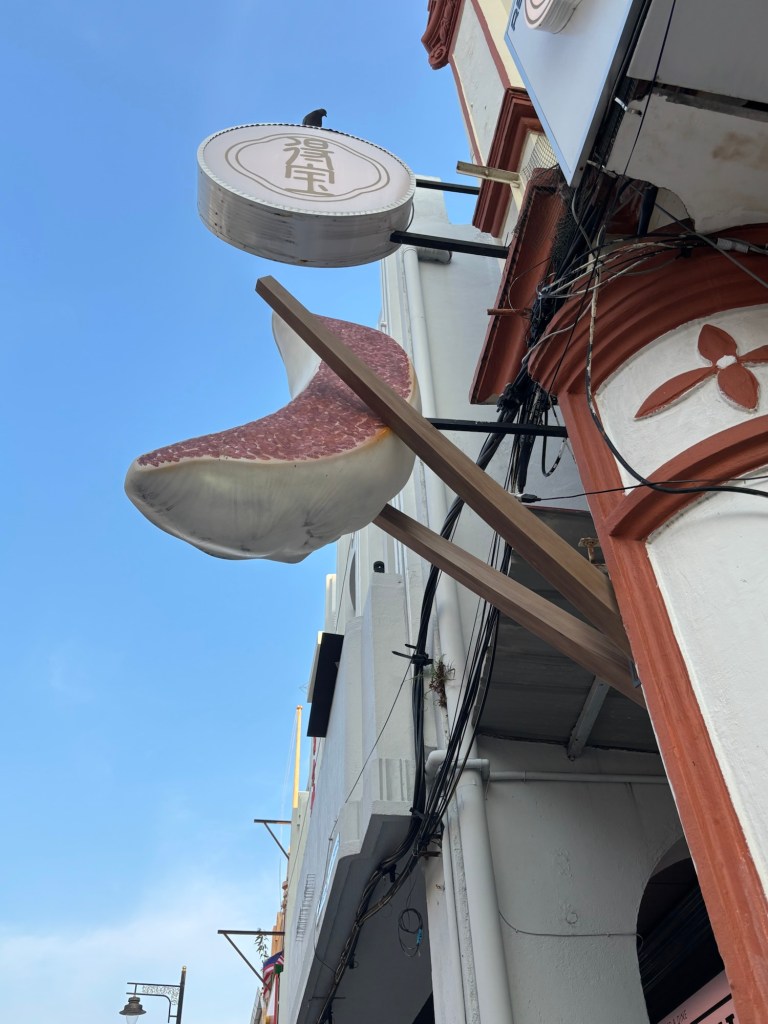
Another unique feature of George Town is it’s lovely, covered, tiled sidewalks with archways. The sidewalks, or Kaki Lima (meaning “5-foot way”) served to shelter pedestrians from intense sun and monsoon rains. The shop houses were required to have five feet of clearance between the business and the road, under British rule (though actual distance ranges from about 3-5 feet). Businesses were housed on the ground floor of the shop houses, with living quarters for business owners upstairs.
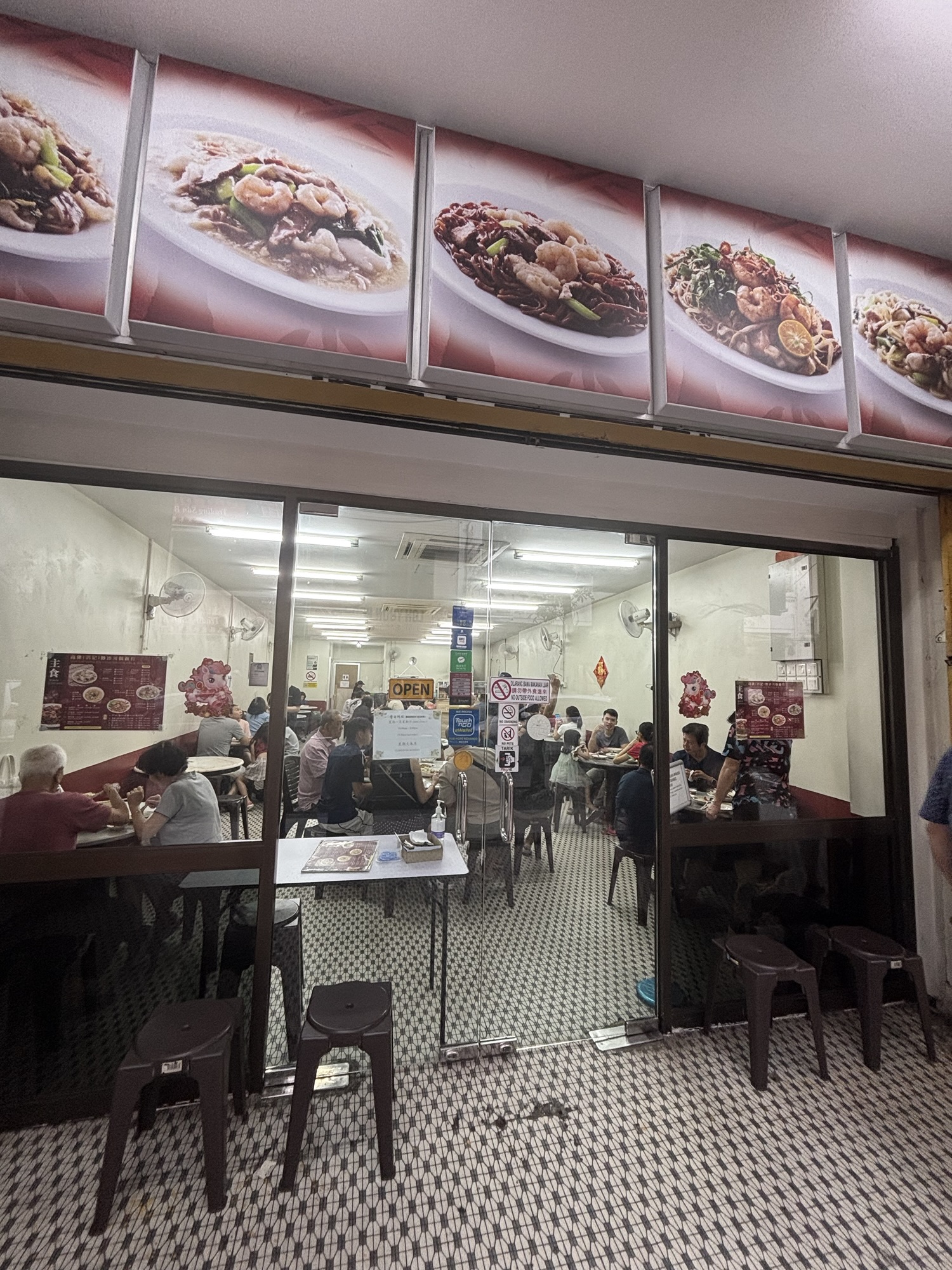
Our next tasty stop on the food tour was at a Chinese noodle house, which is a favorite of locals and has been serving up noodles for nearly 100 years.
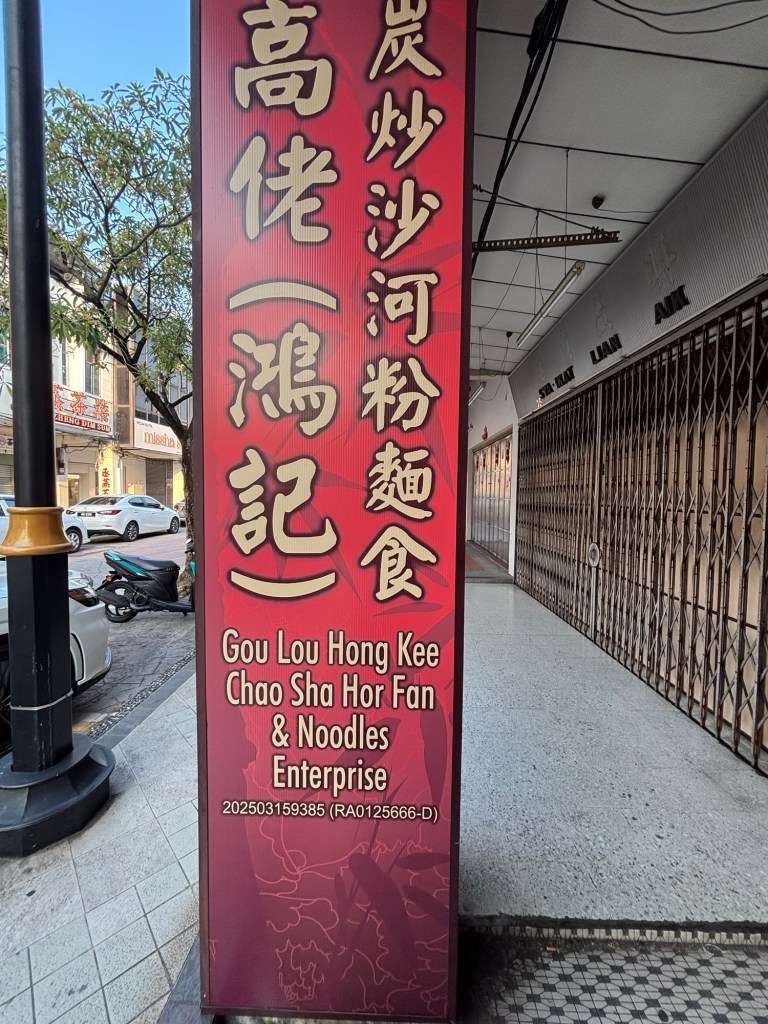
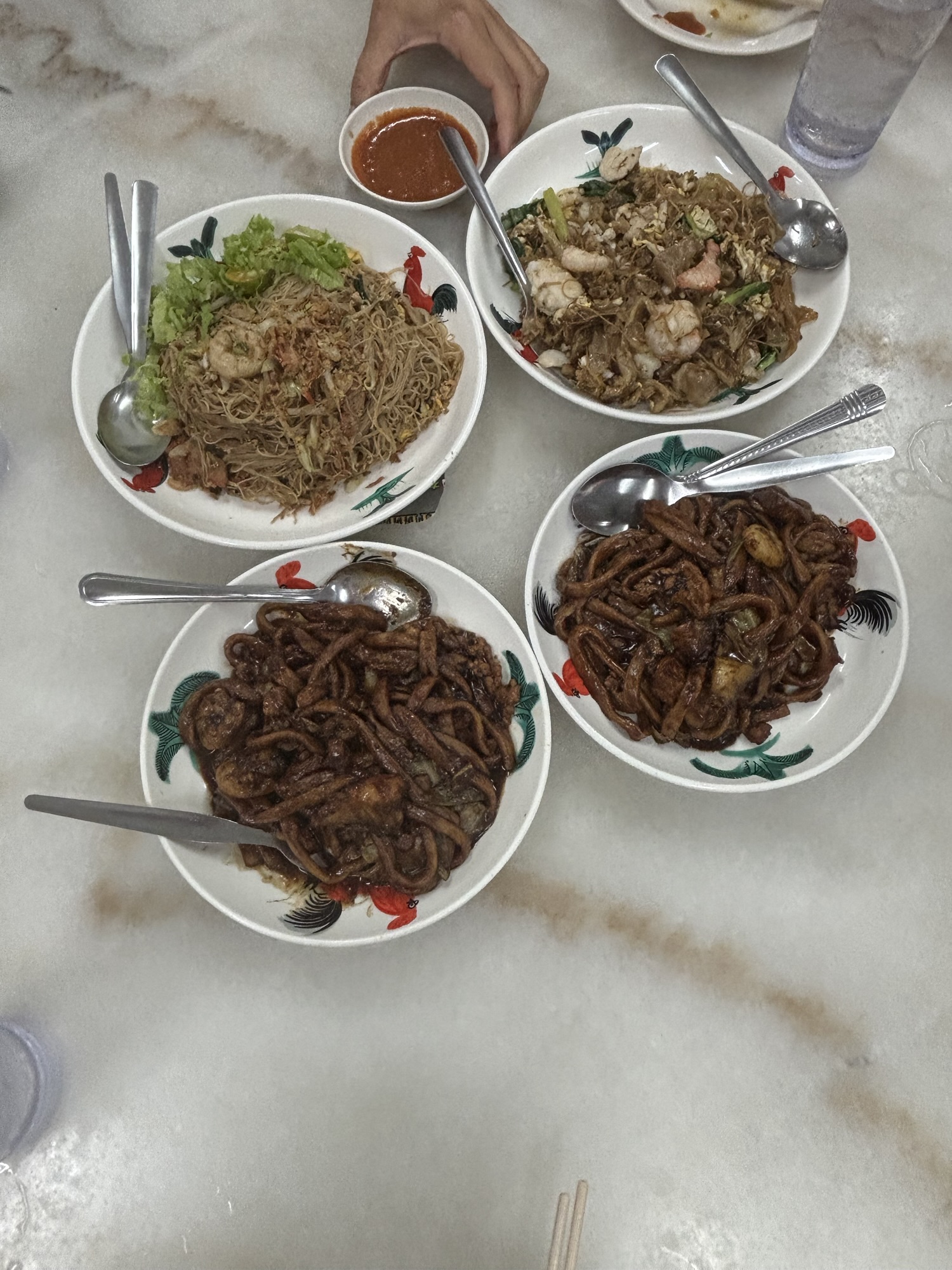
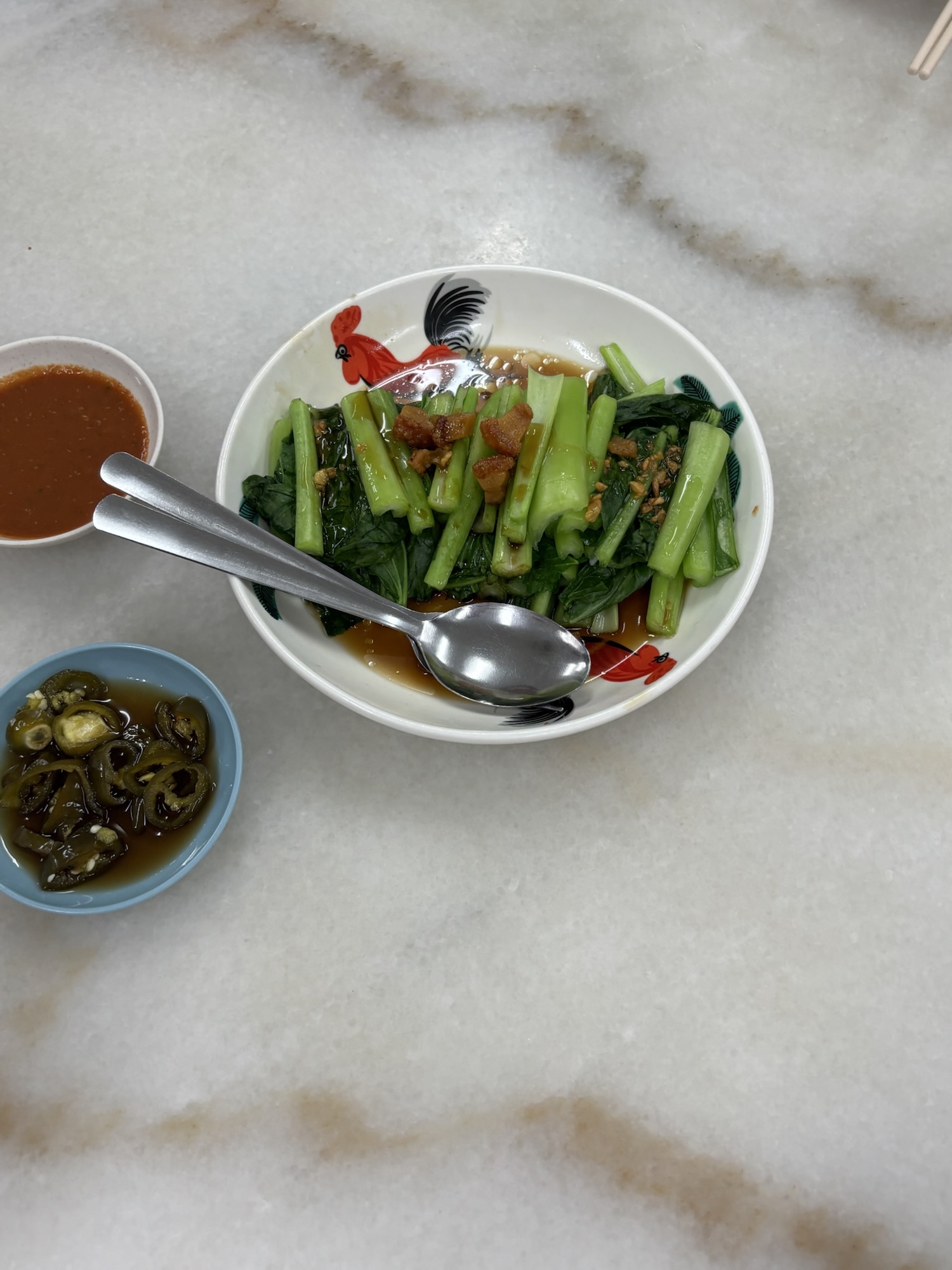
Gou Lou Hong Kee Chao Sha Hor Fan & Noodles Enterprise (say that five times) has been operated by the same family since the 1930’s. We tried three different noodle dishes and had some steamed morning glory (also known as water spinach). My favorite was the Char Hor Fun which are flash-fried over intense, charcoal heat in a seasoned wok to build up a charred, smoky aroma known as wok hei (breath of the wok). The dish includes a lot of meat and seafood and the smokey flavor tasted like pit master had slow cooked the meat. It was so good. We also had fried glass noodles with shrimp and thick Tai Lok Mee which is a yellow, wheat noodle that is thick and chewy. I didn’t love the texture of that one, but the flavor was good. The morning glory was super tasty and had little crispy pork fat pieces sprinkled on top.
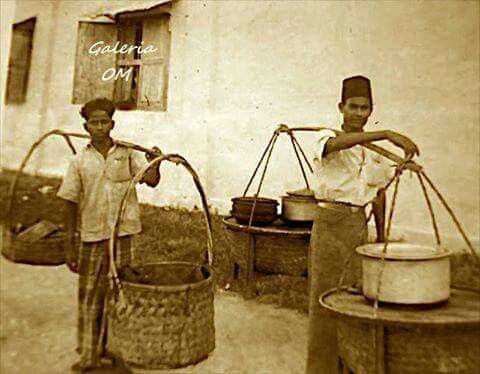
You might think we would be full, having eaten so much food, but this wasn’t the end yet. My favorite place was up next, a Nasi Kandar restaurant. Nasi Kandar is a Malaysian cuisine introduced by Tamil Muslim traders from India. Nasi means rice and Kandar means shoulder. The name comes from the early days of Nasi Kandar when it would be sold to hungry dock workers from shoulder poles.
The difference between a Nasi Kandar restaurant and typical Indian restaurant is that Nasi Kandar establishments are exclusively ran by Muslim Indians. They are also unique in that typically meals are ordered from a hot bar/steam table (though one may still order from a menu typically). One has a choice of white or biriyani rice, meat (mutton, beef, or chicken) often in a curry sauce, and vegetable dishes. You point to what you want and the selections are loaded onto the plate and covered with a mix of the various “gravies” or curry sauces from the hot bar. Your bill is based on what you selected. While we only had a small sampling of this on the tour, we ended up going to another Nasi Kandar place on our own later for the full experience. It really is unique and delicious.
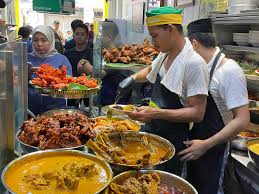
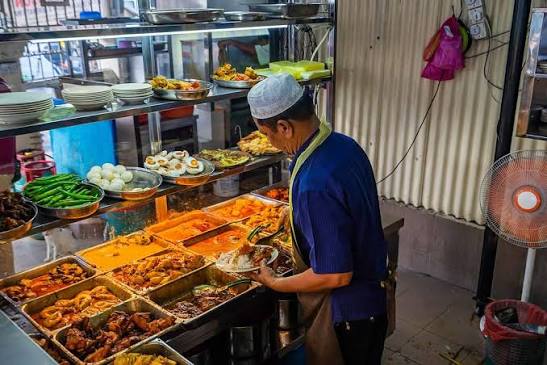
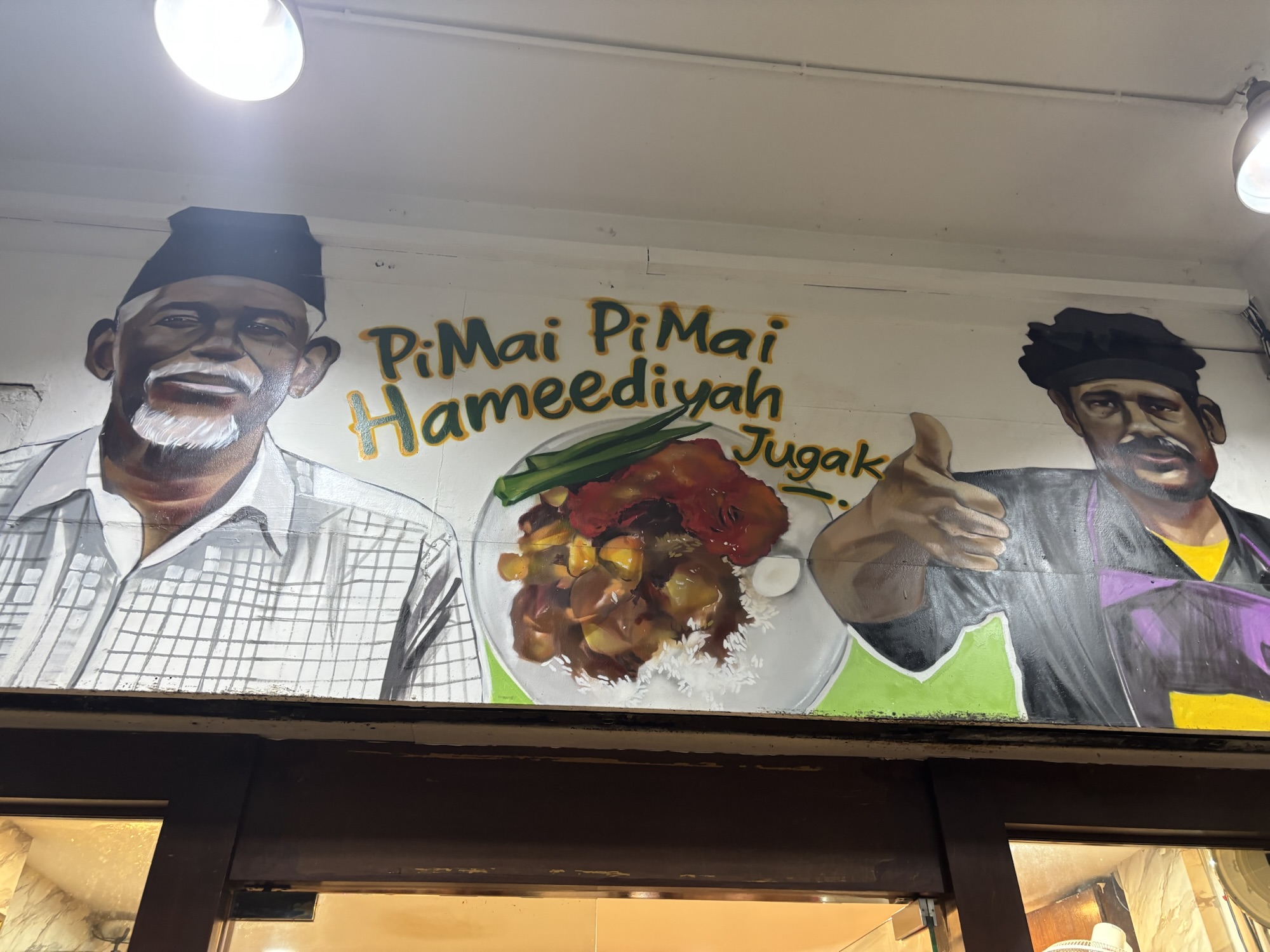
Hameediyah is the oldest Nasi Kandar restaurant in Malaysia, established in 1907.
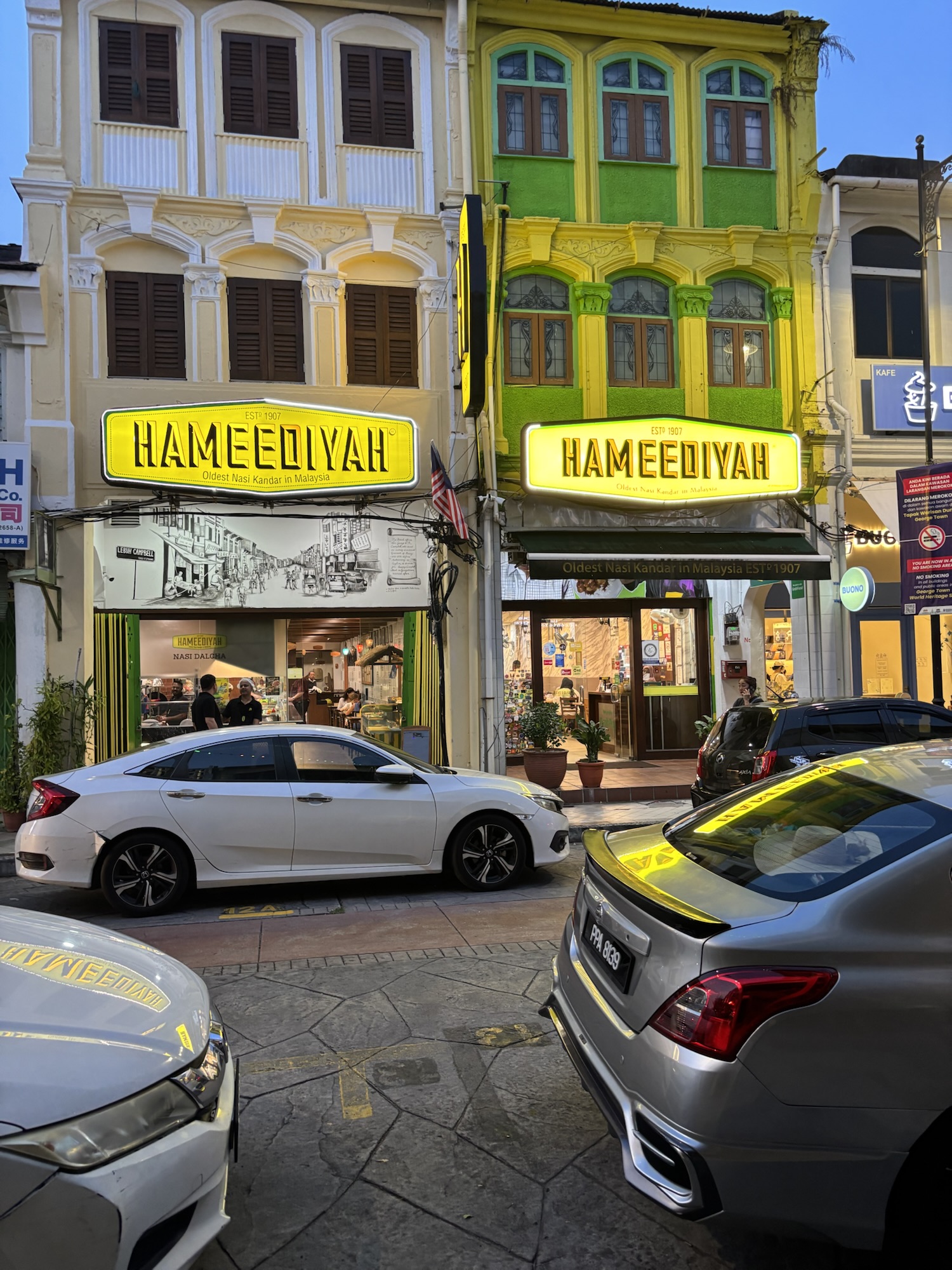
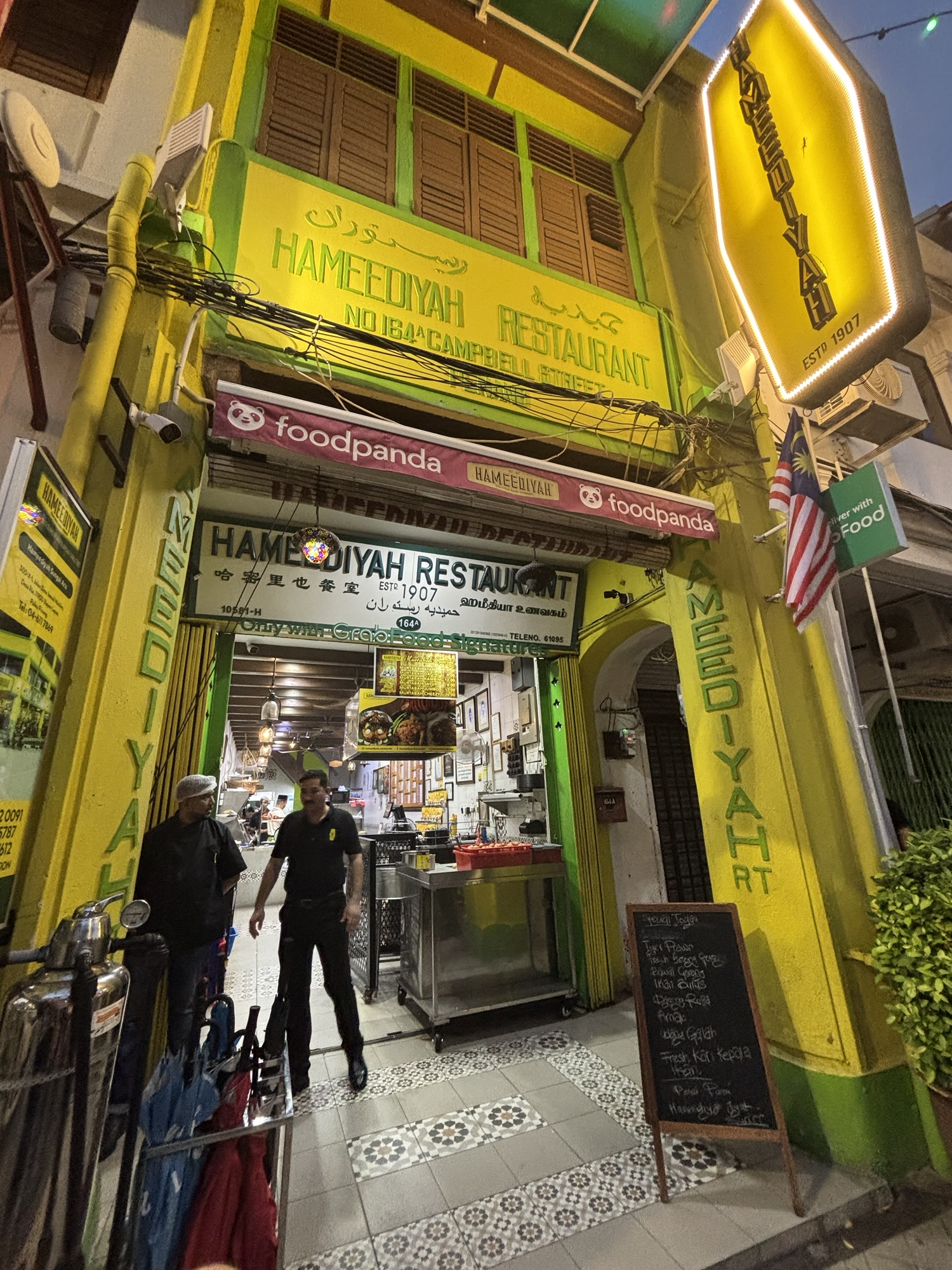
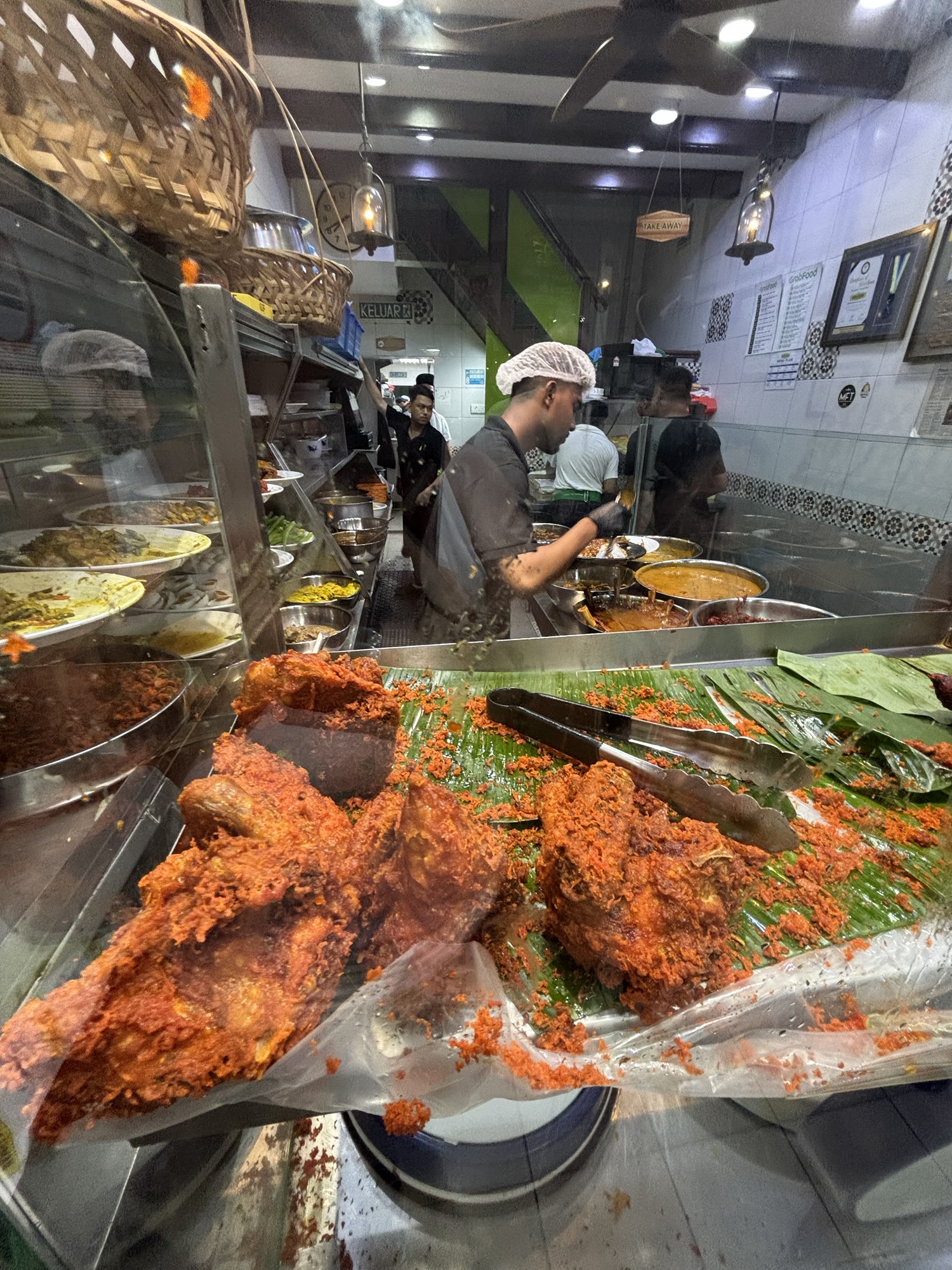
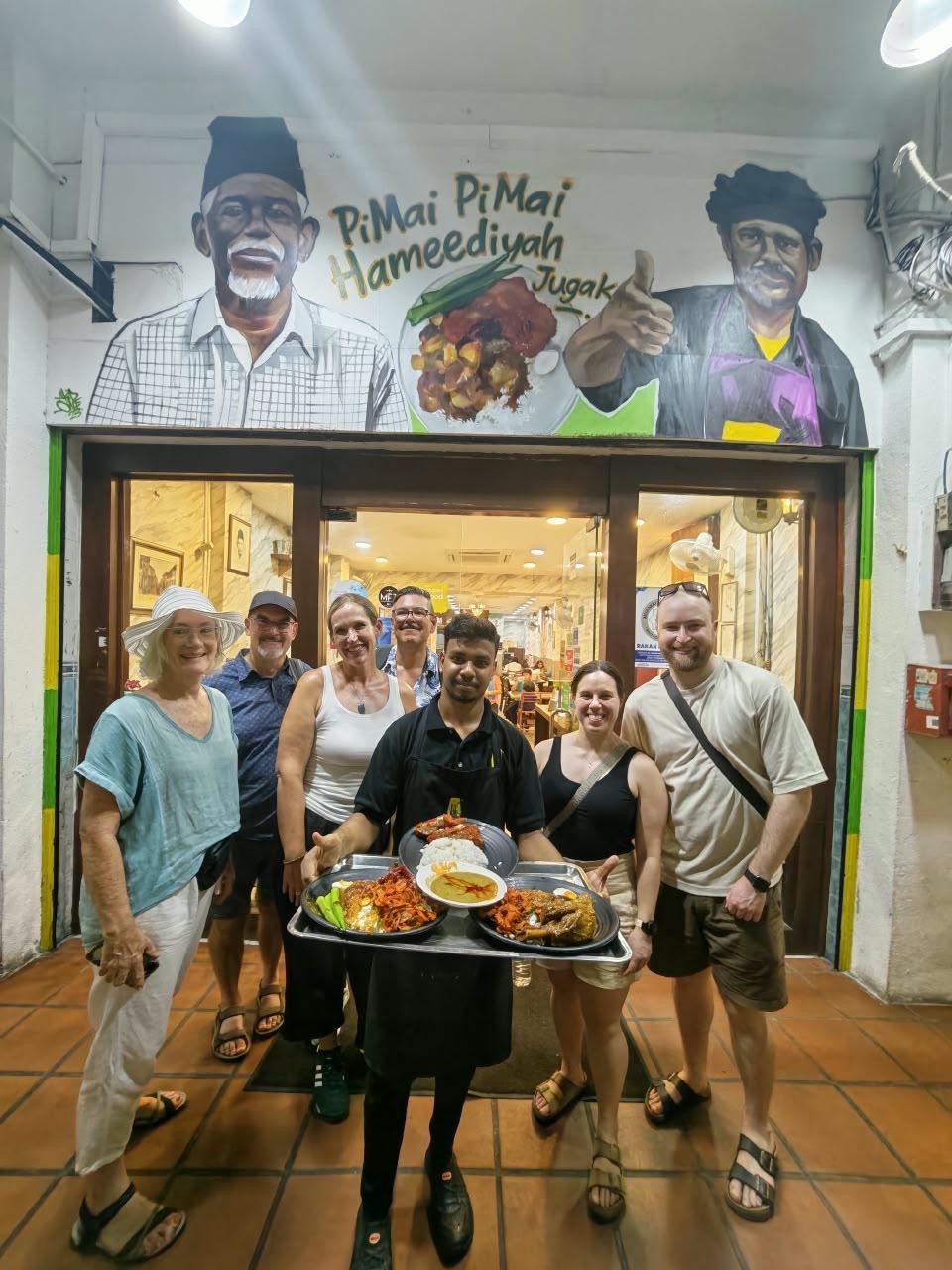
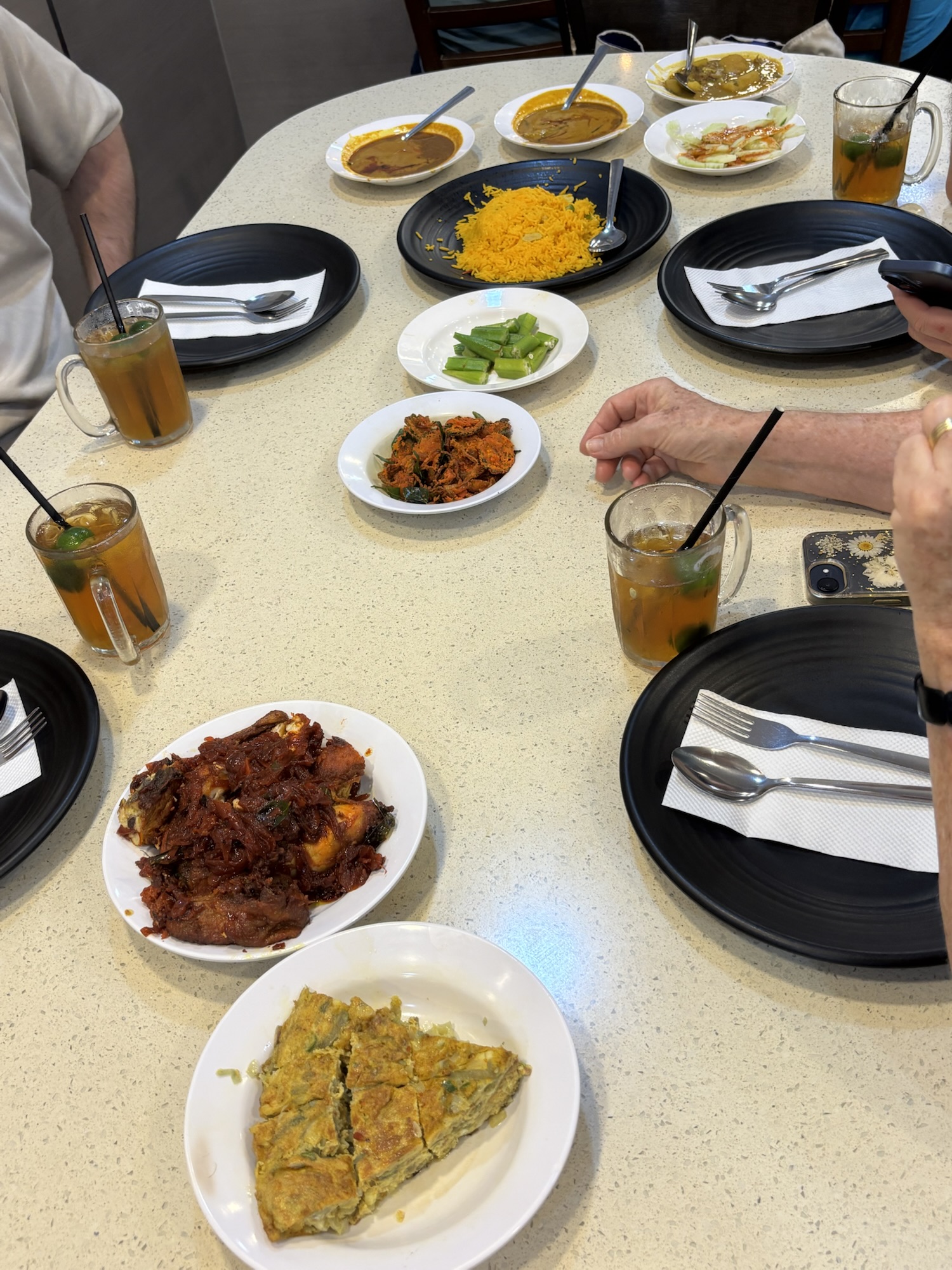
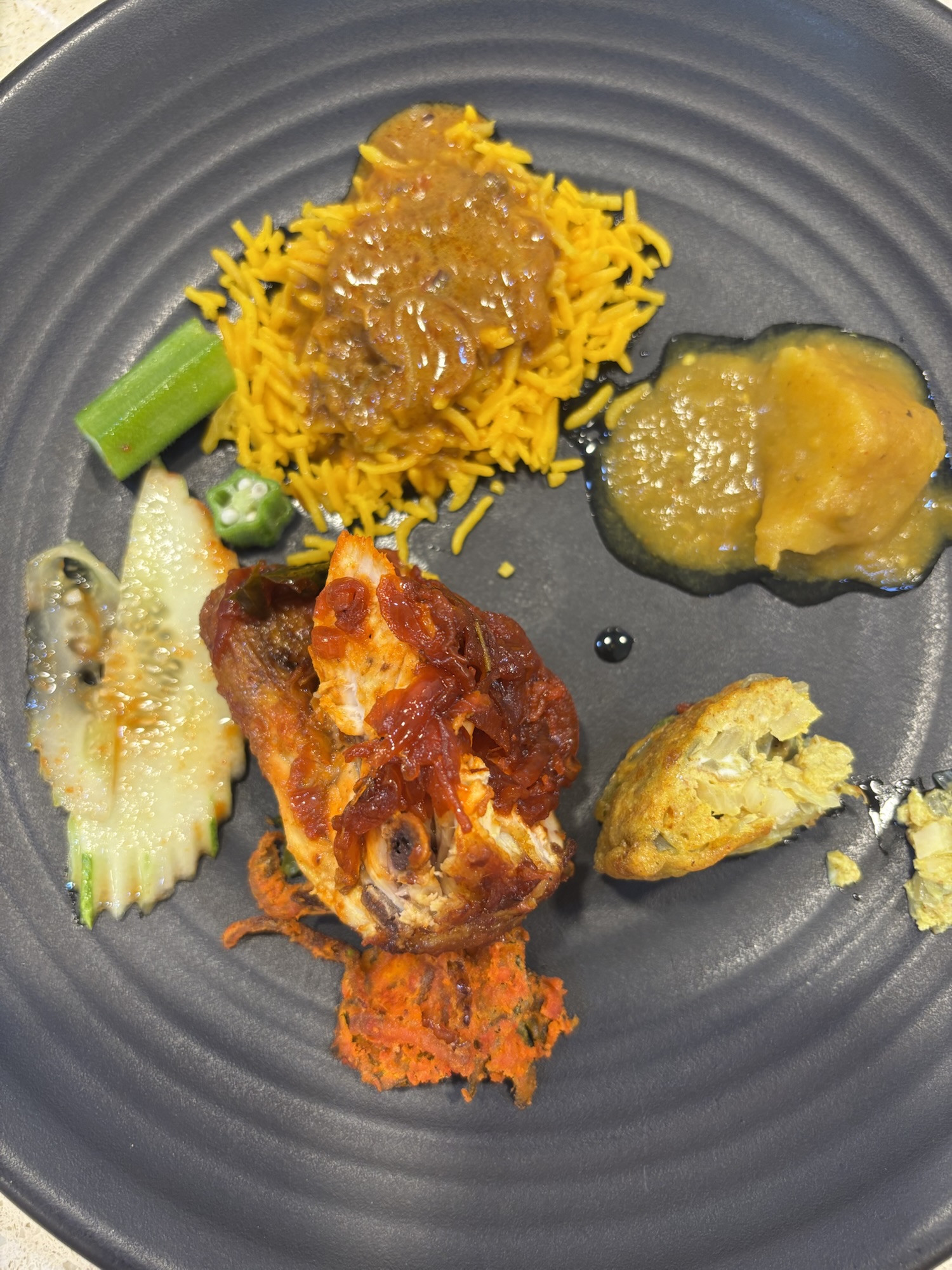
Because we were on the tour, we did not get a heaping plate in all of it’s saucy glory, but sampled individual dishes that were quite tasty; spicy pickled vegetables, chicken curry, and captain’s chicken which is covered in blended spice paste of shallots, garlic, fresh/dried red chilies, galangal (in the ginger family), turmeric, ginger, lemongrass, candlenuts, and shrimp paste. It was super good.
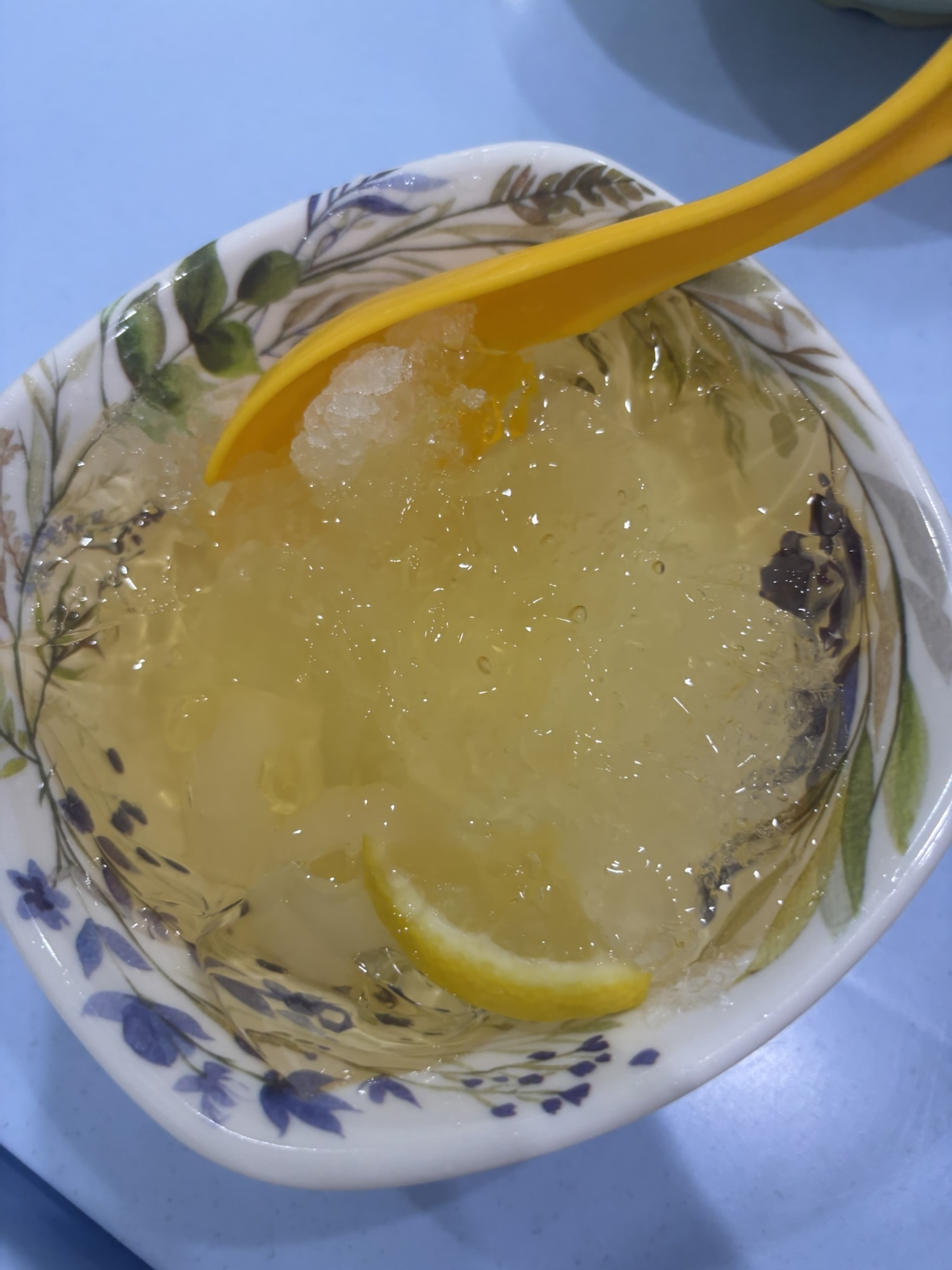
Our last stop was for dessert. Luckily Phil and I shared a dish because it was not my favorite. We sampled Taiwanese Aiyu Jelly which was served over shaved ice. I’m not a huge fan of gelatinous textures, so it not do it for me, but I could see how some could find it to be a light, refreshing desert.
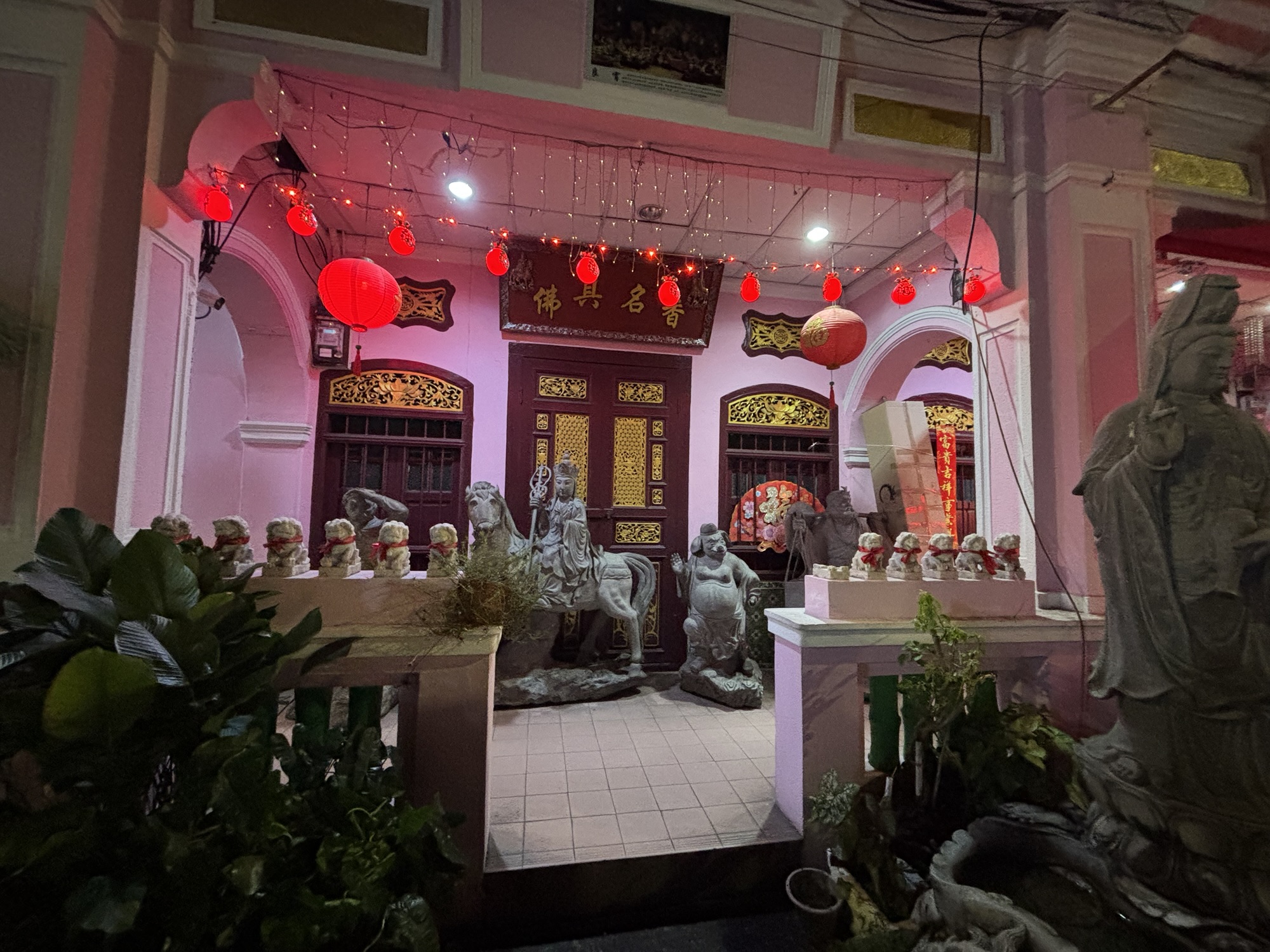
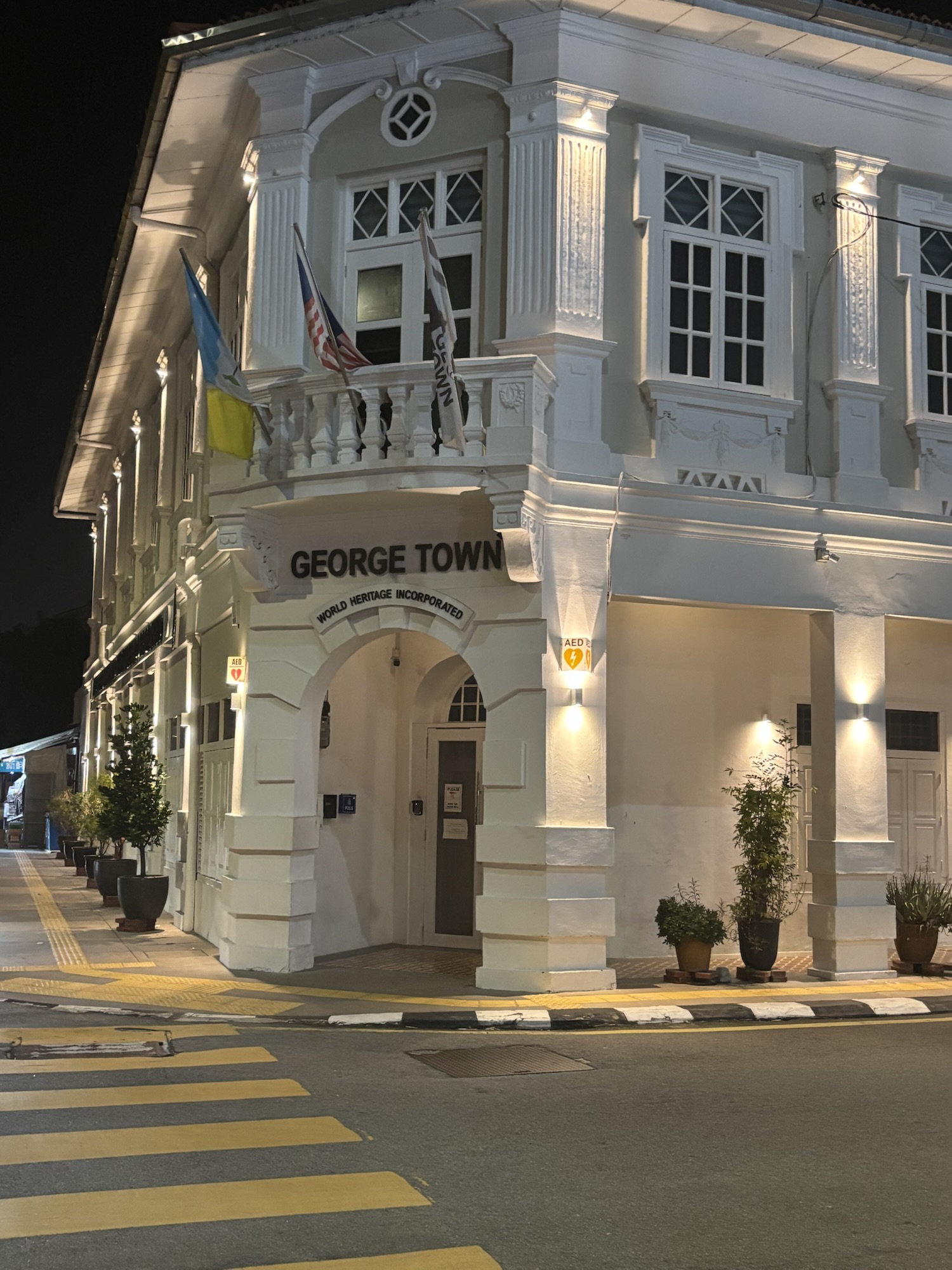
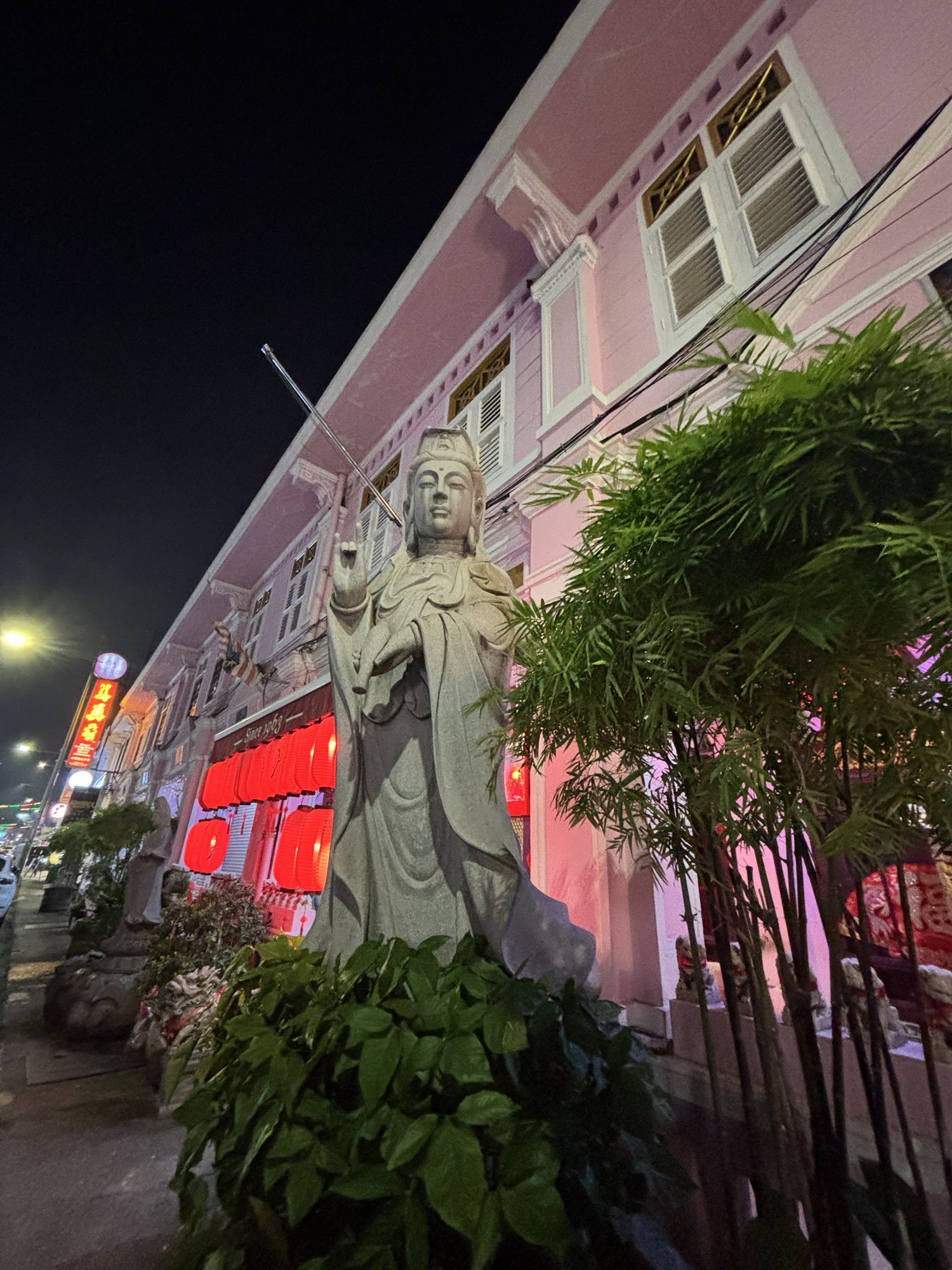
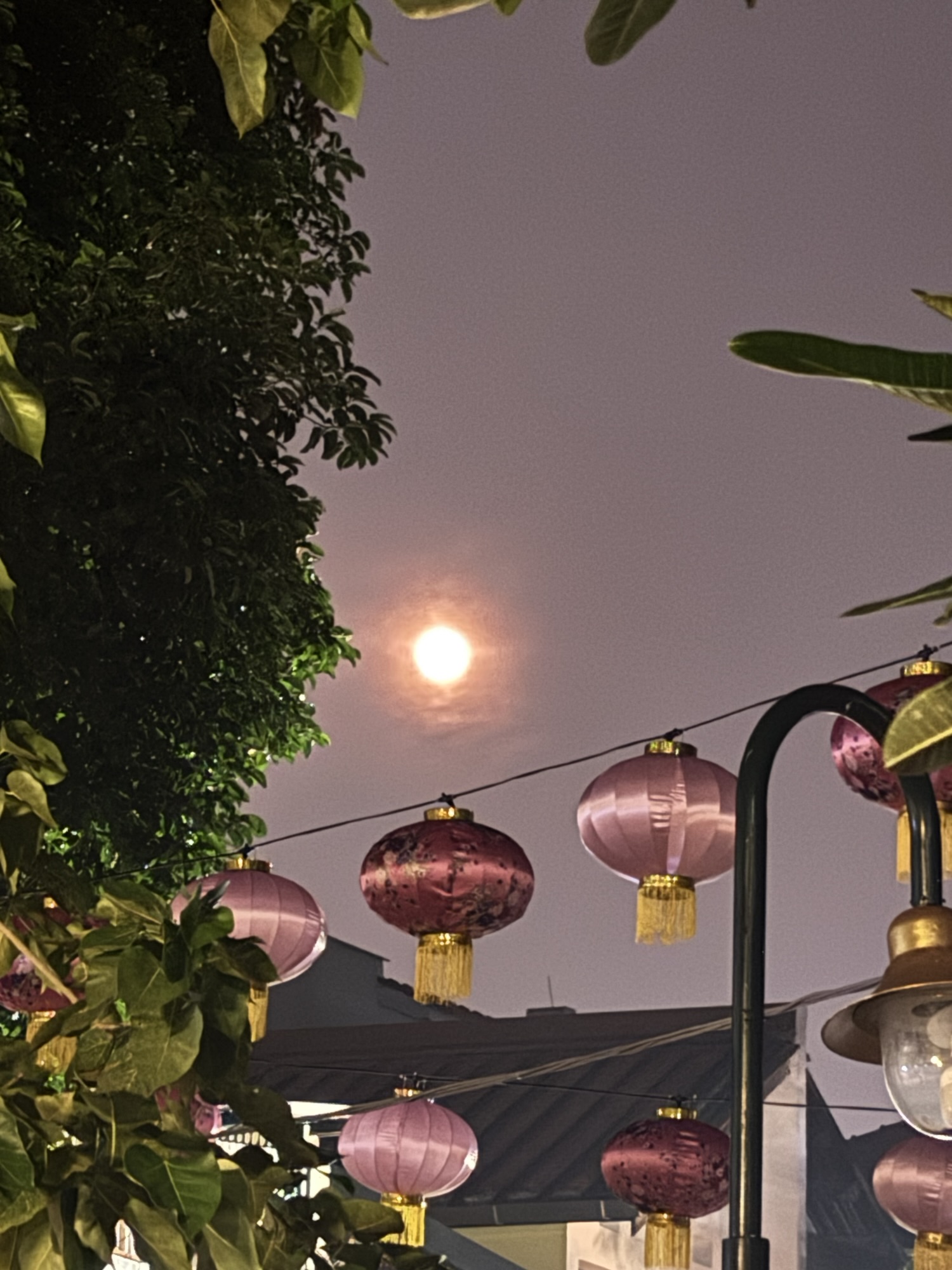
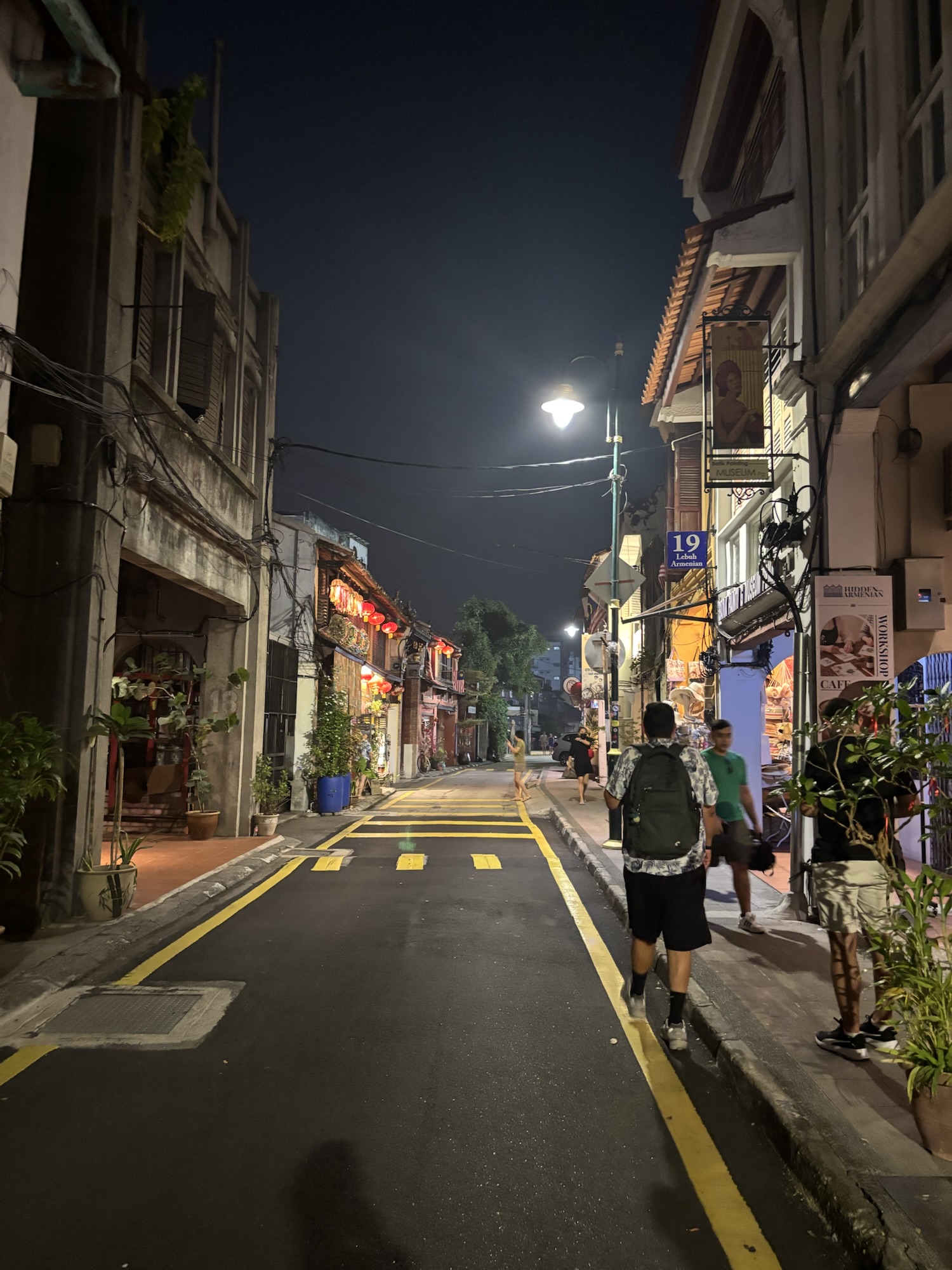
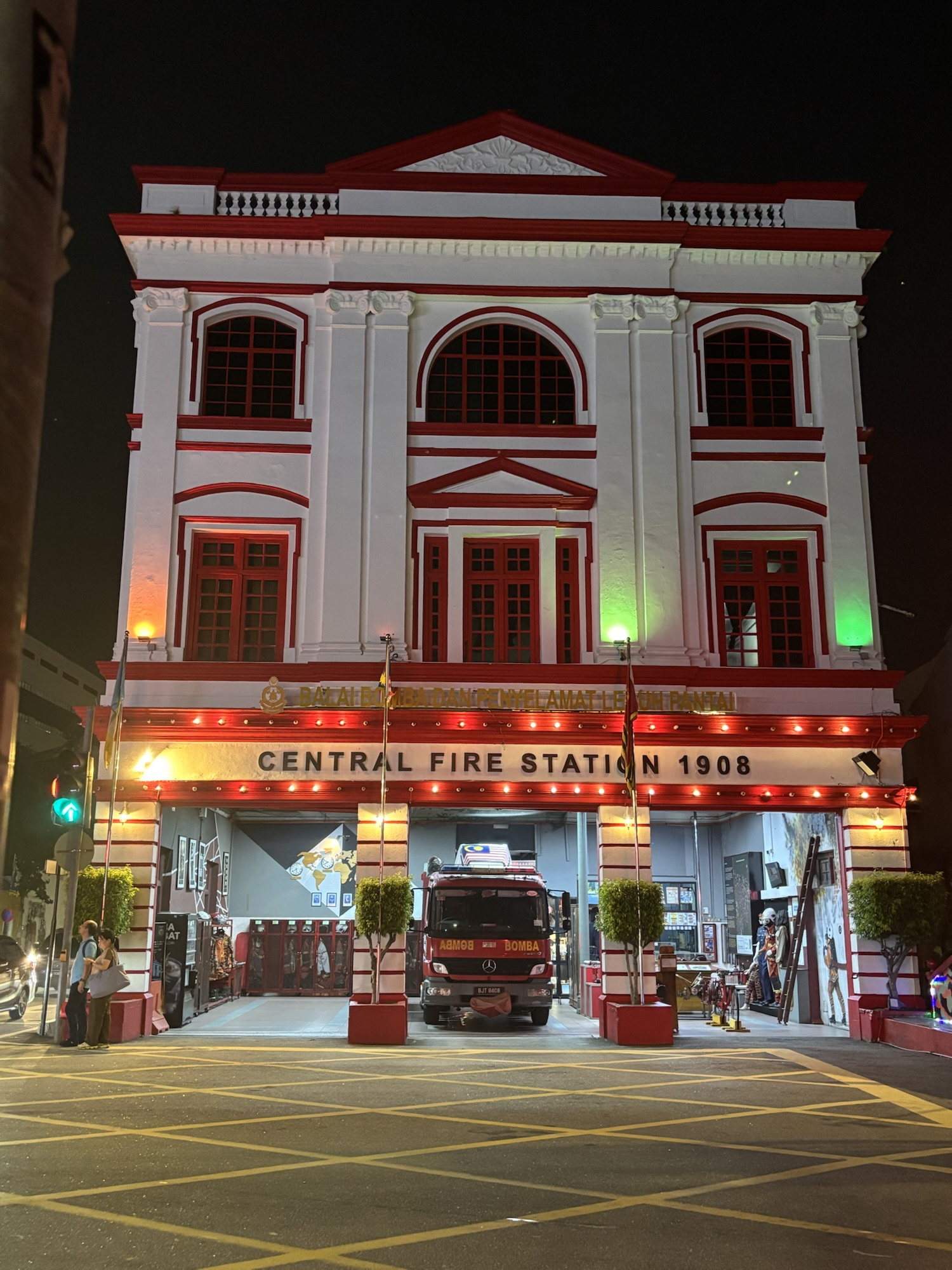
Phil and I were absolutely stuffed after all of our delicious food tasting, so took our time walking back to the hotel. The streets that were packed with tourists that afternoon were relatively empty on our walk home, which allowed us to snap some pics and enjoy a leisurely evening stroll.
More to come from our Malaysian adventure!

