A Day Trip to Oviedo

On Saturday we look our first trip outside of Gijon. We headed inland via train about 30 kilometres south to the capital of Asturias, Oviedo. The ferrocarril (train station) is a ten minute walk from our apartment. We arrived five minutes before our 10:15am departure time. The coach was almost empty as the train begins it’s journey for the day in Gijon. The seats were comfortable and roomy. The brief trip rode us past lush, rolling green hills and we were in Oviedo in less than 20 minutes.

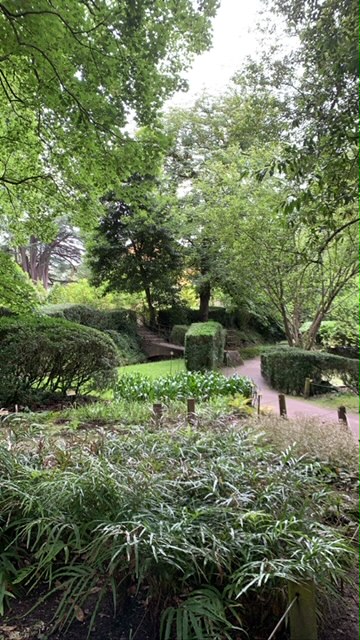
The train station is in central, old town Oviedo. Oviedo is a more aesthetically pleasing city than Gijon (I prefer Gijon’s character and vibe, though admittedly, I am biased) because Oviedo has an old world, European feel and beautiful architecture everywhere you look. We hopped off the train and started walking through the green, sculpture-filled park, named Campo De San Francisco. At one corner of the park was a small tourist information booth and we stopped by for a map and recommendations. The woman working was very nice and provided us with a city map and several brochures written in English (though she did ask us if we would prefer English or Spanish. Score for Team B!). We were able to communicate with her entirely in Spanish and she pointed out the top three sites to see and asked us if we had lunch reservations somewhere (we did).

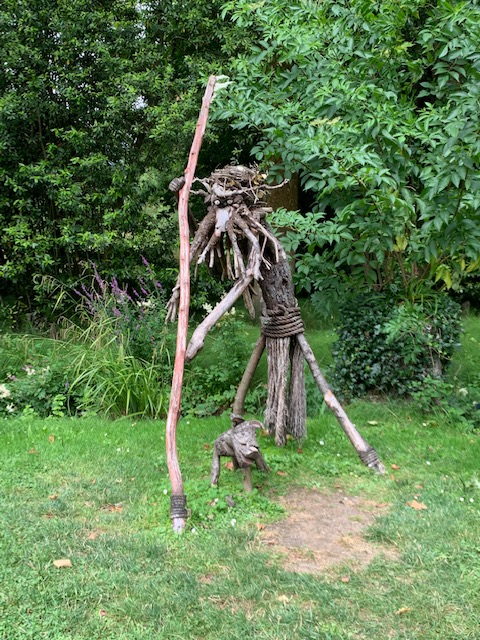
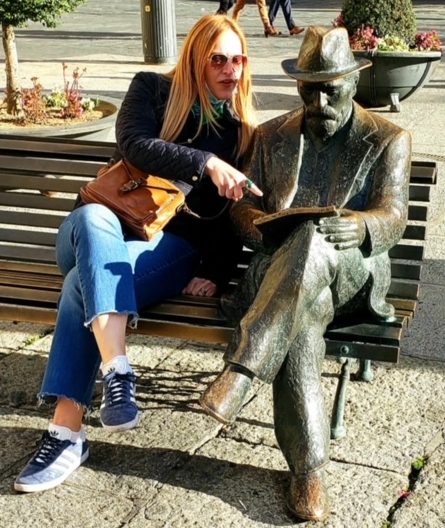
As mentioned, the park has several sculptures, as does the city center at large. One of the statues is, oddly, of Woody Allen. Our profesora had mentioned this to us. Even after reading about it, I am still confused as to why he received this honor but the statue is there and I felt I had to mention it.

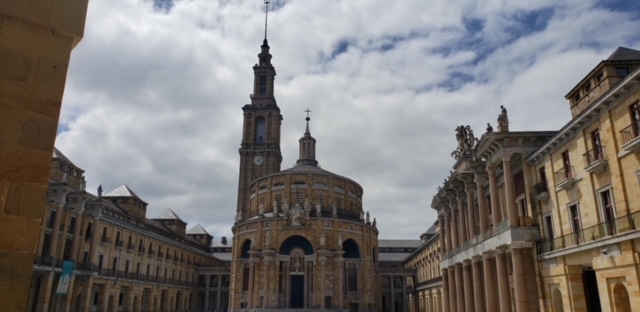
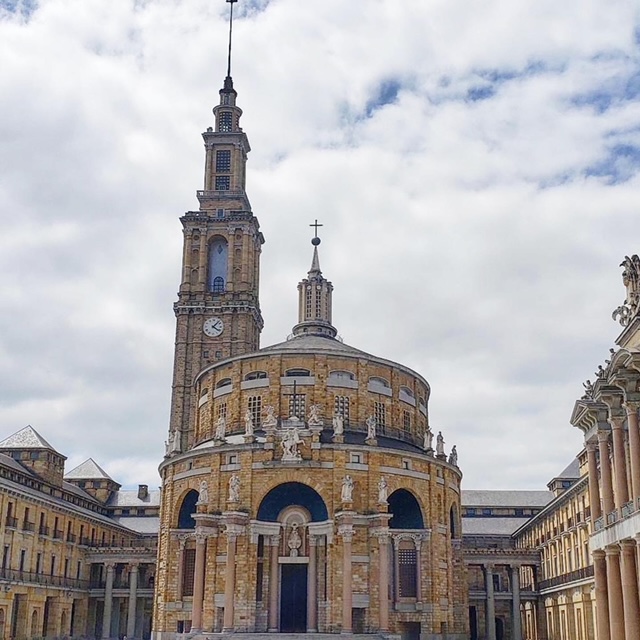
We headed toward the number one tourist site, The Cathedral of San Salvador and on the way, passed the University of Oviedo. We wandered into the the large, open court yard near the library and came upon an art exhibit of artist Jaime Herrero. Jaime Herrero was a multi-disciplinary artist and cultural figure in Oveido who died in 2020 at age 83. We were the only ones at the exhibit at the time so were able to take our time viewing his work before continuing on our way.

The Cathedral de San Salvador is a huge, beautiful cathedral that was built in the 14th century. It is also the starting point for the “camino primitivo” on the Camino de Santiago. As we made our way toward the entrance, we saw that the cathedral charges seven euro to enter. Perhaps it was because we had been to three lovely and old churches in Gijon already earlier in the week but mostly it was because there is something about a church charging for entry that doesn’t sit right, we decided not to tour the cathedral. We figured we have plenty of time to tour the cathedral since we only live 20 minutes away, if we change our minds.

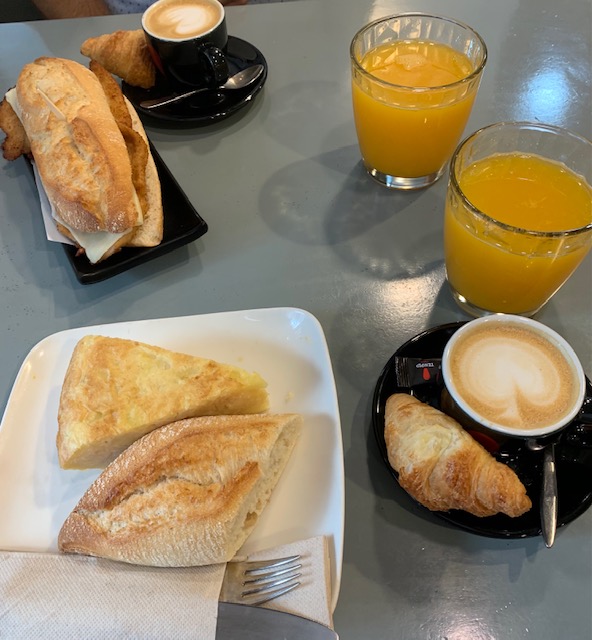
Our lunch reservations weren’t until 2:30, so we decided to grab a quick pincho (snack/small meal) and a caña (small glass of beer) at a nearby cafe and figure out our next destination. We each had the tortilla con chorizo (Spanish tortilla is a thick, potato and egg omelet, similar to a frittata, served in slices). The pincho and beer hit the spot nicely and we decided to move on to the Palacio de Verarde-The Austrian Museum of Art.

The art museum featured primarily Austrian artists (they did have a Picasso and a Dali). Artist Jose Uria y Uria (1861-1937) was particularly notable for his paintings and use of light and shadow. Both Oviedo and Gijon have Uria streets named for the artist.

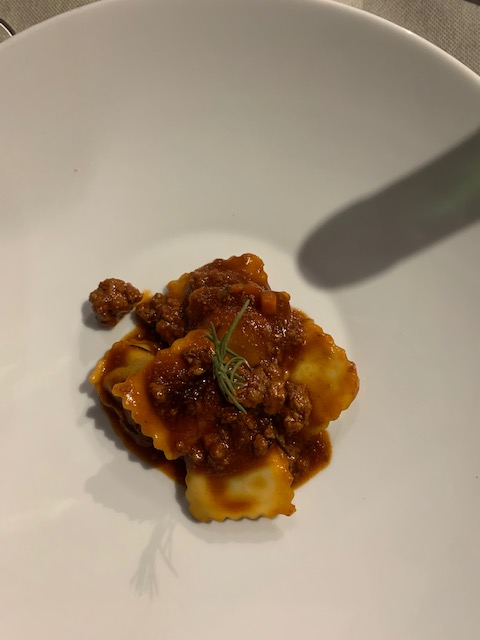
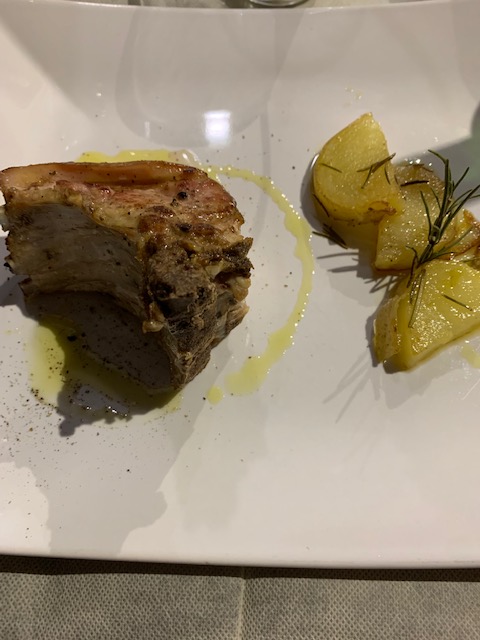
The museum closed at 2pm for lunch which was perfect timing for us to leave and walk to our 2:30 lunch reservation at La Palmera del Indiano. The restaurant is located inside of the Barcelo Hotel. The ambiance had a bit of a Southern California feel to it. The food was delicious (I got a few photos this time!). As we waited for our primera platas (first plates), the waitress poured our glasses of vino tinto and dropped off a couple of complimentary bites of delicious tomato with burrata cheese in basil infused olive oil. We started with a plate of fried Cantabrian squid and a plate of plantain tostones with conchinita pilbil (slow roasted, marinated pork) and poblano mole. You can’t go wrong with fried calamari and the squid did not disappoint. I love plantains and haven’t had any since we’ve been here. That coupled with the south of the [U.S.] boarder flavor, which I have mentioned we don’t get a lot of, would have been enough for me but that mole was something else. It had a strong anise flavor, which I normally do not love and would not expect to pair with such a dish but it worked really well brought the tostones to another level. We then shared a segundo plato of beef cheek with sweet potato puree and garnish of fried yucca. The beef tasted like delicious pot roast. What’s not to like? For desert, we shared the La Torrija (French Toast) of brioche with nougat ice cream. This was soooo good. The La Torrija tasted like a flan/bread pudding combo, not like traditional, American, French-toast (traditional, American, french-toast? You know what I mean).

After lunch we wandered into a couple of small churches and made our way to the Antiguo de San Vicente Archaeological Museum. The museum is home to ancient artifacts from the Austrian region dating back to the Roman conquest of Spain.

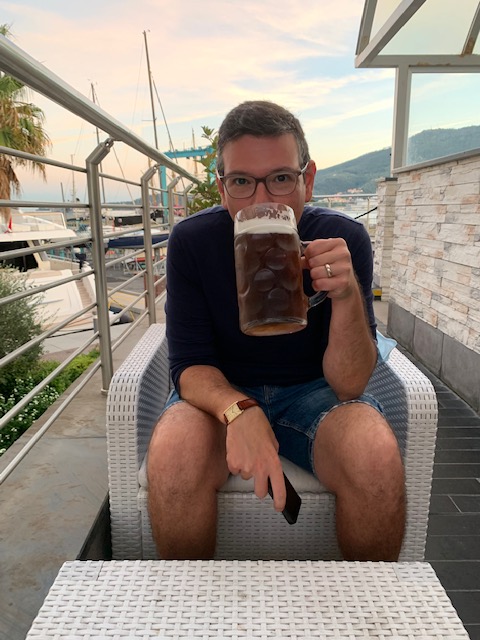
After the archaeological museum, I was straight up tuckered out, so we headed to the bus station for our trip home. Buses run Ovideo-Gijon every 30 minutes and we purchased our 7pm tickets back with 2 minutes to spare. The 20 minute ride back gave my feet a welcomed rest. Luckily the Gijon bus station is only about a five minute walk from our apartment where we returned for a quiet night in of pizza and beer.

Good Friday (not that Good Friday)

Last Friday we had lunch at a restaurant named Topolino (sounds Italian, not Italian). The food was amazing though I forgot to take photos (sorry!). Phil made reservations there after we were standing outside, looking at their menu del dia one Sunday and an elderly gentleman passing by came back to tell us the food was “extraordinario”. It is not very common for a stranger to speak to you on the street here; Asturians are friendly but keep to themselves. We decided if this guy went out of his way to backtrack and tell us about the food, it must be, well, extraordinario.

Our regular Profesora de Espanol, Marta, was out last Friday, so Profesora Sole substituted. We have had Profesora Sole before and we really like her as she really makes us work because Profesora Sole doesn’t speak English (she speaks Spanish and French). We told Profesora that we were going to Topolino for lunch that afternoon and she confirmed that the food was excellent, the restaurant had good ambiance and, if you’re lucky, when you go there, you might get a beach view. She also said that she sometimes has afternoon appointments near there and when she does, she always tries to go to Topolino. She was also sure to tell us that they offer para llavar (to go orders) of their menu del dia, in case they did not have tables available. When we left class, we were even more jazzed about our choice due to another glowing recommendation.

We had coincidentally been working on restaurant phrases in our Spanish class, so lunch at Topolino was an excellent opportunity to test our skills. While a “yo quiero” (I want) and pointing will usually suffice, it is nice to be able to have a bit more of a dialogue with the camarero/a (waiter/waitress) and to ask questions about menu items you are interested in. Lucky us, we were seated at the large window facing the beach. I knew right away I wanted the Fabada for my first course. I have mentioned Fabada before, but in case you forgot it is a classic Asturian bean stew of smokey pork delights (chorizo, blood sausage and what looks like fatback). It tastes like fancy Midwestern ham and beans and is really good. Phil asked a few questions about the other offerings and decided on the sincronizedas de pollo con guacamole which was like a chicken quesadilla. It was pretty darn tasty. There is not a lot of Mexican food in Spain so it was especially nice to have a little taste. For our second course, I had the salmon con salteado de trigueros y setas (salmon with sauteed asparagus and mushrooms) that came with fried, mandolin sliced potatoes. Phil had the solomillo a la carbonara (pork sirloin medallions with a cream sauce) served with a side of patatas fritas (these folks love their french fries but who doesn’t?). Both dishes were excellent. We paired lunch with a bottle of the house vino tinto and for desert, I had the arroz con leche (rice pudding-I know. Weird but it’s crazy good here) and Phil had the lemon tart which was muy rico and refreshing.

After our big lunch and a little nap, we headed out to see a play at the Jovellanos theater. The theater is a five minute walk from our apartment and is the venue for many touring theatrical and concert productions. We have tried to get tickets to a couple of different shows but because of the limited seating related to Covid protocols, tickets sell out quickly. We lucked out and scored a couple of entradas (tickets) for the June 11th production of Doña Rosita Anotada. It was a really cool experience, though mentally fatiguing. We had read a bit about the play prior to going but I didn’t realize that it consisted largely of character monologues. It also moves backward chronologically and as such was a lot for beginning Spanish students to keep track of. The actors spoke very quickly and, while they did have a screen at the top of the stage with subtitles [in Spanish] which helped, we understood very little. We compared notes afterward and both agreed on the gist of the overarching theme (score for team Barrington!). The play is about waiting and the passage of time and aging. How we often put things off because we are waiting for something else to happen and/or we put off doing things we want to do for another, later date and all the while, time is pushing us closer to the finish line.

We had planned to go out for a bit after the play but we were both exhausted from the reading and thinking so we headed home for some wine and cake, which just happens to be the perfect antidote to having an exhausted thinker*.

*this statement has not been evaluated by the Food and Drug Administration

A photo of the theater I stole from Wikipedia

Surprise! Nude beach!

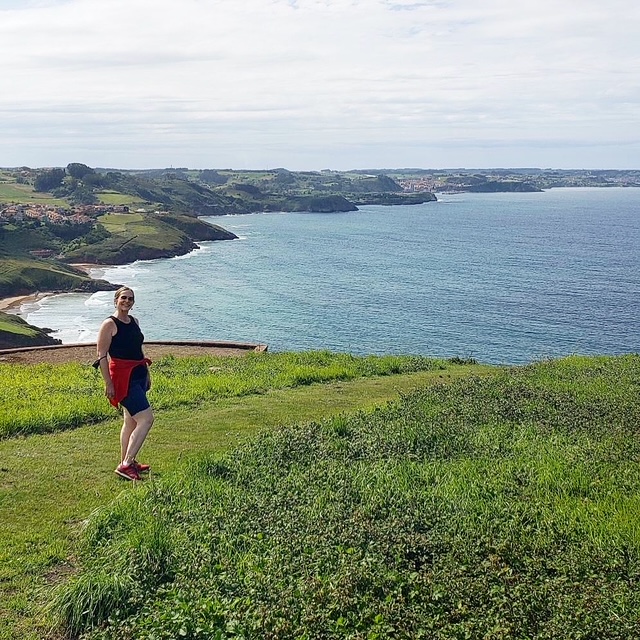
Gijon has several beaches, a few of which are a hike outside of the main city. Our Profesorra de espanol, Marta, knows we enjoy walking and going to the beach. She informed us that if you walk to the end of the paseo maritimo (beachfront walkway), we would come to “the most beautiful beach.” So we decided to go for a long walk towards that beach yesterday. We were well equipped with towels, snacks, sunscreen, water, comfortable shoes, swimming suits under clothes…the whole shebang.

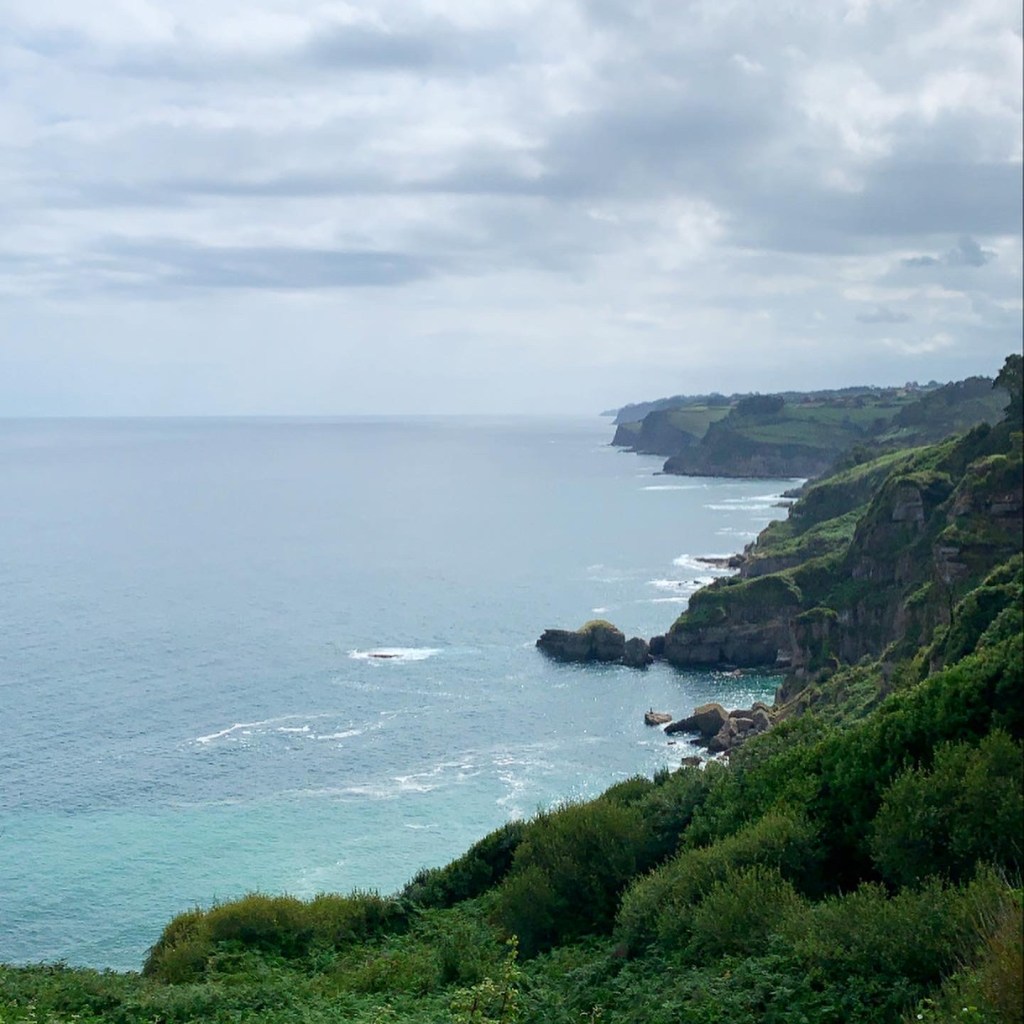
We walked for about an hour, past where the paseo maritimo becomes a stone path and winds through lush, green hills. We saw an inviting beach in the distance and decided the end of the paseo would have to wait for another day because we were done walking and ready for beaching. The beach we saw, Playa de Penarrubia, is at the bottom of a steep hill. Luckily, the stone path and steps leading down to it are in great shape and feel extremely safe for such a steep incline.

As we neared the final descending staircase, we peaked over the edge to look at the water and saw a very tan, very naked, older fellow soaking up some sun in the sand. I had read that there are several nude beaches outside of town. However it is common on nice, sunny days to see women sunbathing topless, from twenty-somethings to seventy-somethings, at the most popular beaches in town. I should mention men are sunbathing topless right along with them. Folks do not look twice at either. It is not illicit or salacious. I say this as a woman from the United States where a woman sunbathing topless on a public beach would not only be viewed as lewd behavior in most places, it would also very likely be illegal.

A friend of ours recently told Phil that his young daughter feels it is unfair that he can walk around with this shirt off but girls and women cannot. It is unfair. Welcome to ladyhood, little sister. The sight of a woman’s breasts are so distracting to men that is is illegal to bare them. Breastfeeding a child in the U.S. in public can still be mistaken for an obscene act. All of that being said, the U.S. also has another layer beyond the puritanical. There is also the body shaming.

Even if topless sunbathing were common place in the U.S., many women would not for the same reason many women do not wear sleeveless shirts or shorts or bikinis (I bought the first bikini I have worn since age four this past year at Phil’s urging because, why not?) because they have been taught to feel ashamed of their bodies. If you have lumps, bumps, stretchmarks, birthmarks, hair, no hair, etc, we should want to cover it up. We don’t feel like it’s normal or good or acceptable. From what I have read and in my limited interactions with Spaniards, something like being fat is used as a descriptor here, not as a judgement or insult. Just like you might describe someone as short or tall or blonde or brunette, one might described as fat (gordo/gorda) as a matter of fact.

As an introvert who loathes being the center of attention and someone who was obese in high school, I have struggled with self esteem and body image issues all of my life. It has gotten much better with age but being a foreigner in a new country with new customs, insecurity has been rearing it’s ugly head a bit more than I would like. When it does, I just have to remind myself that: 1. if someone judges me based on my physical appearance, they are an asshole, and I don’t care what they think, and 2. if someone assumes the worst of me in any interaction, they are an asshole and I don’t care what they think. Anyway, I digress. Back to the beach.

As we arrived at the beach, it became very obvious that it was one of the nude beaches I had read about. About seven or so older men were in the immediate, visible area and some other folks further on down the beach. As with most places we have been in Gijon, everyone was doing their own thing, in their own space, and not really paying attention to anyone else. I always find something comforting about being around people with a “live and let live” attitude. Be cool, don’t cause trouble, and no one will care what you do.

Phil and I rolled out our towels and settled in. I elected to pop off my bikini top (Phil voted in this election and the results were unanimous). Why not let the little ladies see the sun? When in Rome, right? We stayed at the beach for a few hours, laying on our towels, half asleep, half awake, listing to the waves crash. A few people came and went but the peaceful, easygoing vibe remained.
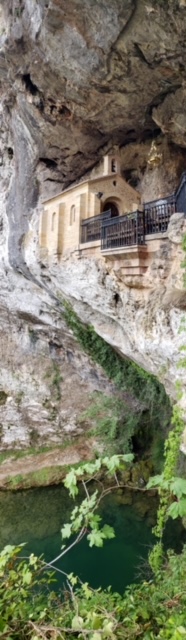
There is something about the beach that is good for the soul. I think I understand why the nudists nude or at least why folks want to get naked on the beach. It is not about sex or voyeurism, or at least not for most people. Being in nature, next to the immensity of the ocean, under the warm embrace of the sun, laying in the sand, you can’t help but feel at one with it all. There is a desire to remove all barriers, to roll around in it, grab onto it, to soak it in. To dive, tits first if you will, into the divine expanse.

Living in the City’s Center

Phil and I live in centro de la ciudad (city center) in Gijon. We couldn’t be happier with the location. It’s just a few minutes walk to everything we need; supermarkets, fruteria, panaderia. We live on Calle Corrida (Corrida Street), which is in the shopping district and the most popular street for retail shopping. The street is pedestrian only and quite wide. I have had several folks ask for photos from our neighborhood, so I have included some below with captions for additional information. I hope you enjoy them!

Palmera de chocolate: A love story

Palmera de chocolate. Palmerita de chocolate. A chocolate palm. Whatever you call them, I’ll take two!

I frequent the panaderia (bread shop/bakery) near our apartment. One of the first times I went in, in addition to my bread order, I pointed to the palmeritas (palmeritas are smaller, palm-sized versions of palmeras) and said, “dos chocolate por favor”. The young gal working, who I had happened to tell that I needed to practice my Spanish, said the name of the cookie, twice, and had me repeat it to her, in Spanish. “Palm-ear-ras”, I said, and earned a “muy bein”. I returned home and recounted the story to Phil, “I’m not sure what she said but something like panietta. I guess that makes sense, like small bread?” I have twice been corrected since that time when asking for them. I even sent Phil to get the scoop while I grabbed a bag of coffee from the place next door because I was becoming slightly embarrassed of my inability to get the pronunciation. He was successful and we now have it down. So much so that I ordered a palmera de chocolate today at a coffee shop with wild abandon. It was So. Good.

What the heck is a palmera de chocolate? You have definitely seen them. I had seen them many times (usually without the chocolate) but had never tried them. They are a cookie made of sweet puff pastry, kind of heart shaped with curled up ends (photos below). They are french in origin and I read that some countries just call them “ears”. That sounds less appetizing than palmera but is in fact a more accurate description of what they look like. It’s buttery puff pastry covered in chocolate. That is really all the information you should need.

Fun update; since that first time ordering palmeritas, I have become a regular at our panaderia. The young gal I mentioned even grabs my usual bread order* when she sees me in line and has it ready for me when it’s time to check out!

*contrary to what you may know about me and my intense desire to do so, I do not get palmeritas every time I go to the panaderia.

Jess learns Spanish (a work in progress)

I told a friend recently, “I didn’t think learning a second language at the age of 42 would be easy peasy” …but maybe I did. Or, more accurately, I didn’t really think about it intently. It was something future Jess would have to deal with, something I said and even believed without contemplating what it actually meant. “I’m going to learn Spanish when we get to Spain.” Kind of like, “I’ll quit smoking by the time I’m 30” and then I turned 30 and was like, “Oh, crap. I’m going to kick this can down the road a little further”(I did quit smoking but I was a smidge older than 30). Regardless I’m doing it. I’m learning Spanish!

Learning is tiring. I don’t remember the last time I used my brain this much. If you don’t use it, you lose it and my brain is definitely burning off some serious flab. The brain is just like building a muscle; when I first started practicing yoga, I remember thinking I would never be able to do full wheel pose. Now, with years of practice, building strength and flexibility, I am able to do many poses. Regardless, the first day I rolled out my mat, I was “doing” yoga. So, I just have to remind myself when I feel frustrated or stupid or disheartened, that I am “speaking Spanish.” I am comprehending Spanish. I am putting in the work and I am doing it. I am forgoing my giant lunches with mas vino (except Friday. I get Friday to enjoy the food and wine that brought me to this land in the first place!) to put in study time.

I love this quote from the movie American Beauty, “It’s a great thing when you realize you still have the ability to surprise yourself. Makes you wonder what else you can do that you’ve forgotten about.” It is way too easy to get sidetracked in life and to spend years in a routine or situation that doesn’t feed your soul. It is such a gift when you remember yourself, get a glimpse of who you really are (or were), could still be, or could be again. It is a bigger gift yet to act on it and to take that step. To feel the cobwebs fall away. What I am trying to sufficiently say, is that I am (still) surprising myself and it feels muy estupendo!

Churros! The good, the bad, and the ugly. Just kidding, they are all good.

Since we’ve arrived in Gijon, I have eaten churros a handful of times and not once have I regretted ordering them. In fact, I am a little nervous that anytime we pop into a cafe for a snack or desayuno (Spainsh for breakfast) and they are a menu option, I will order them above all else. I won’t do that (don’t do it, Jess!) as I enjoy trying other foods. But they are sooooo good. Even when they’re not great, they’re still pretty darn good.

The best place to order them, from my experience and what I’ve read, is at a Churroria. Churrorias specialize in churros (duh) and make their own, fresh, in-house. A cafe or even a bar may have churros on the menu but they likely come from a bag and perhaps were frozen. I have had them both ways. The fresh ones (pictured below from Valor) were far superior (like funnel cake kissed by an angel) but even the frozen ones were still fried, golden, sugar dusted tubes of delight. As if that wasn’t enough, you get to dip them in CHOCOLATE! Chocolate that you can then drink! They are similar to pizza in this way; fresh is the way to go but frozen pizza is still pizza and well, gimme that pizza. But first, pass the churros con chocolate!

Hot, cold, and sweaty

We knew it would be rainy and we were vale (Spanish word for ok) with the rain. Now Gijon is extremely humid, as rain allows for the lush greenery that is Asturias. We were spoiled in Southern California with almost no humidity. We could go on a moderate intensity hike and not even break a sweat. I am a sweater, that is to say I sweat (often in a sweater) easily, so I embraced the lack of humidity whole heatedly and never looked back.

When considering Gijon, we did not think about humidity. “But Jess,” you say, “if a place is often rainy, it only makes sense that the rain would increase the relative humidity, duh.” While I appreciate your meteorological insight, and you are correct, we simply neglected that fact.

Phil and I both grew up in the Midwest and as such are no strangers to hot, sweaty, and humid summers. It is a new experience, however, to be in a place where it’s relatively cool (50-65°F) and experience humidity. Layering is key (it’s actually quite useful in SoCal too but I digress). Usually when I walk out the door, I wish I would have worn a heavier jacket. Then, after about five minutes into our walk, I’m glad I didn’t. Ten minutes in, my jacket is off and I am carrying it. Because of the humidity, it doesn’t take much to work up a sweat while walking, particularly if you are a sweater in a sweater.

Gijon also happens to be super windy, so if you stop to have a seat on one of the many public benches (Gijon and Spain in general has a large elderly population and as a gerontologist, it pleases me greatly that they have so many spots for folks to stop and have a rest!), you are pleased as punch (what does that even mean?) to have your jacket to slip back on.

When my brother and I were kids, we would take turns staying with my aunt Harriet who lives in Kansas City. She did not have kids yet and she would shower us with attention and take us to fun places in the big city. One summer, while at the Ocean’s of Fun water park with my brother, Travis, she asked him how he was feeling. He told her, “I’m hot, I’m cold, and I’m sweaty”. This became a well known family story that we would all laugh at because what the heck kind of feeling is that? Well, lo these many years, I finally truly understand what he meant. I feel you, young Travis. I feel you. I am hot. I am cold. I am sweaty.

Cachopo de Ternera: A signature dish of Asturias

I love trying new food. I also believe when you’re in Rome (go on…), you should do as the Romans do so while in Asturias, I shall do as the Asturians do. A traditional Austrian dish throughout Gijon is called Cachopo. Cachopo consists of ham and cheese sandwiched between two large veal fillets, then breaded and fried and served over a bed of french fries and topped with vegetables, often red bell pepper and mushrooms. Whaaaaaaat? Yes.

I had read up on some of the local dishes when we first arrived in Gijon and discovered a restaurant with highly rated Cachopo very near to the airbnb we started our adventure at in Cimadevilla district (the oldest neighborhood in town). This was when the national curfew was still in place and restaurants had to close indoor dining service at 9pm (outdoor at 10). We knew Spain was known for their late dinners as we had seen plenty of people in restaurants in the evenings.

So, one night, we headed to the small restaurant called Bar Begona to try Cachopo. As we entered, no one was in fact eating, rather we found 70- and 80-year-old men were drinking and socializing, but stopped for a moment to concentrate on us (or so I felt). We could tell we were in the place to be, we just weren’t there at the right time. We weren’t going to turn around and leave, so we sat down and the waitress came over. We indicated we wanted to eat (this was at 8pm). She informed us they closed at 9pm. Phil asked if we could eat, “Podemos comer?” to which she essentially said “You tell me?” and pointed to her watch. We said Vale (Spanish for okay) and ordered the Cachopo. We waited somewhat awkwardly, at a table smack dab in the middle of the bar, surrounded by the old Spanish men. The Spanish fellows reminded Phil of his Papa (his Italian grandfather) and said when his buddy Jason comes for a visit, he’s going to take him there so they can old man it up. When in Asturias…

As we waited, the old Spaniards drank more and talked louder and seemed to forget we were there. We had some vino tinto (red wine) while we waited and eased in a bit. An older couple, who I assume owned the place were in and out of the kitchen. She (I referred to her repeatedly as Abuela to Phil) passed around some delicious bites to each table. They tasted similar to a crestless ham and cheese quiche but were so much better. Abuela eyed us curiously. Not quite a stink eye but not welcoming either.

The Cachopo was ordered as a shared dish and we have discovered you can typically share most entrees on a menu here. We were glad we did as when it arrived at the table it was huge and beautiful and covered in lovely red peppers, green peas, and mushrooms. Phil doesn’t like mushrooms and I’ve only seen him eat them on rare occasion if a dish is truly delicious. This was one of them.

After the experience at Bar Begona, we became more accustomed to Spanish meal times. Breakfast (desayuno) is eaten anywhere from 8-11am, lunch is eaten at 2-3pm (comida), and dinner (cena) between 9pm-midnight. We knew of their later eating times but putting it into practice has taken time, as of this post we are still getting used to the timing of eating. We had not realized that lunch was the largest meal of the day, typically consisting of several courses and wine, with dinner being a much smaller one. Phil had mentioned wanting to return to Bar Begona for the Cachopo at lunch sometime so we could have a proper dining experience there.

Our wedding anniversary is Wednesday and we’d planned to go out then but we were both onboard with moving it up a bit. To Abuela’s we went! We arrived at Bar Begona just after 2pm. We were seated in their small dining room, which we had not seen on our first visit, with wall adorned with watercolor paintings of topless mermaids, and I mean every one of the dozen or so that adorned the walls.

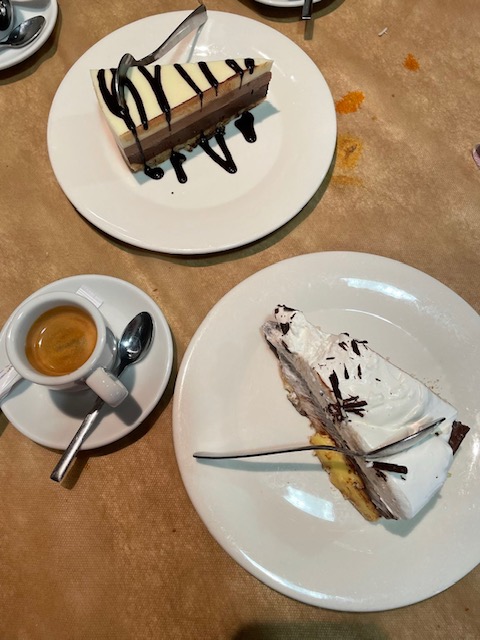
An ensalada mixta to start, followed by the Cachopo and a bottle of vino rosado to accompany the meal. The Cachopo was even better than the first time and I could tell Abuela’s comida Cachopo was pan fried with love. Cutting into the giant, golden beauty revealed the melty cheese and jamon hiding inside. The veal reminded me of really tender, thin, chicken-fried steak. To end the meal, we shared a crust-less cheesecake at the waitress’s recommendation, and each had a cafe solo. The meal left us with a pleasant, warm, and inviting feeling (maybe the wine had something to do with that?) and we left quite pleased and satisfied.

As has become our routine, we took a long, leisurely post-meal walk home along the waterfront, stopping a couple of times to sit on a bench and watch the waves and the passersby. Being able to take our time in most all that we do has been an amazing experience. We have to remind ourselves (or at least, Phil has to remind me), that we can take our time as we don’t have to be anywhere. We can do whatever we want and I don’t need to feel guilty about having a giant lunch on a Monday and then taking it easy the rest of the day. I can savor each experience without rushing onto the next. That’s what this life is for, right?

A rainy Saturday at the Museum

Today Phil and I visited the Museu del Pueblu d’Asturies (the museum of Asturias). Asturias is the larger region and autonomous community we reside in in Spain (similar to a US state) and Gijon is the city we live in in Asturias. The museum was a rainy, half hour walk from our place. I knew moving to Asturias rain was a common weather pattern, and today it alternated between a heavy mist and a drizzle; so it was perfectly comfortable to be out and about as we had our umbrellas with us.

The museum was located right across from the Gijon soccer team’s (aptly named Sporting Gijon) stadium. Phil is really hoping things open up enough here that we can go and see a game when the new season starts. At first it looked as if the museum might be closed due to obvious construction near the entrance but we were able to read the signs well enough that directed us around the building and to the entrance. A nice fellow greeted us at the desk, advised us to please not walk on the freshly painted floors, gave us a map, and we were off. The museum grounds consisted of several buildings on about 2 acres of land.

We started in the main building which provided a peek into both middle class/bourgeoisie and working class/peasants living conditions, household items, and tools from the 1780’s through 1965. It was so interesting and we enjoyed seeing the juxtaposition of the lives of the citizenry depending on the luck of the draw at their birth.

We then moved onto the Valdes Manor which housed a photograph exhibit of found and developed negatives from the early 1900’s everyday life in Asturias, which was somber but so cool. Then we walked next door to the House of Gonzalez which is home to a bagpipe museum (the Gaita Asturiana is a traditional, Asturian bagpipe). There were also many other musical instruments including the hurdy-gurdy which I’d heard of but never seen. Look it up. That thing is crazy.

After leaving the bagpipe museum we walked around the grounds and popped into the various other buildings: cider press, peasant house, horreos (grain storrage), and chozo ucorros (mountain shepherd refuge). These buildings gave us a look at the old cider pressing process, grain processing and storage, of normal life in the region. The outdoor space was lovely and green, especially so after the rain. We were mostly alone and only passed a couple of other folks during our few hours there. One of the things that felt weird about living in LA is that you could never be alone; there were always other people. Even on seemingly remote hikes, we always ran into someone or lots of someones. In Gijon, even though it’s a fair sized city (pop. 250,000), we’ve been able to find places that feel like we have them all to ourselves which has been really nice.

After we left the museum we went in search of a tasty snack and I needed coffee! We walked home along the waterfront and stopped in at a little coffee house/churreria. We each had an espresso and ordered churros (our first churros order since being in Spain). The churros came plain but we wanted them with chocolate so ordered up two large cups of thick, delicious hot chocolate (more like warmed pudding, like we used to make on the stove, before snack packs) for dipping. I wasn’t sure if I should drink the chocolate right from the cup because I thought I remembered reading that to do so would be uncouth. I looked around to see what everyone else was doing. I couldn’t really tell, so I dipped the churros. Between heavenly bites of the long, somehow not greasy, donut-like ropes, I spooned the thick chocolate into my mouth. Then I figured the right thing to do was whatever I wanted to do, so took a few sips to finish off the cup. I also happened to do a quick google search that indicated drinking the chocolate was A-ok, which made me feel better. I don’t know why I’m so worried about making a little faux pas. It’s not like the waiter is going to come over and tell me to get the hell out. Anyway, it all worked out and I left with a belly full of chocolate, sugar, coffee, and magic (fun fact; churros are 90% magic). It was a perfect pick me up and warm hug of yum needed after our long day in the rain.

Most businesses are closed on Sunday with the exception of restaurants and bars, so we stopped by a fruteria and small grocery store for a few items to use for the night’s dinner and meals on Sunday. As much as I would love to eat every meal out, experiencing new, tasty delights for each one, shopping and cooking meals at home are another adventure of their own (I’ll share more about what I prepare as I get to know the ingredients at my disposal). Phil made us salads with a little bread and vino tinto which was the perfect ending to a wonderful day exploring unknown parts of Gijon.